There is no single winner. Welded railings give you the cleanest look and a joint that cannot loosen. Bolted railings give you speed on site, easier repair and a way to protect a factory finish. In Montreal, the better choice depends on the material, the finish, how the railing attaches to the building and who has to sign off on it. This guide walks through each factor so you can decide with a contractor, architect or fabricator, without surprises at inspection.
TL;DR
- Welded suits most custom steel and stainless railings: continuous lines, no fasteners to work loose, and a finish that looks like one piece. It needs qualified welders and, on code-governed work, a certified shop.
- Bolted suits aluminum, pre-finished or powder-coated components, tight site access and railings you may need to replace one section at a time.
- The best answer is often both: weld in the shop, bolt at the site. Panels are fabricated and finished in controlled conditions, then fastened on the building.
- Strength depends on the whole system, not just the joint type. In Quebec, the anchors into the slab, joists or masonry are where railings most often fall short.
- Whatever you choose, the guard must meet the load and height rules of the Quebec Construction Code, and any change to the tested or engineered design needs new validation.
Table of Contents
- What “welded” and “bolted” actually mean for a railing
- Start with the rule that does not bend: Quebec code
- Welded railings: strengths and limits
- Bolted railings: strengths and limits
- Side-by-side comparison
- The hybrid approach most projects land on
- Which method for which project
- Our perspective: control the joint, control the outcome
- Questions to ask before you sign
- Railings made and installed by Manara
- FAQ
- Sources
What “welded” and “bolted” actually mean for a railing
The terms get used loosely, so it helps to separate three different joints in a railing.
- Shop joints: where posts, rails and pickets meet each other. These can be welded or mechanically fastened.
- Field joints: where long runs are spliced together on the building. These are the joints most people mean when they ask about site welding versus bolting.
- Anchorage: where the post meets the concrete slab, wood framing, masonry or steel. This is almost always mechanical (anchor bolts, through-bolts, lag screws or chemical anchors), even on a fully welded railing.
That third point surprises many homeowners. A “welded railing” still gets bolted down. The real question is usually how much of the assembly is welded before it arrives, and how the sections are joined once they are on site.
As a general principle, welding joins members during fabrication so the assembly behaves as one rigid piece, while a bolted joint allows some movement and can be taken apart. TWI’s overview of structural joining methods describes welding as preferred for its sleeker finish and monolithic nature, with no parts to work loose over time. It also notes the trade-off: welding requires skilled labour and equipment, which makes it a higher-cost, higher-schedule-risk option on site than bolted assemblies.
Start with the rule that does not bend: Quebec code
Before comparing methods, know the target they both have to hit. CAA-Québec’s guide to guardrails and handrails summarizes the requirements under the National Building Code of Canada as amended by the Quebec Construction Code:
- A guard is required when the walking surface is more than 60 cm (2 ft) above the ground.
- Minimum height is 90 cm (36 in) for private dwellings, or 107 cm (42 in) for platforms more than 180 cm (6 ft) above the ground.
- A guard must withstand a minimum horizontal point load of 0.5 kN (113 lb) applied at any point.
The last line is the one that matters for this comparison. Welded or bolted, the railing has to carry that load at the weakest spot, including mid-span and at the base. For the height rules specific to the city, see our guide to balcony railing height in Montréal, and for opening sizes, guardrail spacing in Montreal.
The Régie du bâtiment du Québec is blunt about responsibility. In its reminder on the structural strength of guardrails, it says designers and manufacturers must design guards to resist the minimum horizontal and vertical loads at any point, and that the installed guard must match the installation drawings and specified materials so its strength is the one obtained in testing or calculation. In practice, that means a railing system, tested by a recognized laboratory or calculated by an engineer, with defined post spacing, fasteners and anchors. If someone increases anchor spacing or swaps in different fasteners on site, the validation no longer applies.
This cuts both ways:
- A bolted system is only as good as the specified bolts, torque, edge distances and substrate. Substituting a cheaper fastener is a code problem, not a shortcut.
- A welded system is only as good as the weld procedure and the person making it, and the design still has to be validated.
Welded railings: strengths and limits
Where welding wins
Appearance. A welded and ground joint disappears. With no brackets, set screws or bolt heads, the railing reads as a single sculpted line. That matters on architectural projects, in restaurants and retail spaces, and on modern homes where the railing is a visible feature. Stainless steel in particular looks best when joints are continuous and polished.
Fewer places for water to get in. Outdoors in Montreal, freeze-thaw cycles and de-icing salt punish every crevice. A continuous welded joint has no threaded interface where moisture can sit. Finishing a welded railing properly (galvanizing, then paint or powder coat) seals that joint under the coating. Our notes on protecting railings by material cover what to expect for each metal.
No loosening. Vibration, repeated hand loads and thermal movement can slowly work mechanical fasteners loose. Welded connections do not back off. On a busy commercial stair or a condo balcony used by many people, that is a real maintenance advantage.
Rigidity. A well-made welded post-and-rail frame transfers bending through the joint and feels solid under the hand. That feel is part of what people mean by quality.
Where welding is harder
Skill and certification. On work governed by the National Building Code, structural welding has to be done by qualified people at a certified company. The CWB Group’s mandatory certification page states that buildings and structures under the NBCC and its provincial versions must be welded by CWB-certified companies. Whether a given railing falls under that requirement depends on the project, so ask your fabricator and your engineer rather than assume. It is a fair question to put to any shop: who welds, to what standard, and under whose certification?
Site conditions. Field welding needs power, shielding from wind and rain, fire protection, and clear working space. On an occupied condo balcony, near wood framing or next to a finished facade, hot work is difficult and sometimes not allowed. Our article on field welding versus bolting for engineers goes deeper on rework risk when site welds are specified without a plan.
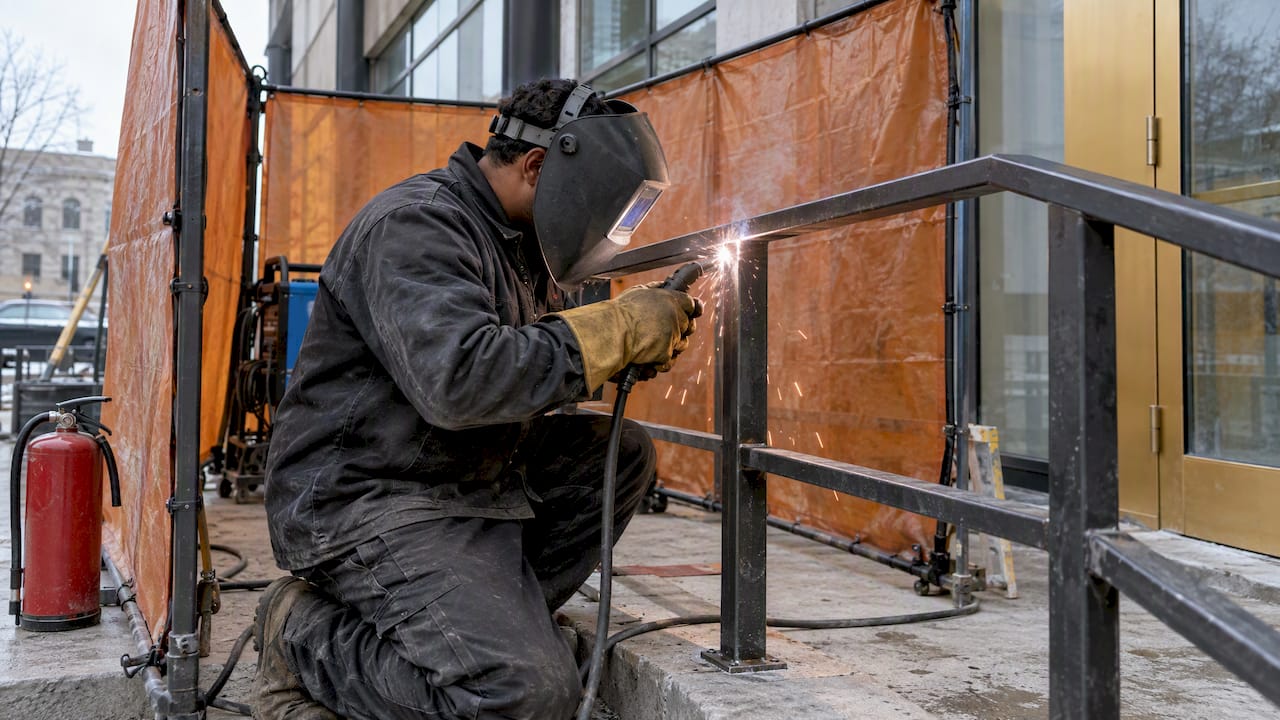
Finish damage. Welding burns off galvanizing and powder coat around the joint. If you weld on site, you have to restore the finish on site, and a touch-up is never quite the same as the factory coating.
Heat on aluminum. This is the biggest technical caveat. Welding aluminum creates a heat-affected zone that lowers the strength of the metal next to the weld. Vista’s Canadian design manual reports tests where welded aluminum base plates failed at loads roughly 30 to 35 percent lower than mechanically fastened connections in some studies (Vista Pro Railings design manual, 9th edition). That does not mean aluminum cannot be welded. It means the design has to account for the reduced strength, which is one reason many aluminum systems are assembled mechanically.
Bolted railings: strengths and limits
Where bolting wins
Speed on site. Bolted components go together with common tools and predictable timing. There is no cooling, no grinding, no fire watch. For a tight schedule or a short weather window, that predictability is valuable.
Protected finishes. If panels are galvanized and powder-coated in the shop, bolting them together on site leaves the coating intact. This is one of the main reasons fabricators split the work: weld in the shop, finish, then bolt on the building.
Replaceability. A damaged picket panel, a cracked glass clamp or a corroded post can be unbolted and swapped without cutting. For property managers who maintain dozens of balconies, that can lower the long-term cost.
Fewer special trades on site. Installation does not need a welder and hot-work precautions at height, which simplifies logistics on renovation projects.
Where bolting is harder
Loosening and wear. Mechanical joints need periodic checking. Where fasteners are exposed to weather and use, they can corrode or relax, and a railing that wobbles is both a complaint and a hazard.
Visible hardware. Even neat bolted connections show fasteners or brackets. Concealed fixings exist, but they add cost and design effort.
Substrate problems. The bigger risk is not the bolt but what it bites into. Latera Engineering’s catalogue of guardrail attachment methods points out that lateral loads on a guard create very high tensile forces at the baseplate, and that small-diameter lag screws into wood are a recurring weak point. It also describes crushing of wood under the post base plate on wood-framed connections, where the bearing area of a typical 4 in. by 4 in. plate is often too small, and where proprietary transfer brackets that deliver load into the joists are needed. This applies to both methods: a welded post with a poor base connection fails the same way.
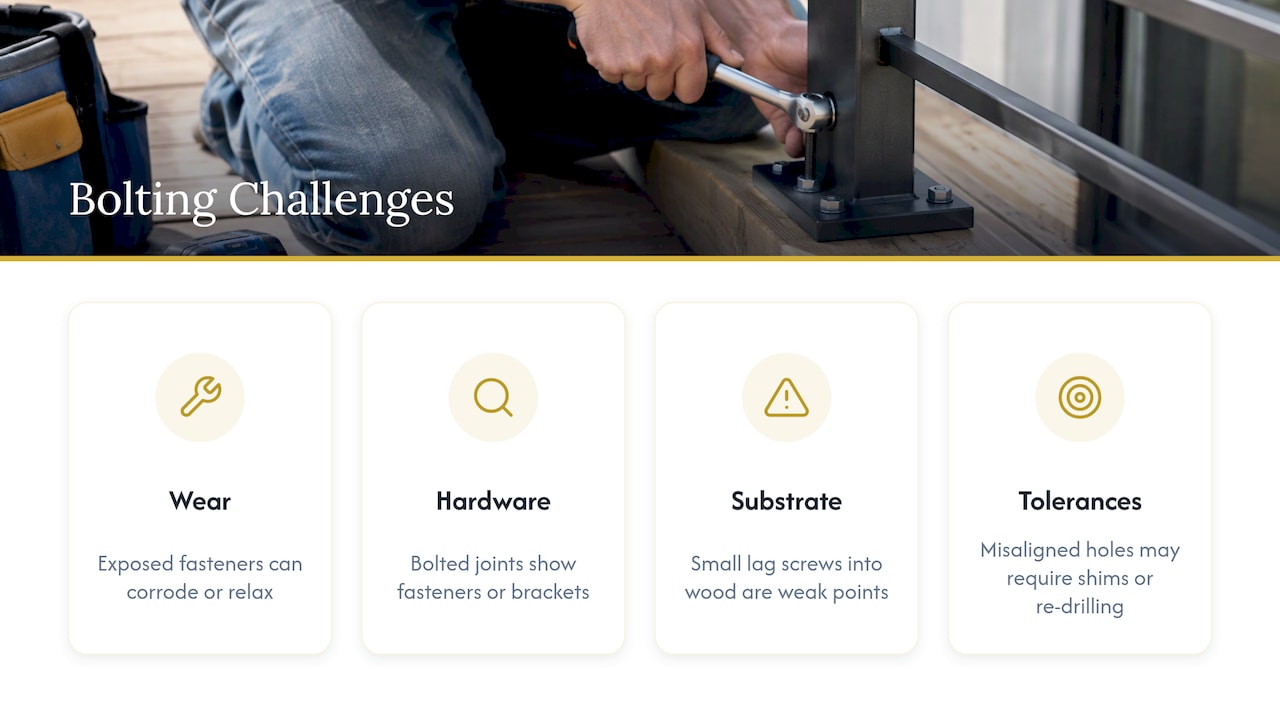
Tolerances. Bolt holes need to line up. If the slab edge is out of square or the existing structure has moved, bolted systems can need slotted holes, shims or re-drilling, and each of those must still respect the engineered detail.
Side-by-side comparison
| Criterion | Welded | Bolted |
|---|---|---|
| Appearance | Seamless, no visible hardware | Hardware visible unless concealed |
| Long-term looseness | No fasteners to loosen | Needs periodic inspection |
| Site installation time | Slower if welded on site; fast if pre-welded panels | Fast and predictable |
| Finish protection | Coating damaged near field welds | Factory finish stays intact |
| Repair or replacement | Cutting and re-welding | Unbolt and swap |
| Labour | Qualified, certified welders | General installers with torque control |
| Aluminum | Strength reduced at weld zone | Often preferred |
| Stainless steel | Excellent for polished, continuous look | Used with concealed or decorative fixings |
| Cost driver | Skilled labour, finishing, site prep | Fasteners, precise fit-up |
The hybrid approach most projects land on
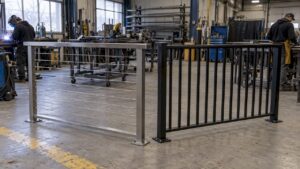
For most Montreal jobs, the practical answer is neither pure welding nor pure bolting. It is shop welding plus site bolting:
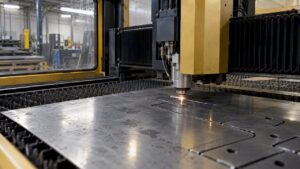
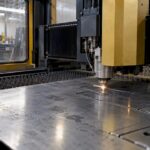
- Cut and form components in the shop. Laser-cut base plates and brackets hold tight tolerances, and rolled or bent rails follow curved stairs and balconies accurately.
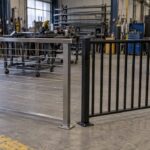
- Weld posts, rails and pickets into panels under controlled conditions, where position, lighting and weld inspection are all easy.
- Finish the panels: galvanizing, powder coating, paint or polishing.
- Transport panels sized to fit the access route, whether that is a narrow stair in Plateau, a third-floor balcony in Verdun or a commercial entrance in Laval.
- Bolt the panels to engineered anchors and splice them with concealed or low-profile connections.
This keeps the quality advantages of welding and the speed and finish protection of bolting. It also puts the critical joints in a place where they can be inspected before the railing leaves the shop.
If a long run has to be welded on site, for example a curved stair railing that cannot be split, plan for it: grinding, touch-up coating, protection of surrounding finishes, and permission for hot work.
Which method for which project
Homeowner replacing balcony or exterior stair railings. Pre-welded steel panels, galvanized and powder-coated, bolted to properly designed anchors. You get a durable finish and a short installation day. Check the anchoring detail first, particularly if the balcony is wood-framed, and see our notes on snow loads, anchors and shop details in Montreal.
Condo board or property manager. Prioritize repairability and inspection. Panel-based bolted connections let you replace a single section, while welded panels reduce the number of fasteners to monitor. Ask for drawings that show each anchor type, so future maintenance matches the original design.
General or renovation contractor. Schedule and sequencing decide it. Shop-welded, shop-finished panels shorten time on the building and reduce trade conflicts. When pricing, compare the whole job, including labour, equipment and site time, not only the fabrication line. A list of construction estimate components helps make sure those items are not forgotten when you compare a field-welded option with a bolted one.
Architect or designer. If the railing is a visible feature, specify welded and ground joints in the shop, concealed fasteners at the site, and a finish that tolerates Quebec winters. Show the connection details on the drawings, not just the profile.
Commercial owner, restaurant or retailer. Stainless steel handrails and guards with welded, polished joints are easy to clean and look sharp. Bolted or clamped sections can make sense where you plan to reconfigure the space.
Aluminum railings. Expect mechanical assembly to be the default, and confirm that any welded aluminum design accounts for the lower strength near the weld.
Weathering steel. Detailing matters more than the joint type, since water and staining need a path away from the railing. See our shop rules for weathering steel railings.
Our perspective: control the joint, control the outcome
We fabricate and weld everything in-house in Lachine and install it ourselves across Greater Montreal. That shapes how we answer this question.
We lean toward welding in the shop for almost every steel and stainless railing. Controlled conditions let us position the work, grind the joints and finish the panels before they travel. Then we choose the site connection to suit the building: bolted splices and anchors where the finish must stay intact or where the structure calls for it, and site welding only where the geometry demands it.
The more important point is that the joint is rarely the reason a railing disappoints. The problems we see are the anchors: not enough bearing under the base plate, fasteners smaller than the engineering assumed, or posts moved a few centimetres without anyone rechecking the load path. Because we build and install our own work, we can keep the drawings, the shop details and the site crew aligned, which is how we keep code compliance and timelines under direct control on small jobs and large ones alike.
Our advice: decide the anchoring and the finish first, then pick the joint type that fits them.
— Ash
Questions to ask before you sign
Whatever you choose, put these questions to any fabricator:
- Which standard and which drawings? Is the railing a tested system or an engineered design, and will the installed version match the drawings exactly, as the RBQ expects?
- Who welds, and under what certification? Ask about CWB certification for the shop and qualified welders for work that falls under the building code. The CWB’s welder qualification information explains how welders are tested.
- What happens at the anchors? Ask for the fastener type, size, spacing and substrate assumptions, in writing.
- How is the finish protected? Find out whether welds are coated after fabrication and what is done about touch-ups at site joints.
- Will there be field welding? If yes, ask how hot work will be managed and who restores the finish.
- What is the handrail and guard height? Our guides on outdoor handrail code requirements and stair handrail heights in Montreal show what inspectors check.
For a broader approach to comparing shops, our article on how to vet a metal fabricator lists the filters we would use ourselves.
Railings made and installed by Manara
If you are planning a railing or stair in Montreal, Laval, the South Shore or the West Island, we can fabricate it in our Lachine shop, finish it and install it. We work with homeowners, contractors, architects, property managers and commercial owners, in French and English. Our railing offering covers residential and commercial guards, and we also build metal staircases and handle custom welding and profile rolling for curved work. Tell us the site, the material and the finish you have in mind, and we will recommend the connection method that fits. Start from manaracorp.com.
FAQ
Which is stronger, a weld or a bolt?
Neither wins in every case. A properly made weld creates a rigid, continuous joint, while a bolted joint carries load through fasteners and allows some movement. For railings, the weakest link is often the anchorage or the metal next to the weld, so strength has to be judged for the complete system against the 0.5 kN point load required in Quebec.
Are welded railings better for outdoor use?
Often, when they are shop-welded and then galvanized or coated, because there are fewer crevices and no threaded joints to loosen. The finish is what protects them against Montreal winters and de-icing salt. Bolted panels that were coated before assembly can perform just as well, provided the fasteners are suitable for outdoor use.
Can I bolt aluminum railings instead of welding them?
Yes, and it is common. Welding aluminum reduces strength near the weld, and testing reported in Vista’s design manual showed welded aluminum base plates failing at lower loads than mechanically fastened ones. Whichever route you take, follow the installation drawings and have any deviation validated.
Can a contractor change the anchors or fasteners on site?
Not freely. The RBQ states that a guardrail must be installed as shown on the drawings and with the specified materials, and that changes such as wider anchor spacing or different fasteners call for new engineering validation. If the site conditions differ from the drawings, have the fabricator and the engineer review before work proceeds.
Do I need a permit or inspection for a new railing?
It depends on the borough, the building and the scope of work, so check with your borough or municipality before starting. Our guide to Montreal balcony railing code, permits and anchoring explains the usual triggers.
Sources
- Guardrails and handrails: for your safety, CAA-Québec
- Résistance structurale des garde-corps, Régie du bâtiment du Québec
- Mandatory Certification, CWB Group
- Welder Qualification Testing, CWB Group
- What Are The Most Common Methods of Joining Structural Steel? TWI
- Vista Pro Railings design manual, 9th edition
- Railing, Guardrail Attachment Methods, Latera Engineering