Expect custom metal fabrication in Greater Montreal to range from small-part minimums to $6,500 to $10,500 for a custom metal staircase, with pricing driven by material, labour hours and machine time rather than a flat rate per job. Itemized quotes vary by shop, and accurate pricing always starts with drawings or at least clear measurements. Manara Corp offers instant online quotes for jobs across Greater Montreal.
TL;DR:
- Budget around $167 for a standard residential fence permit before fabrication; length, material, and gate hardware determine the remaining project cost.
- Send dimensioned drawings, material grade and thickness, required tolerances, finish, and installation needs to every shop; vague specifications can inflate estimates.
- Laser cutting tolerances of ±0.030 to 0.050 millimeters require slower feed rates, and shops may impose minimum orders or charge a premium.
- Small parts can take days, while custom stairs and architectural railings need several weeks; requesting Canadian steel can extend lead times.
Table of Contents
- Cost components: materials, labour, machine time and finishing
- What do railings, stairs and fences typically cost in Montreal?
- How is laser cutting priced in Montreal?
- How do you get an accurate, comparable quote?
- Timelines and lead times for Montreal projects
- Safety, code and permit costs you shouldn’t skip
- What Montreal projects teach us about fabrication costs
- Local factors that move your price in Montreal
- Labour and shop hourly rates: what drives the number
- Installation costs by zone across Greater Montreal
- Maintenance, warranty and long-term value
- Custom fabrication versus pre-fabricated alternatives
- Why hiring a local fabricator changes your outcome
- How Manara Corp can help with your fabrication project
- FAQ
- Sources
Cost components: materials, labour, machine time and finishing
An itemized metal fabrication quote breaks into a handful of recognizable line items, and knowing them helps you read a bid instead of just trusting the bottom number.
Material cost is the most variable piece. Mild steel runs cheapest, stainless steel costs more due to alloy content and harder machining, aluminum sits in between depending on grade, and copper carries the highest raw material premium of the common options. Thickness matters directly: heavier gauge steel or plate costs more per piece and also slows cutting and bending, which raises labour and machine time together.
Shop labour covers several distinct roles. A programmer has to translate your drawing into a CNC toolpath, an estimator builds the quote, and a certified welder executes the joinery. Skilled welding labour, particularly for stainless steel or structural work, is priced higher than general shop labour because of the training and certification involved.
Machine time and setup fees apply to laser cutting and press brake work. Every new job requires fixture setup and, for press brakes, several trial bends before the first production part matches specification, so batch jobs spread that setup cost over more parts and cost less per piece than a one-off.
Finishing and installation are often the final line items:
- Painting or powder coating adds a flat or per-square-foot charge depending on coverage area.
- Hot-dip galvanizing is priced by weight and adds corrosion protection for outdoor railings and fences.
- Site installation includes labour, travel and sometimes crane or lift rental for heavier structures.
- Welding inspection or certification documentation, when required, adds a separate professional fee.
Each of these items should appear as its own line on a proper quote rather than folded into one lump figure.
What do railings, stairs and fences typically cost in Montreal?
Common residential and light commercial jobs in Greater Montreal tend to fall into recognizable price bands, useful for sanity-checking a quote before you sign.
- Residential metal fences start with a municipal permit baseline before any fabrication cost; Manara Corp’s fence guidance references a typical permit fee around $167 for standard residential installations with posts near 1.2 metres, with total project cost scaling from there based on length, material and gate hardware.
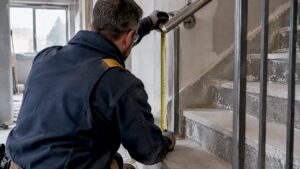
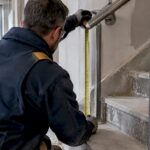
- Custom metal staircases typically run $6,500 to $10,500 for a full in-shop fabricated and installed unit, with the high end driven by stainless steel finishes, complex stringer geometry, or multiple landings.
- Small fabricated parts, such as brackets or single custom pieces, carry a shop minimum charge regardless of size, since setup and handling cost the same whether you order one part or five; ordering in small batches brings the per-part cost down meaningfully.
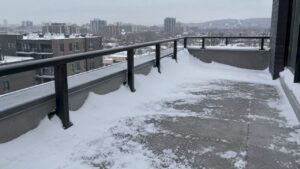
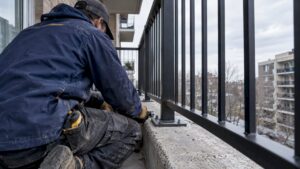
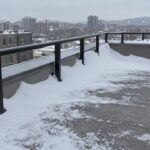
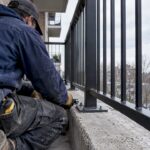
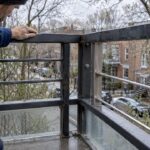
- Architectural railings, whether residential or commercial, price higher per linear metre than a simple fence because of baluster density, handrail profile requirements and the precision needed for code-compliant guard heights, and installation adds cost when anchoring into concrete, wood decking or existing stairs.
These ranges assume standard materials and straightforward site access. A heritage building facade, tight urban lot access, or a request for mixed metals (say, steel frame with glass infill) pushes any of these bands toward their higher end.
How is laser cutting priced in Montreal?
Laser cutting quotes are typically built on machine-hour, per-minute or per-part pricing, and which model a shop uses often depends on job volume and part complexity; for detailed benchmark pricing models from a procurement perspective, see Laser Cutting Cost Benchmarks for Procurement Engineers.
- Per-part pricing suits repeat orders where nesting multiple parts on one sheet spreads the machine time efficiently.
- Per-hour or per-minute pricing suits one-off or highly custom jobs where setup and cutting time are harder to predict in advance.
- Tight nesting, fitting more parts onto fewer sheets, reduces material waste and lowers the effective per-part cost.
Material thickness and small internal features both add runtime: thicker material cuts slower, and tiny holes or intricate profiles require the laser to slow down for accuracy, which adds machine minutes per part.
Tight tolerances cost more to hold. Manara Corp quotes laser cutting tolerances of ±0.030 to 0.050 millimetres, a precision level that demands careful programming and slower feed rates, which is why shops offering that tolerance often set minimum order sizes or a modest premium versus standard-tolerance cutting.
Edge quality also factors in. Laser cutting leaves a heat-affected zone along the cut edge, and some finishes or welding preparations require light grinding or deburring afterward, an extra step worth confirming on your quote.
How do you get an accurate, comparable quote?
A quote is only as good as the information behind it, and vague requests produce vague numbers.
- Supply CAD files or dimensioned drawings whenever possible; a photo or rough sketch forces a fabricator to estimate and pad the price for uncertainty.
- Specify required tolerances, since a job with no stated tolerance gets priced to the shop’s standard, which may be tighter and costlier than you actually need.
- State the material grade and thickness explicitly: “steel” alone is not enough when mild steel, galvanized steel and stainless steel all price differently.
- Note the intended finish (raw, painted, powder-coated, galvanized) and whether installation is included.
- Ask how the shop sources material and what current lead time looks like for that material.
Before comparing numbers, review the three filters worth applying to any fabricator before you shop on price alone: capability, compliance and communication.
Pro Tip: Ask every shop for an itemized quote broken into material, labour, machine time and installation. A lump-sum number hides which component is driving the price, and makes two bids impossible to compare fairly.
Timelines and lead times for Montreal projects
Small parts and straightforward brackets often move through a shop in days, while a custom staircase or architectural railing set can take several weeks once you include design review, material ordering and welding time.
- Material sourcing timing matters: requesting Canadian-sourced steel aligns with current federal procurement direction but can extend lead time slightly compared to readily available imported stock.
- Rush fees typically apply when a project needs to skip the normal queue or when material has to be expedited from a supplier.
- Installation booking in Greater Montreal should be confirmed early, particularly for outdoor work tied to a seasonal construction window.
Safety, code and permit costs you shouldn’t skip
Compliance costs are built into any reputable quote, not an optional add-on.
- Welding operations fall under federal welding health and safety guidance, which recommends ventilation and exposure controls that shape how a shop runs its welding bays.
- SIMDUT and WHMIS rules govern hazardous consumables like welding rods and solvents, and proper handling and disposal add a small but real cost to shop operations.
- Municipal permits, such as the fence permit baseline noted earlier, apply before installation begins, and RBQ-licensed installation may be required depending on the scope of work, which can add professional fees and a longer timeline.
What Montreal projects teach us about fabrication costs
Working in a local shop and installing throughout Greater Montreal, including Laval, the South Shore and the West Island, gives a direct view of where quotes go wrong: vague drawings and unspecified tolerances. On fence jobs, we budget from that $167 municipal permit baseline before fabrication costs are even added. On stair projects, stringer connection geometry is the single most common source of expensive rework, so we confirm that detail before cutting steel.
— Ash
Local factors that move your price in Montreal
A few regional realities shape fabrication pricing here specifically, beyond the generic materials and labour math.
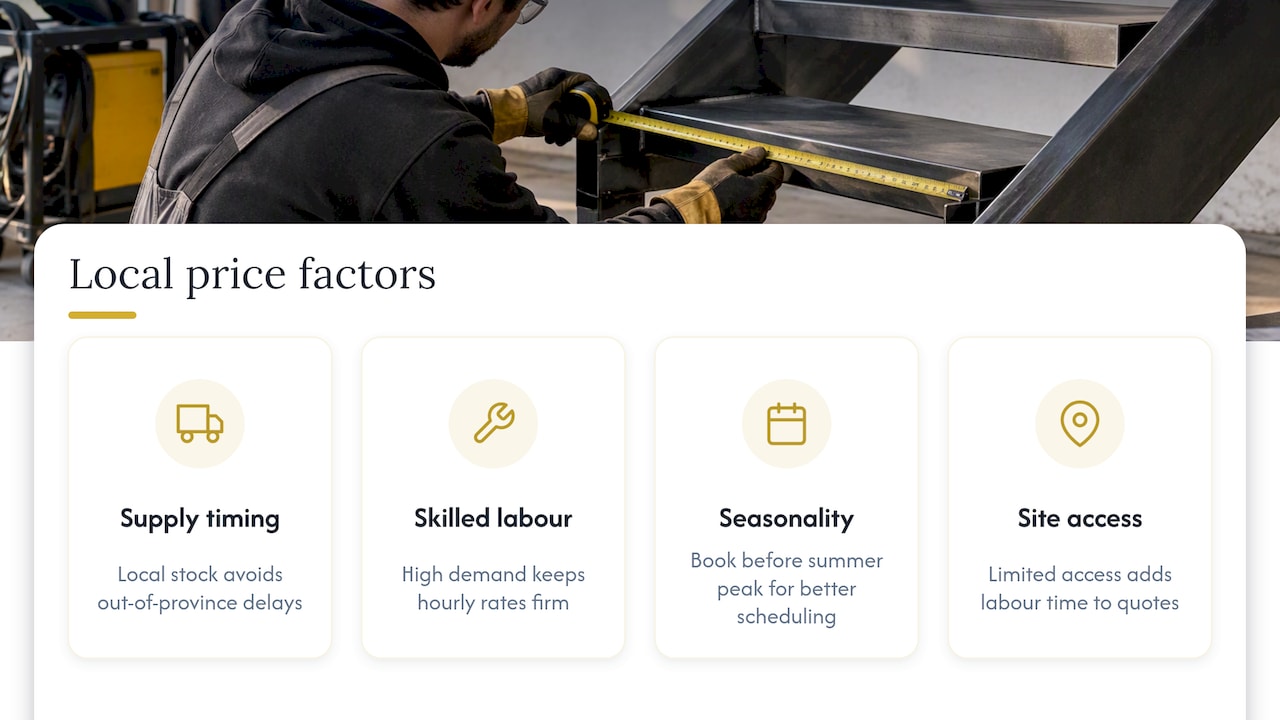
Supply chain timing affects steel and stainless availability, and shops that stock common gauges locally avoid the delay of ordering from out-of-province or imported sources. The skilled welding labour market in Greater Montreal is competitive, since certified welders qualified for structural and architectural work are in steady demand across construction, industrial and custom fabrication shops alike, which keeps hourly labour rates firm rather than falling.
Seasonal construction demand also plays a role: outdoor installation work, particularly railings, stairs and fences, clusters in the warmer months, and booking ahead of that peak window tends to secure better scheduling than requesting installation mid-summer.
Finally, site access across the region varies enough to matter. A ground-floor suburban installation in the West Island is straightforward, while a dense multi-unit building on the island of Montreal with limited loading access or street parking restrictions can add labour time that a quote should reflect upfront rather than as a surprise change order.
Labour and shop hourly rates: what drives the number
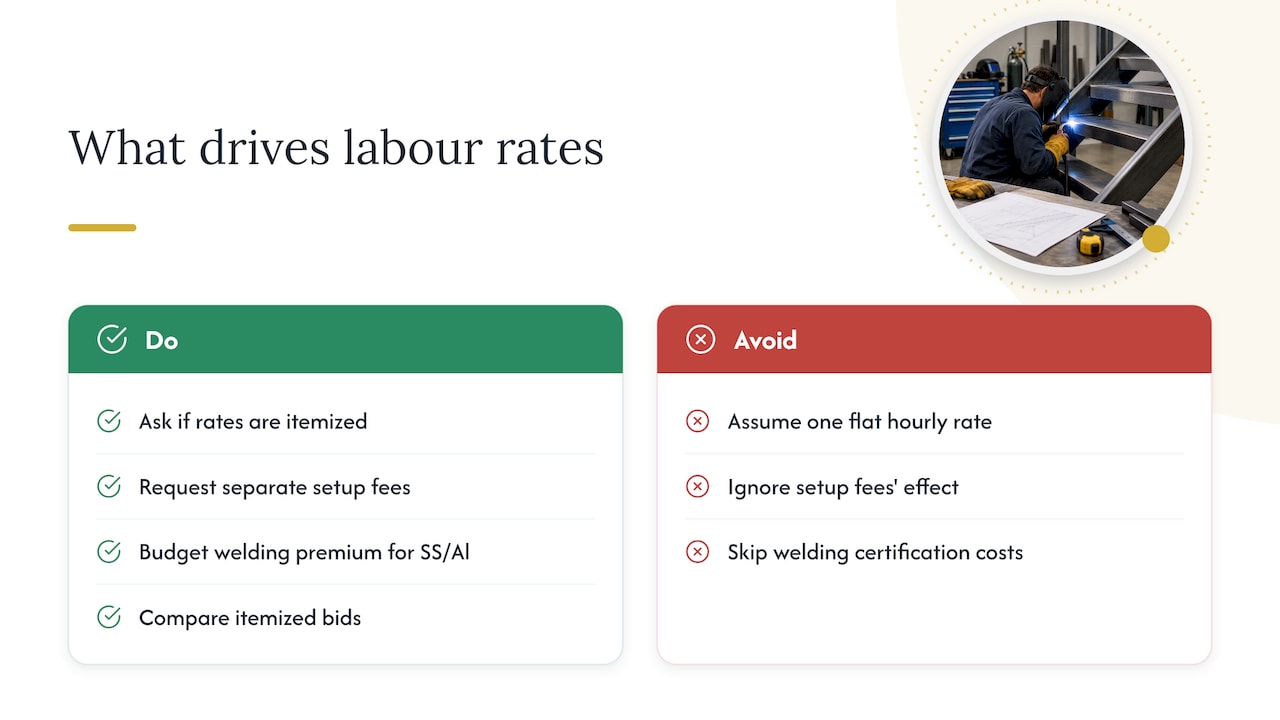
Shop labour is rarely a single flat rate. A shop typically quotes separate effective rates for CNC programming, machine operation and certified welding, since each role requires different training and carries different liability.
Setup fees are charged separately from running time because fixturing a job, loading material and dialing in a press brake or laser for a new part takes real time regardless of how many pieces follow. That is why a one-off custom bracket costs disproportionately more per piece than the same bracket ordered in a batch of twenty: the setup fee gets divided across more parts.
Welding labour specifically commands a premium over general fabrication labour, driven by certification requirements and the slower, more careful pace that structural or architectural welds demand compared to straightforward cutting or bending. Projects requiring stainless steel or aluminum welding, which need different technique and equipment than mild steel, often carry a further labour premium.
When you see a single hourly rate on a quote, ask whether it blends programming, operation and welding into one average, or itemizes each separately. The itemized version is more useful for comparing bids.
Installation costs by zone across Greater Montreal
Installation pricing includes labour, travel and sometimes equipment rental, and travel time varies by zone even within a single metropolitan service area.
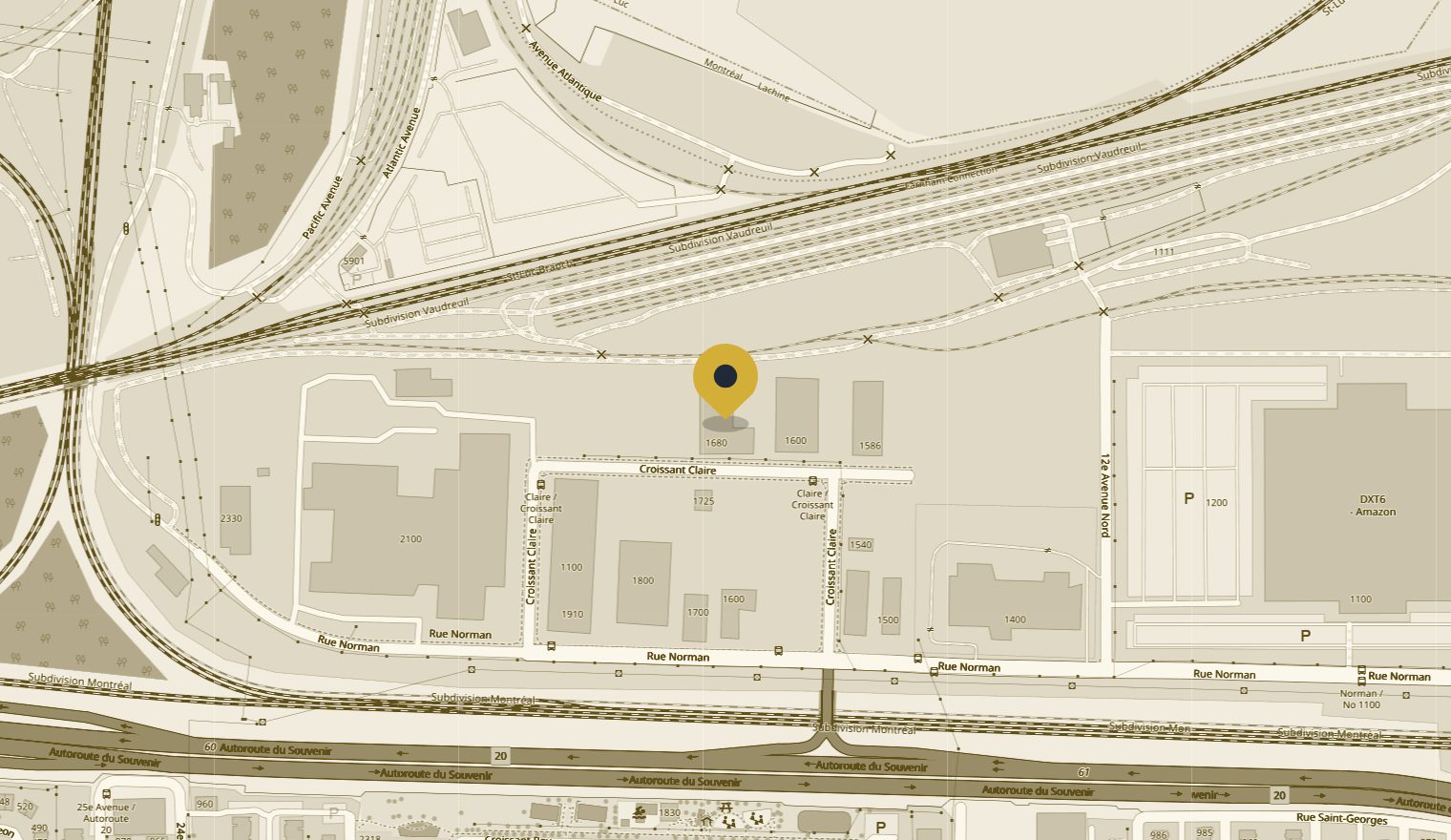
Jobs on the island of Montreal benefit from shorter travel distances from a Lachine-based shop and generally face fewer travel-related add-ons, though dense urban sites can add labour time for loading and parking logistics. Laval and the South Shore involve a longer drive but remain within a standard day-trip radius for most installation crews, so travel typically shows up as a modest line item rather than a major cost driver. West Island locations sit closer to a Lachine-based operation geographically, often keeping travel costs on the lower end of the range.
Heavier installations, such as a full staircase or a long run of architectural railing, may require a lift or additional crew regardless of zone, and that equipment cost is separate from travel. Confirming your specific address zone and site conditions when requesting a quote avoids a surprise travel or access charge on the final invoice.
Maintenance, warranty and long-term value
The upfront fabrication price is only part of the total cost of ownership for an outdoor metal structure. Finish choice affects long-term maintenance: powder coating and galvanizing both resist corrosion better than raw or simply painted steel, which matters directly in a Quebec climate with road salt, freeze-thaw cycles and humid summers. Stainless steel and aluminum resist corrosion inherently but cost more upfront, so the decision is a trade-off between initial price and future touch-up or replacement cost.
Warranty terms vary by shop and should cover both material defects and workmanship on welds and connections. A documented warranty is worth asking for in writing before you sign, since it affects how much you might spend years down the road on repairs. Routine maintenance, such as periodic inspection of welds and touch-up coating on high-wear areas like gate hinges or stair treads, is inexpensive compared to the cost of replacing a structure that was neglected.
Factoring expected maintenance into your decision at the quoting stage, rather than after installation, is the more cost-effective way to plan a railing, stair or fence project meant to last for years.
Custom fabrication versus pre-fabricated alternatives
Pre-fabricated or modular railing and fence kits are available locally and typically cost less upfront than a fully custom design, since they are manufactured in standard sizes without the programming and setup time custom work requires.
Custom fabrication earns its higher price where standard kits fall short: irregular stair geometry, non-standard guard heights required by code, specific architectural detailing, or a material and finish combination that modular products don’t offer. Custom work also allows exact fitting to an existing structure, which avoids the gaps or awkward transitions that can show up when a modular kit is forced onto a non-standard opening.
For straightforward, standard-dimension projects, a modular option may be a reasonable starting point. For anything involving custom stair stringers, architectural railings or a nonstandard fence layout, the fitting precision and code compliance of custom fabrication tend to justify the cost difference, particularly since a poorly fitted modular guard can fail to meet code height or baluster spacing requirements.
Why hiring a local fabricator changes your outcome
A metal fabrication quote is only useful if it’s itemized and the shop behind it can document compliance. That’s the standard worth holding every bid to, whether it’s a simple bracket or a full staircase.
Cost comparisons between shops matter less than most people assume when one bid is lump-sum and vague while another breaks down material, labour and installation separately. We’d rather you ask hard questions of any fabricator, local or otherwise, than accept the lowest number on the page.
— Ash
How Manara Corp can help with your fabrication project
Some metal fabrication shops offer in-house fabrication and installation services including CNC laser cutting, bending and rolling, profile rolling and welding of steel, stainless steel, aluminum and copper across Greater Montreal, from the island to Laval, the South Shore and the West Island. Having the same team manage cutting, welding and installation provides a single point of contact and oversight on quality and code compliance from start to finish.
- Request an instant online quote for laser-cut parts with tight tolerances.
- Browse our custom metal staircases or railings pages for project examples.
- Start a conversation about custom fabrication and welding for your Greater Montreal project.
Reach out through our contact page to request a quote or book a site visit.
FAQ
How much does metal fabrication cost in Montreal?
Costs depend heavily on material, labour and machine time, with small parts carrying a shop minimum and larger projects like a custom metal staircase running $6,500 to $10,500. An itemized quote based on your drawings is the only reliable way to get an accurate number for your specific job.
What affects the price of laser cutting?
Laser cutting price depends on material thickness, part complexity and how tightly parts can be nested on a sheet, with pricing typically structured per hour, per minute or per part. Tolerances as tight as ±0.030 to 0.050 millimetres require slower, more careful cutting, which can add a modest premium over standard-tolerance work.
How much does a metal fence permit cost in Montreal?
Typical Montreal municipal fence permits run around $167 as a baseline for a standard residential installation, separate from fabrication and installation charges. Total project cost depends on fence length, material choice and any gate hardware.
Why do quotes vary so much between fabricators?
Quotes vary because shops differ in material sourcing, labour rates, equipment capability and whether a quote is itemized or lump sum. Supplying detailed drawings, tolerances and finish specifications to every shop you ask reduces that variance and makes bids genuinely comparable.
How long does a custom metal fabrication project take?
Small parts can often be completed within days, while custom staircases or architectural railings typically take several weeks once design review, material sourcing and welding are factored in. Requesting Canadian-sourced steel can add to lead time compared to readily stocked material, so confirm sourcing when you book a timeline.