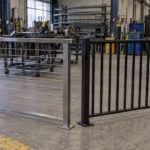
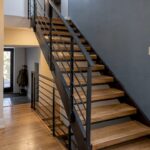
For a standard exterior residential run, galvanized steel stringers deliver the best balance of stiffness and price. Modular aluminum kits suit quick, lightweight installs where corrosion resistance matters more than raw strength. Anything with a public egress requirement, a long unsupported span, or heavy concentrated loads needs custom steel and an engineer’s stamp before fabrication starts.
TL;DR:
- Galvanized steel stringers are ideal for standard exterior residential stairs due to their cost-effectiveness and stiffness, while aluminum kits suit quick, corrosion-resistant setups.
- Custom fabrication becomes necessary for unusual rise configurations, curves, or high-end finishes, especially in tight urban sites or complex landings.
- Connection details, especially how stringers attach to decks and footings, are the most critical factor for safety and durability, requiring proper review before fabrication.
- Steel provides better stiffness and cost savings over aluminum, but aluminum is lighter and naturally resistant to corrosion, with stainless steel reserved for aggressive environments.
- The cost to install a typical 10-12 step galvanized steel stair ranges from $2,000 to $6,000, depending on finish, site access, and custom engineering needs.
Table of Contents
- Which type of metal stair stringer fits your project?
- Prefab kits or custom-fabricated stringers?
- Steel vs aluminum: which material actually holds up?
- What is the 27 rule for stair stringers?
- How do you attach metal stair stringers to a deck?
- Finishes that actually protect a stringer outdoors
- What does a metal stair stringer cost installed?
- Why Manara Corp.’s shop process catches problems before installation
- Where the standard advice on stringers falls short
- Get a custom stringer built and installed in Greater Montreal
- Sources
- FAQ
Which type of metal stair stringer fits your project?
Stringer geometry drives everything else: cost, weight, and how the stair feels underfoot. A mono stringer uses a single central steel beam with cantilevered treads, which reads as modern but demands a stiffer, thicker section since it carries the full load alone. Double or parallel stringers run one beam under each side of the tread and are the industry default for both interior and exterior stairs because they distribute load predictably. Box stringers enclose the tread ends for a cleaner architectural look, common in commercial lobbies and high-end residential builds.
Prefabricated kits come in fixed widths and step counts, usually sold in short runs of four to sixteen steps, and they work well when your rise and run match a standard configuration.
- Mono stringers: architectural interior stairs, feature staircases
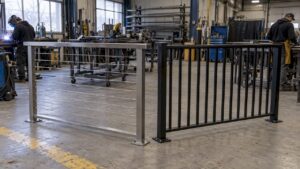
- Double/parallel stringers: decks, egress stairs, most residential exterior builds
- Box stringers: commercial lobbies, high-visibility architectural applications
- Prefab kits: mezzanine access, utility stairs, standard deck heights
If your site has an odd rise, a mid-landing, or a tight turn, a kit will not bend to fit. That is where custom fabrication earns its keep.
Prefab kits or custom-fabricated stringers?
The decision usually comes down to geometry, timeline, and how much finish quality matters to you.
- Installation speed: prefab kits bolt together in hours; custom stringers need shop drawings, fabrication time, and a coordinated install day.
- Cost: kits win on upfront price for standard runs, but custom fabrication pays off fast once you have an unusual rise, a curved run, or a specific finish.
- Connections: bolted kit assemblies are easier to inspect and often carry a manufacturer warranty; field-welded custom work depends entirely on the welder’s skill and the inspection that follows.
- Site access: tight urban lots, narrow side yards, or upper-floor installs often favour shop-built stringers cut to fit, since bulky prefab kits can be awkward to manoeuvre into place.
Steel vs aluminum: which material actually holds up?
Steel feels firmer underfoot because it is inherently stiffer than aluminum. To match that rigidity, aluminum stringers typically need thicker sections or deeper profiles, which practitioner guidance notes as a necessary design compensation to avoid a springy feel on longer runs.
- Steel: stiffer, cheaper per unit of strength, needs corrosion protection (galvanizing or powder coat)
- Aluminum: naturally corrosion-resistant, lighter for handling, but pricier per kilogram of strength
- Stainless steel: best corrosion resistance, highest material cost, usually reserved for coastal or marine-adjacent exposure
Field welding aluminum is also more demanding than welding steel, which is one reason modular aluminum systems lean on bolted, shop-built connections rather than on-site welds.
Pro Tip: If your project sits within a few kilometres of open water or faces heavy road salt exposure through winter, price out stainless steel treads even if the stringer stays galvanized. The tread surface takes the most abuse.
What is the 27 rule for stair stringers?
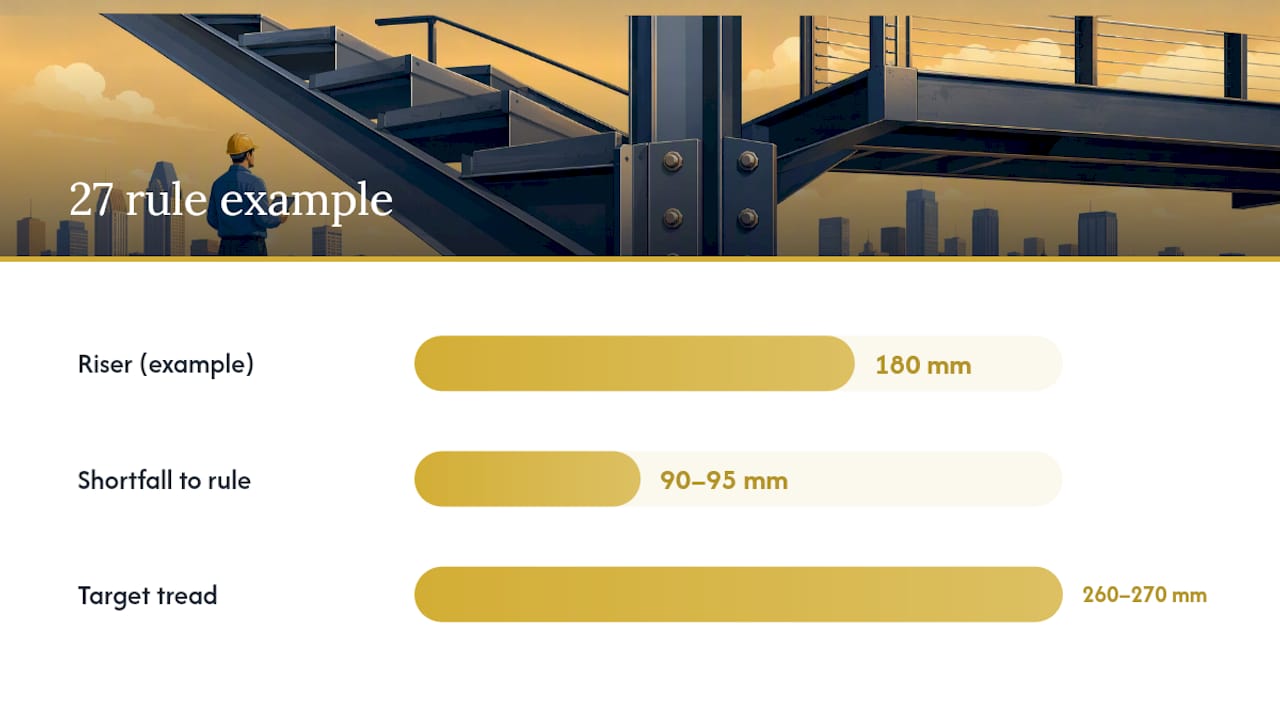
The 27 rule states that riser height plus tread depth should equal roughly a certain comfortable dimension, a proportion that keeps a stair comfortable to climb without eating excessive floor space. For a 10-step run with a 180 mm riser, that puts your tread depth around 90 to 95 mm short of matching the rule, so you’d adjust tread depth to roughly 260 to 270 mm to land in the comfortable zone.
Quebec’s building rules go further than a rule of thumb. LegisQuébec sets a maximum riser height of 200 mm and a minimum tread depth of 230 mm, along with guard heights of 1,070 mm at landings and 900 mm along the sides of steps. Riser and tread uniformity across a single flight is mandatory. On the load side, construction rules require stairs and landings to safely support specified live loads, with references to loads near 4.8 kN/m² for certain stair types, a threshold that pushes long spans or heavy-traffic stairs toward an engineered design rather than a rule-of-thumb layout.
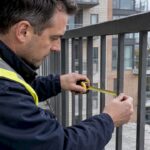
Before ordering any custom stringer, measure and record:
- Total vertical rise, floor to floor
- Total horizontal run available
- Headroom clearance at every point along the stair
- Landing dimensions and any mid-flight turns
Get the sizing details right the first time and you avoid the single most expensive mistake in stair fabrication: a stringer cut for the wrong rise. Our stringer types and sizing guide walks through the layout math in more detail.
How do you attach metal stair stringers to a deck?
Top and bottom connections carry the whole safety case for a stair, and they deserve more attention than most installers give them.
- Top attachment options: a welded plate bolted to the deck ledger, a metal strap fastened directly to the subfloor framing, or a bolted ledger bracket sized to the stringer’s load.
- Bottom bearing: base plates on a concrete pad, post supports set into footings, or expansion anchors driven into an existing slab, sized for the calculated reaction load at that point.
- Field welding vs bolting: avoid structural welding on site whenever a shop-bolted connection will do the job. Bolted connections are inspectable, repeatable, and don’t depend on field conditions the way an on-site weld does.
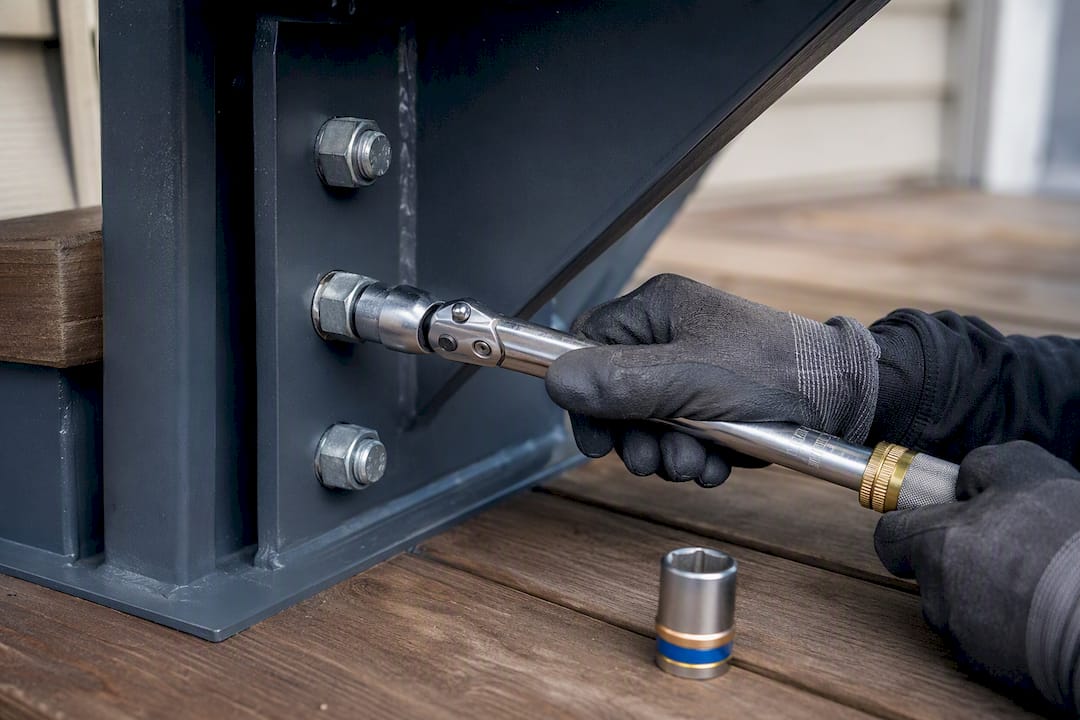
- Final checklist: confirm alignment against the layout drawing, check level side to side, torque every fastener to spec, and verify the guard attachment points are solid before anyone uses the stair.
Connection failure, not the stringer material itself, is the recurring theme in stair-collapse reports. One Quebec workplace fatality tied to a stairwell collapse pushed safety authorities to call for engineering review of custom metal stair connections, a recommendation worth following on anything beyond a simple deck stair.
Pro Tip: Bring a torque wrench to every stringer install, not just a socket set. A hand-tightened bolt on a guard post feels solid until someone leans on it during a party.
Finishes that actually protect a stringer outdoors
Hot-dip galvanizing suits any exterior stringer that will see Quebec winters. It coats every surface, inside and out, and shrugs off road salt far better than a painted finish. Primer plus powder coat works for interior stairs or covered exterior applications where moisture exposure is lower.
- Hot-dip galvanizing: best all-around protection for uncovered exterior stairs
- Powder coat over primer: good for interior or sheltered installs, wider colour range
- Stainless steel: worth the premium for coastal or heavy-salt-exposure sites
- Touch-up: any field-cut edge needs a zinc-rich touch-up compound to match the original coating
For treads specifically, grating or serrated bar treads outperform solid plate on drainage and slip resistance, a real factor once snow and ice enter the picture. Inspect exterior finishes annually and touch up any exposed steel before surface rust spreads.
What does a metal stair stringer cost installed?
A standard residential run of 10 to 12 steps in galvanized steel typically installs for $2,000 to $6,000, with the spread driven by finish choice, site access, and how much custom fabrication the geometry requires.
- Material: aluminum and stainless steel command a higher per-unit cost than galvanized steel
- Finish: powder coat adds cost over standard galvanizing; custom colour matching adds more
- Labour and access: tight urban lots, upper-floor installs, or crane/rigging needs push the price up
- Permits and engineering: any job requiring a stamped drawing adds a fixed engineering fee on top of fabrication
To get a quote that actually matches what you’ll pay, send the fabricator a rough drawing with rise, run, and mounting details, plus your finish preference, before asking for a number.
Why Manara Corp.’s shop process catches problems before installation
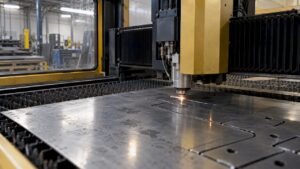
Custom stringers are fabricated in-house using CNC laser cutting, sheet bending, and welding on steel, stainless steel, and aluminum, then installed locally in the Greater Montreal area.
- Shop workflow: on-site measurement, a shop drawing for your approval, fabrication with CNC-cut bolt patterns, then coordinated installation
- Anchorage templates: bolt patterns and base plate positions are laid out in the shop, not improvised on site
- Engineering review: recommended for long spans, public egress stairs, or any run carrying heavy concentrated loads, consistent with the structural load provisions in Quebec’s construction rules
- Site visit prep: have your rise, run, and landing dimensions ready, along with photos of the existing structure, so the estimate reflects real conditions
Where the standard advice on stringers falls short
Most buying guides treat material choice as the big decision: steel or aluminum, galvanized or powder-coated. That’s not where projects actually go wrong. The recurring failure point, confirmed by the connection failures behind documented stair collapses, is the connection detail: how the stringer meets the deck, and how the base bears on its footing.
A cheap stringer with a properly engineered, bolted, inspectable connection will outlast an expensive stringer with a sloppy field weld. That’s the part homeowners skip past when they’re comparing prices on a spec sheet, and it’s the part contractors sometimes rush when a schedule gets tight.
If there’s one thing worth prioritizing above material and finish, it’s this: get the connection detail reviewed before fabrication starts, not after installation. For public-facing stairs or anything carrying real foot traffic, that review should come from a structural engineer, not a fabricator’s best guess. Sound connection design principles apply whether the joint is bolted or welded, and skipping that step to save a few days almost never pays off.
— Ash
Get a custom stringer built and installed in Greater Montreal
Manara Corp. fabricates stringers in-shop rather than reselling a catalogue kit, which means your rise, run, and landing quirks get solved on paper before anything hits the CNC laser. That matters most on the jobs prefab kits can’t touch: tight urban lots, mid-flight landings, or a finish that needs to match existing railings.
The shop handles laser cutting, bending, and welding across steel, stainless steel, and aluminum, then installs the finished stringer on site across the island, Laval, the South Shore, and the West Island. For custom stair work specifically, the team builds full custom metal staircases from measurement through installation, and onsite welding services cover any field adjustment needed once the stringer is set.
To get an accurate estimate, send your rise and run measurements, a few photos of the install location, your finish preference, and a rough timeline. Request a site visit or shop estimate through the Manara Corp. contact page to get the process started.
Sources
- Worker dies after stairwell collapse — The Safety Magazine
- LegisQuébec — Stairs and ramps (selected clauses)
- Outdoor metal stairs with landings: what to know before you build — Signature Metal Works
- Mono stringer stairs cost: price range, materials, and installation — CurrentCost
FAQ
Are metal stair stringers good?
Yes. Steel stringers offer more stiffness per dollar than wood over the long term and resist rot entirely, while aluminum adds corrosion resistance for coastal or high-moisture sites. The trade-off is upfront cost and the need for proper connection detailing.
What is the 27 rule for stringers?
The 27 rule holds that riser height plus tread depth should total roughly 27 centimetres, keeping the stair comfortable to climb. Quebec’s building rules set firmer limits on top of that: a 200 mm maximum riser and a 230 mm minimum tread depth.
How do you attach metal stair stringers to a deck?
Top connections typically use a welded or bolted plate secured to the deck ledger, while the base rests on a concrete pad, post support, or anchored footing sized for the load. Bolted connections are generally preferred over field welding because they’re easier to inspect.
What is the best material for stair stringers?
Galvanized steel suits most residential exterior stairs for its stiffness and cost. Aluminum works well for lightweight, quick-install applications, and stainless steel earns its premium in coastal or heavy-salt environments.