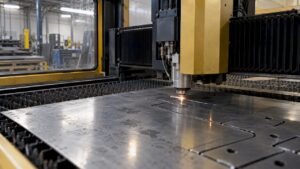
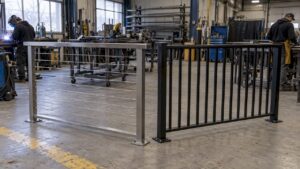
A typical exterior metal staircase in Greater Montreal runs from several thousand to over ten thousand dollars for fabrication and installation combined, with most standard residential jobs landing in the mid-range. Material choice and site access swing that number more than anything else. Your first move: book an on-site quote and confirm your borough’s permit requirements before you commit to a design.
TL;DR:
- Exterior metal staircase costs in Montreal mainly depend on material choice, site access, and permit fees, commonly ranging from several thousand to over ten thousand dollars.
- Permit fees are calculated based on project cost using a specific formula, typically around 1 to 3% of the total, and require submitting detailed drawings and documentation.
- Aluminum offers the longest lifespan with minimal maintenance, while galvanized steel requires periodic coating touch-ups in high-salt zones, influencing long-term costs.
- Site conditions such as frost-line depth, excavation difficulty, and access restrictions can significantly increase the final quote beyond the base estimate.
- Expect total project costs, including taxes and extras, to be around 6,500 to 10,500 dollars for a mid-range exterior staircase in Montreal.
Table of Contents
- What does a metal staircase cost in Montreal, broken down by line item?
- When do you need a permit in Montréal, and how is the fee calculated?
- Which material lasts longest in Montreal’s climate: steel, aluminum or composite?
- What site conditions change your final quote the most?
- How much should you budget for maintenance and winter safety?
- How do you get comparable quotes and what should you ask?
- How does Manaracorp handle a Montreal staircase project?
- Are there financing options for Montreal homeowners commissioning metal stairs?
- What are typical lead times for Montreal stair contractors?
- Where do you find fabricators and installers in Montreal?
- What building code requirements beyond permits affect your design?
- What’s the full cost breakdown including taxes and extras?
- What’s the realistic timeline from quote to finished stairs?
- Should you repair or replace your metal staircase?
- Ready for a site quote? Here’s what Manaracorp offers
- Where to check permit fees and code requirements yourself
- Sources
- FAQ
What does a metal staircase cost in Montreal, broken down by line item?
A quote that just says “$6,800, installed” tells you almost nothing about where the money goes, and it makes comparing two contractors nearly impossible. Break the number down and you can spot which bidder is cutting corners and which one padded the estimate.
For a standard exterior run (a straight flight, 6 to 10 risers, one landing, basic railing), the rough split usually looks like this:
- Raw material: 20 to 30% of the total, depending on whether you’re specifying galvanized steel, painted steel, or aluminum
- Fabrication (cutting, bending, welding): 25 to 35%, the largest single line item on most jobs
- Installation labour: 20 to 25%, higher if the site needs excavation or crane access
- Engineering or stamped plans: 5 to 10%, required when the design changes structural load paths or when your borough asks for it
- Permit fees: usually 1 to 3% of the project cost, but never skip this line
- Contingency: 10% is a sane buffer for anything hidden under an old staircase you’re replacing
Here’s where permit math actually matters for your budget. The Ville de Montréal calculates residential permit fees as your project cost divided by 1,000, multiplied by $9.80, with a set minimum fee for residential work. On a $7,000 staircase, that’s roughly $69 in permit fees, plus whatever minimum applies if your project falls below the threshold where the formula kicks in meaningfully. It’s a small percentage, but contractors who “forget” to mention it are the same ones who tend to forget other things.
When do you need a permit in Montréal, and how is the fee calculated?
Any new construction, structural modification, or full replacement of an outdoor staircase requires a permit from your borough. Cosmetic touch-ups, painting, or swapping a handrail baluster generally don’t trigger the same requirement, but a full tread or stringer replacement almost always does.
The fee structure is consistent across most boroughs, though processing times and specific document requests vary slightly:
- Calculate the base fee: divide your total project cost by 1,000, then multiply by $9.80 — this is the official Ville de Montréal formula for outdoor staircase permits
- Check the residential minimum: if your calculated fee lands below the borough’s minimum charge, you pay the minimum instead
- Gather your documents: expect to submit site plans, technical drawings showing dimensions and materials, and sometimes a structural note from an engineer
- Confirm heritage status: properties in a protected or patrimonial zone may fall under SPAIP review, which adds both documentation and time to the process
- Submit and wait: review timelines depend on borough workload and completeness of your file
Building the permit fee into your budget early avoids an unpleasant surprise at contract signing, and it’s one of the few costs in this whole process you can calculate to the dollar before a single quote comes in.
Which material lasts longest in Montreal’s climate: steel, aluminum or composite?
Galvanized steel typically costs less upfront but demands periodic maintenance, while aluminum costs more to buy but needs far less attention over a longer service life in Quebec’s freeze-thaw cycles, according to sector cost comparisons for the Quebec climate.
- Galvanized steel: typically has lower upfront cost and needs coating touch-ups periodically where salt exposure is high, with a service life of over a decade with reasonable upkeep
- Painted steel: similar base cost to galvanized, but the paint layer is the weak point. Chips expose bare metal to rust faster than a zinc coating would
- Aluminum: generally higher purchase price, essentially immune to the corrosion that affects steel, and a long lifespan with minimal intervention
- Composite decking on metal stringers: a hybrid option that trades some upfront savings for better underfoot comfort in winter, though the metal frame still needs the same corrosion planning
The real decision often isn’t steel versus aluminum on sticker price. It’s whether you’d rather pay more now or budget for maintenance visits later, a trade-off shaped by expected lifespan and the owner’s appetite for periodic upkeep versus a lower-maintenance material.
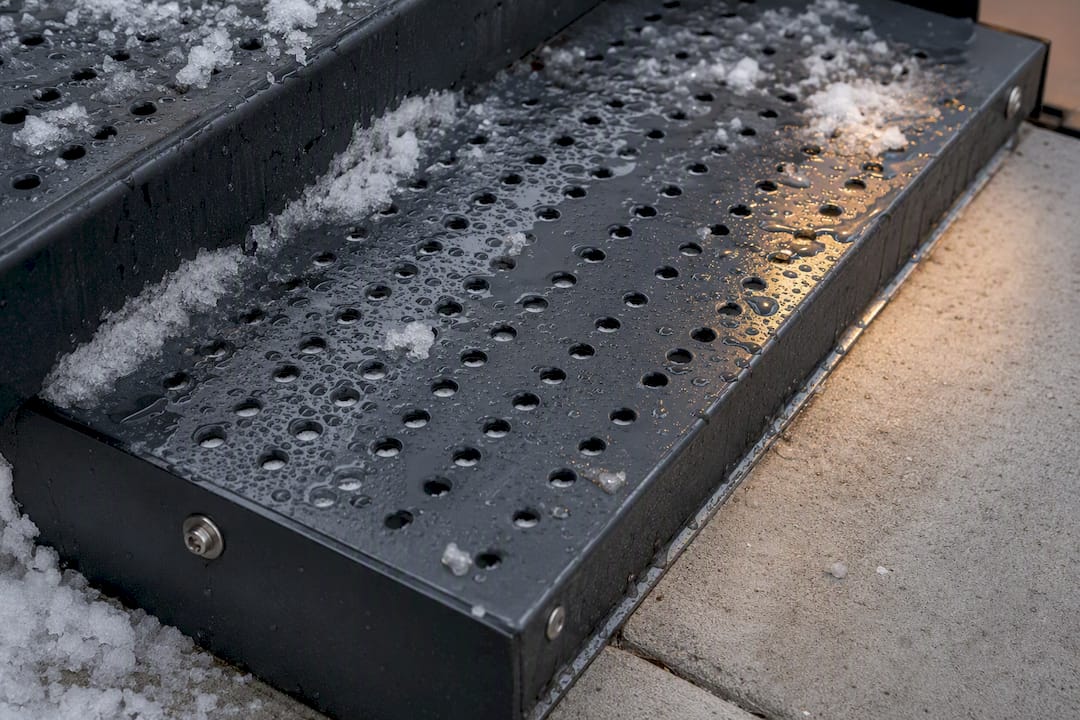
Finish matters as much as base material. Perforated or striated treads with an anti-slip coating add a modest cost but cut winter fall risk substantially, and that upfront choice usually costs less than retrofitting a slip treatment after the fact.
What site conditions change your final quote the most?
Two houses on the same street can get wildly different quotes for what looks like an identical staircase, and the reason almost always comes down to what’s underground and what’s around the site.
Quebec’s frost line requires footings dug to a depth of roughly 1.2 to 1.8 metres depending on local soil conditions, per provincial exterior stair norms. Skip this and you’ll get frost heave within a couple of winters, which cracks welds and tilts the whole structure. Deeper excavation on a rocky or high-water-table lot adds real labour cost that a cheaper quote may simply be ignoring.
Other factors that move the number:
- Access: a narrow side alley or a backyard with no gate wide enough for equipment often means hand-carrying materials or renting a mini crane
- Scaffolding or staged deliveries: multi-storey installs sometimes need temporary scaffolding, which adds a rental line to the quote
- Guardrail height and landing size: code minimums for guardrail height and door-swing clearance at the top landing can expand the footprint beyond what you originally sketched
Pro Tip: Ask every contractor to walk the site with you before quoting. Don’t just look at photos. A five-minute walk-through catches footing and access issues that a photo-based estimate will miss, and it’s the single fastest way to explain why two quotes for “the same staircase” differ by thousands of dollars.
How much should you budget for maintenance and winter safety?
Ongoing costs matter as much as the installation price, especially once you factor in Montreal winters. Budget for an annual visual inspection (often free or low-cost if bundled with another service call), plus galvanization touch-ups roughly every 5 to 7 years in high-salt zones, running a few hundred dollars per visit depending on staircase size.
- Anti-slip tread replacement or refresh: modest cost, typically needed every few years depending on foot traffic
- Fastener and weld inspection: worth doing after the first hard winter and then every couple of years
- Heated-tread system: involves higher upfront and operating costs but reduces salt use and associated corrosion
Heated treads deserve a specific mention because they solve two problems at once: they melt ice without you dumping de-icing salt on the metal, and less salt exposure directly reduces long-term corrosion. The trade-off is the electrical hookup and the operating cost through a Montreal winter, so it’s worth running the numbers against your current de-icing routine before committing.
Whatever material you choose, request a written warranty and maintenance clause in your contract. Vague verbal promises about “we’ll come back if there’s an issue” aren’t worth much three years later.
How do you get comparable quotes and what should you ask?
The single biggest reason homeowners get burned on staircase quotes is comparing bids that don’t actually cover the same scope. Fix that before you sign anything.
Before your site visit, prepare photos of the existing staircase from multiple angles, exact measurements if you have them, and any existing drawings or permit records from the original installation.
During the meeting, ask these seven questions:
- Who pulls the permit, you or the contractor?
- Are you licensed with the RBQ for this type of work?
- What warranty do you offer on welds, coatings, and installation?
- Do your welders follow CWB or an equivalent certified welding practice?
- What’s your realistic timeline from signed contract to finished install?
- What are the payment milestones, and what triggers each one?
- Is the foundation depth and tread finish spelled out in writing?
Watch for red flags: a scope that says “supply and install staircase” with no foundation detail, no specified tread finish, or no warranty language in writing. Those vague estimates are the ones that balloon once work starts, because nothing was actually agreed to.
How does Manaracorp handle a Montreal staircase project?
Manaracorp is a Lachine-based metal fabrication shop serving Greater Montreal, from a site visit and technical drawings through permit support, in-shop fabrication, and local installation. Every project ends with a final inspection before handoff.
The shop handles custom metal stairs in steel, stainless steel, and aluminum, with service available in French and English. No job gets shipped out of the region, and every piece is fabricated and installed by the same local team.
Are there financing options for Montreal homeowners commissioning metal stairs?
Most homeowners cover a staircase project through a mix of savings, a home equity line of credit, or a renovation loan through their bank or credit union, since standalone financing products specifically for metal fabrication work are rare in Quebec. If you’re already planning a broader renovation, folding the staircase into an existing home improvement loan or line of credit usually gets you a better rate than treating it as a standalone purchase.
Some fabrication shops offer payment milestones instead of formal financing: a deposit to start fabrication, a progress payment once the shop work is done, and a final payment on completion. This spreads the cost across the project timeline without requiring a loan at all, and it’s worth asking about directly since not every contractor advertises it.
Property managers handling multiple units sometimes negotiate a maintenance contract that bundles several staircases into one annual service agreement, which can reduce the per-unit inspection and touch-up cost compared to calling a contractor out for each building separately.
Whatever payment structure you’re considering, get the milestone schedule in writing before work starts. A contract that ties each payment to a specific completed stage (shop fabrication done, materials delivered on site, installation complete) protects you far better than a simple deposit-and-balance arrangement, and it gives you leverage if a stage falls behind.
What are typical lead times for Montreal stair contractors?
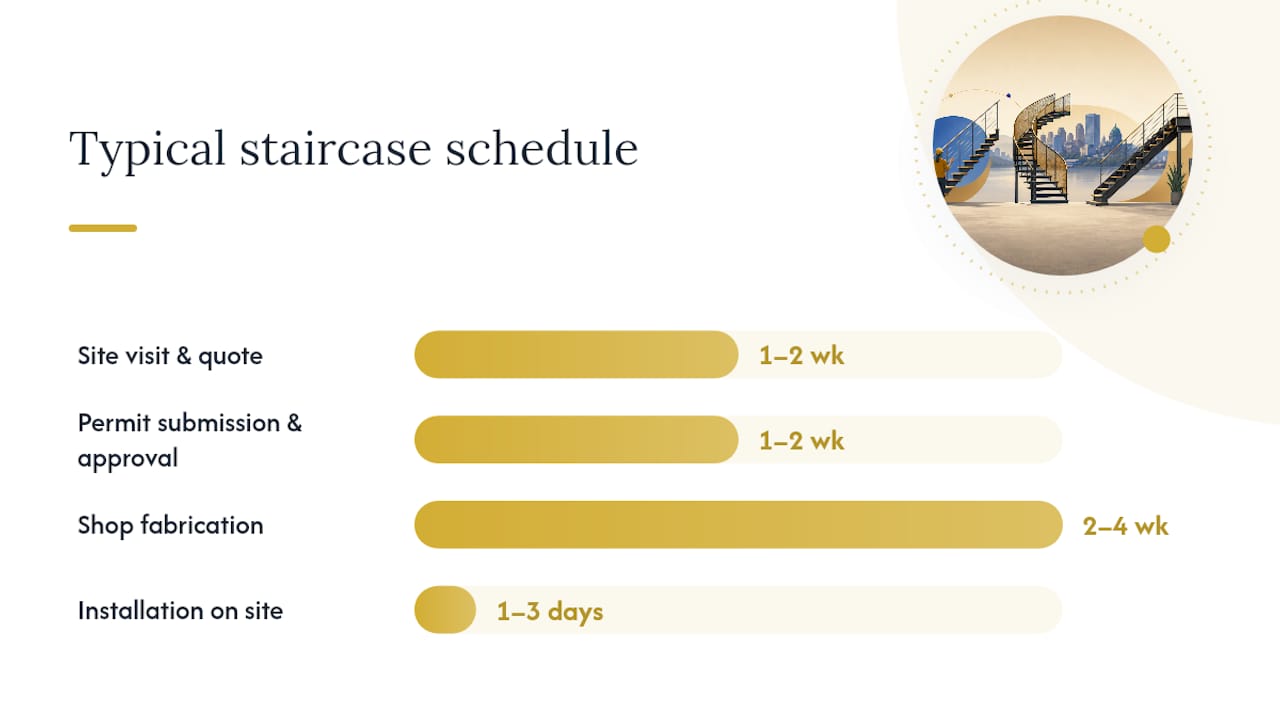
Expect roughly one to two weeks from your initial site visit to a finalized quote, assuming the design is straightforward and doesn’t require major structural engineering review. Once you sign, fabrication typically takes two to four weeks depending on shop backlog and how custom your railing or tread design is.
Installation itself is usually the fastest part: a standard exterior staircase can go from delivery to finished install in one to three days, weather permitting. Winter installs are possible but slower, since frozen ground complicates any footing or excavation work, and most Montreal fabricators push structural excavation jobs toward the spring and fall shoulder seasons when the ground is workable.
Permit approval timelines vary by borough and by season. Spring is typically the busiest permit season across Greater Montreal boroughs, since that’s when most homeowners start renovation projects, so submitting your application in late winter can shave real time off your overall schedule. If your project needs SPAIP review for a heritage property, add extra weeks to account for that additional layer of approval.
Booking your contractor’s calendar slot early matters more than most homeowners realize. Local shops with strong reputations often have fabrication queues that fill up two to three months in advance during peak season (April through October), so a contractor who can start “next week” in July is either unusually available or worth a second look at their other reviews.
Where do you find fabricators and installers in Montreal?
Local directories like HomeStars list stair builders across the Montreal area with customer reviews and typical service ranges, which is a reasonable starting point for gathering names before you start calling for quotes.
Beyond directories, the Ville de Montréal’s borough offices can confirm whether a contractor has pulled permits for similar work in your area before, which tells you something reviews can’t: whether they actually know your borough’s specific process. Word-of-mouth from a neighbour who had similar exterior work done recently is often more reliable than an online review, since you can see the finished product in person and ask about problems that came up mid-project.
When you’re screening candidates, look specifically for shops that do their own fabrication rather than subcontracting it out. A shop with an in-house welding operation, like Manaracorp’s welding services, controls quality and timeline in a way that a broker-model contractor simply can’t, because every delay or quality issue with a subcontractor becomes your problem to chase down.
Ask any shortlisted contractor for photos of at least two completed exterior staircase projects in the Montreal area, ideally ones that have been through a winter or two already. A staircase that still looks sharp after two Quebec winters tells you more about a fabricator’s material choices and weld quality than any sales pitch will.
What building code requirements beyond permits affect your design?
Permits get the paperwork approved, but the actual dimensions of your staircase are governed by the Code de construction du Québec and the National Building Code framework it’s built on, and these rules shape both cost and design regardless of whether your borough asks for extra documentation.
Guardrail height minimums apply to any staircase or landing more than a modest height above grade, and that height threshold catches more homeowners off guard than any other rule. A design sketched without checking this often needs a taller, more expensive railing added after the fact once a permit reviewer flags it.
Tread depth and riser height ratios are also fixed by code, which means you can’t simply compress a staircase to fit a tight space without changing the number of steps or the landing configuration. Door-swing clearance at the top landing is another common design trap: if a door swings outward over the top step, code requires enough landing depth to keep the swing path clear, which sometimes forces a bigger landing than the original plan called for.
Minimum stair width, handrail graspability, and the maximum gap between guardrail balusters (to prevent a small child from squeezing through) round out the list of dimensional rules that a stamped drawing needs to satisfy. None of these are negotiable line items. They’re baked into the design before a fabricator even quotes the job, which is exactly why a vague estimate that skips foundation and dimension detail is a red flag worth pushing back on.
What’s the full cost breakdown including taxes and extras?
Your final invoice includes more than the fabrication and labour numbers quoted upfront. GST and QST apply to the full project cost at standard Quebec rates, so factor roughly 14.975% combined tax onto whatever pre-tax quote you’re comparing.
Permit fees, calculated through the Ville de Montréal formula of cost divided by 1,000 times $9.80, sit outside most contractor quotes since the homeowner or contractor pays the borough directly. Confirm which party is responsible for submitting and paying this before signing anything.
Common extra charges that catch homeowners off guard:
- Demolition and disposal of the old staircase, often $300 to $800 depending on size and material
- Custom railing or baluster patterns beyond a standard vertical picket design, which adds fabrication time and material cost
- Engineering stamps for structural changes, sometimes required by the borough even on straightforward replacements
- Site remediation if excavation reveals a damaged foundation or unexpected utility line
A realistic total for a mid-range exterior staircase replacement, once you add tax, permit fees, and a demolition allowance to the base $5,000 to $8,000 fabrication and install range, often lands closer to $6,500 to $10,500 all-in. Get every one of these line items itemized in your written quote rather than folded into one lump number.
What’s the realistic timeline from quote to finished stairs?
Count on roughly six to ten weeks total from your first phone call to a finished, inspected staircase, assuming no major delays with permits or weather.
That breaks down as one to two weeks for the site visit and quote, another one to two weeks for permit submission and approval (longer if your property needs SPAIP review), two to four weeks for shop fabrication depending on backlog, and one to three days for the actual installation once materials arrive on site.
The biggest variable isn’t the fabrication or install work itself. It’s permit turnaround and seasonal scheduling. A project submitted in March, ahead of the spring rush, moves faster through borough review than the same application filed in June when every renovation crew in the city is competing for the same inspectors’ attention. If your existing staircase is currently unsafe, ask your contractor about temporary safety measures while you wait through the permit and fabrication window rather than rushing the design to save a few weeks.
Should you repair or replace your metal staircase?
Replace when you’re seeing structural corrosion at load-bearing points, footings that have already failed or shifted, or repeated safety complaints from tenants. Those signs mean the frame’s integrity is compromised, and patching over that is money spent postponing the inevitable.
Repair makes sense when the damage is cosmetic or localized: surface rust on a tread, a loose baluster, chipped paint with intact steel underneath. If the foundation and main stringers are sound, a repair budget in the low hundreds to low thousands usually solves it without touching the structure everyone actually depends on. The mistake I see most often isn’t choosing wrong between these two. It’s not inspecting closely enough to know which situation you’re actually in.
— Ash
Ready for a site quote? Here’s what Manaracorp offers
Manaracorp is the direct alternative to guessing at a staircase budget from a phone estimate. As a Lachine-based fabrication shop working across Greater Montreal, we handle the full scope in-house: custom metal stairs, integrated railings, permit-ready drawings, and local installation, all without subcontracting the welding out to someone else’s crew.
That in-house control is the real advantage over piecing together a project through a broker-style contractor: one shop owns the fabrication quality, the timeline, and the finished install, so there’s no finger-pointing between a designer, a welder, and an installer when something needs adjusting on site. If you’re weighing galvanized steel against aluminum, or trying to figure out how a frost-line footing changes your quote, book a site visit and we’ll walk the property with you before putting a number on paper. Initial quotes typically take one to two weeks to finalize once we’ve seen the site. Start with a request through our custom metal staircases page, and bring your measurements and photos so the first conversation actually moves the project forward.
Where to check permit fees and code requirements yourself
- Ville de Montréal’s outdoor staircase permit page covers fee formulas and required documents
- Provincial exterior stair dimension norms detail guardrail heights and frost-line footing depths
Sources
- Construire ou remplacer un escalier extérieur | Ville de Montréal
- Entre corrosion et glissance, l’équilibre d’un escalier extérieur métallique — destination-maison
- Norme escalier extérieur Québec — Plans Architecture
- Which exterior stair materials to prioritise for Quebec climate — Symphonie du Bois
FAQ
How much does a metal staircase cost in Montreal?
A typical exterior metal staircase in Greater Montreal runs from several thousand to over ten thousand dollars for fabrication and installation combined, with most standard residential jobs landing in the mid-range.
How much does it cost to install a metal staircase specifically, separate from fabrication?
Installation labour usually accounts for 20 to 25% of the total project cost, which translates to roughly $1,000 to $2,500 on a standard residential job, more if the site needs excavation, crane access, or staged deliveries.
Is steel cheaper than concrete for exterior stairs?
Steel staircases generally have a lower upfront material cost than poured concrete, though concrete needs less ongoing maintenance since it doesn’t corrode. Galvanized steel splits the difference: lower purchase price than aluminum, but it needs periodic coating touch-ups that concrete doesn’t require.
How much does it cost to build an iron or wrought-iron staircase?
Wrought iron and custom decorative steel staircases typically run higher than a standard galvanized or aluminum design, often 20 to 40% above a comparable basic run, because of the added fabrication time for ornamental detail and the higher-grade material involved.
Do I need a permit to replace an existing metal staircase in Montreal?
Yes. Full replacement of an outdoor staircase requires a permit from your borough, with fees calculated by dividing your project cost by 1,000 and multiplying by $9.80, subject to a residential minimum charge.