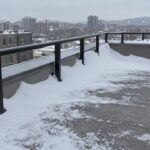
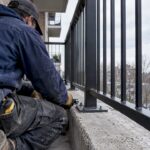
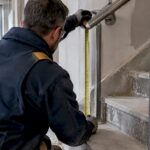
Yes, you can get an instant quote for sheet metal laser cutting. Upload a DXF, DWG, or STEP file and most shops or online quoting platforms will price it in minutes, since laser cutting handles thin to medium-gauge sheet with tight tolerances better than most alternatives. For jobs needing bending, welding, or local installation in Greater Montreal, Manaracorp is worth contacting directly.
TL;DR:
- Most laser cutting shops can provide instant quotes within minutes if the file contains clear specifications for material, thickness, and finish.
- Tolerance levels for modern fiber lasers are around ±0.030 to 0.050 mm, significantly tighter than plasma cutting, which is crucial for assembly precision.
- The cutting cost depends heavily on the part’s perimeter length, complexity, material type, and quantity, with larger orders reducing unit price.
- Assist gases like nitrogen produce cleaner, weld-ready edges, especially on stainless and aluminum, while oxygen speeds up cutting on mild steel but can cause oxidation.
- For parts requiring assembly or installation, collaborating with a local fabricator that offers bending, welding, and onsite installation can be more efficient than online quoting platforms.
Table of Contents
- What a sheet metal laser cutting service actually includes
- Materials, thickness ranges and what tolerance actually means
- Design rules and file preparation that keep quotes accurate
- What drives price and lead time on a laser cutting quote
- How to choose a laser cutting shop without getting burned
- Manaracorp’s approach to laser cutting and fabrication
- Instant quote platforms versus a local fabricator
- Ready to get a quote from Manaracorp
- Sources
- FAQ
What a sheet metal laser cutting service actually includes
A sheet metal laser cutting service typically covers more than the cut itself. Most shops quote from standard CAD file formats and bundle secondary finishing into the same job.
- File types accepted: DXF and DWG for flat vector geometry, STEP for 3D models that need flattening first.
- Quote turnaround: many quoting tools return pricing within minutes once the file, material, and thickness are confirmed.
- Secondary services: bending, welding, and deburring are commonly offered alongside cutting so parts arrive ready to install.
- Order minimums: some shops set a minimum order charge to cover setup time on small jobs.
- Delivery: shipping is standard for online-quote platforms, but local shops often offer pickup or, in Manaracorp’s case, installation across Greater Montreal.
Precision metal cutting services differ mostly in how they handle the edges: some stop at a clean cut, others deliver a part ready for welding or a painted finish.
Materials, thickness ranges and what tolerance actually means
Fiber lasers cut mild steel, stainless steel, and aluminum, with practical thickness ranging from roughly 1.5 mm up to 12 to 16 mm depending on the machine’s power and the material. Beyond that range, plasma cutting often becomes more cost-effective, though higher-power fiber lasers have narrowed that gap in recent years.
By the numbers: Modern fiber lasers hold tolerances of ±0.030 to 0.050 mm, roughly ten times tighter than the ±0.5 mm typical of plasma cutting. Kerf width sits in the 0.1 to 0.3 mm range, which is why nested parts on laser-cut sheet waste far less material than plasma-cut equivalents.
- Mild steel: wide thickness range, forgiving on tolerance, cheapest per part.
- Stainless steel: thinner practical range, tighter cosmetic requirements, often needs nitrogen assist gas.
- Aluminum: reflective and thermally conductive, so it demands more machine power for the same thickness as steel.
Assist gas choice changes the outcome on the cut edge. Nitrogen prevents oxidation on stainless and aluminum, leaving a clean, weld-ready edge, while oxygen speeds up cutting on mild steel but leaves an oxide layer that needs grinding before painting or welding. If your part is going straight into a weld fixture, ask which gas the shop defaults to. It matters more than most buyers realize.
Design rules and file preparation that keep quotes accurate
A quote is only as good as the file behind it. Missing details cause the biggest gap between an instant online estimate and what actually lands on the shop floor.
- State material, thickness, finish, and quantity directly in the file name or a note. A part quoted in 12-gauge steel but cut in 14-gauge steel will not fit.
- Account for kerf in your design. The laser removes 0.1 to 0.3 mm of material per pass, so nested holes and slots need that allowance built in, not added after the fact.
- Respect minimum hole size and radii. Common shop rules set minimum hole diameter at roughly 1.5 times material thickness on smaller gauges.
- Use tabs on nested parts so pieces don’t shift mid-cut, and check whether your quote already includes CAM nesting or if that’s a separate line item.
- Request a pilot run on complex geometry before committing to a full production quantity.
Pro Tip: On small, intricate parts, ask the shop to spread pierce points across the sheet rather than clustering them. Concentrated piercing builds up heat fast and warps thin gauge material before the cut even finishes.
What drives price and lead time on a laser cutting quote
Cost comes down to how much laser time your part consumes and how efficiently it nests against other jobs. The variables that move a quote up or down:
- Cut length and complexity: more perimeter and more pierces mean more machine time.
- Material and thickness: thicker stock cuts slower and costs more per pound.
- Quantity: pierce time and setup get amortized across more parts, so unit price drops on larger runs.
- Nesting efficiency: tight nesting on a standard sheet size reduces scrap and lowers your per-part material cost, a point manufacturers increasingly optimize for to control production spend.
- Finishing: deburring, bending, or welding after the cut adds labour time on top of the raw cutting charge.
Setup and pierce time hit hardest on small orders. A one-off part might carry a flat setup fee that a 500-piece run absorbs easily. If your project sits above the thickness where laser loses its edge, ask whether plasma cutting makes more sense for that specific run. It usually costs less on heavy plate, even if it can’t match laser tolerance.
How to choose a laser cutting shop without getting burned
A good provider answers these questions without hesitation. A vague or evasive answer on any of them is a red flag.
- What’s your bed size and laser power? This tells you the maximum sheet size and thickness they can realistically handle.
- What tolerance do you guarantee, and on what material? ±0.05 mm on mild steel and ±0.05 mm on stainless aren’t the same claim; a serious shop will differentiate.
- Which assist gases do you offer, and do you charge extra for nitrogen? This affects both edge quality and your final invoice.
- What’s included in the quote? CAM nesting, material waste, and setup fees sometimes appear as surprise add-ons after the fact.
- Do you follow CNESST guidance for metallic dust capture? In Quebec, shops that follow CNESST protocols for dust control tend to run tighter, more predictable production overall, which shows up in consistent quality on repeat orders.
If a shop won’t quote a sample cut before a full production run, ask why. A confident provider has no reason to avoid it.
Manaracorp’s approach to laser cutting and fabrication
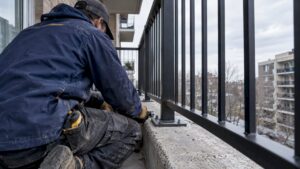
Some fabricators run CNC laser cutting, sheet bending, and welding in-house, allowing parts to be bent, welded into assemblies, and installed locally without leaving the shop’s control.
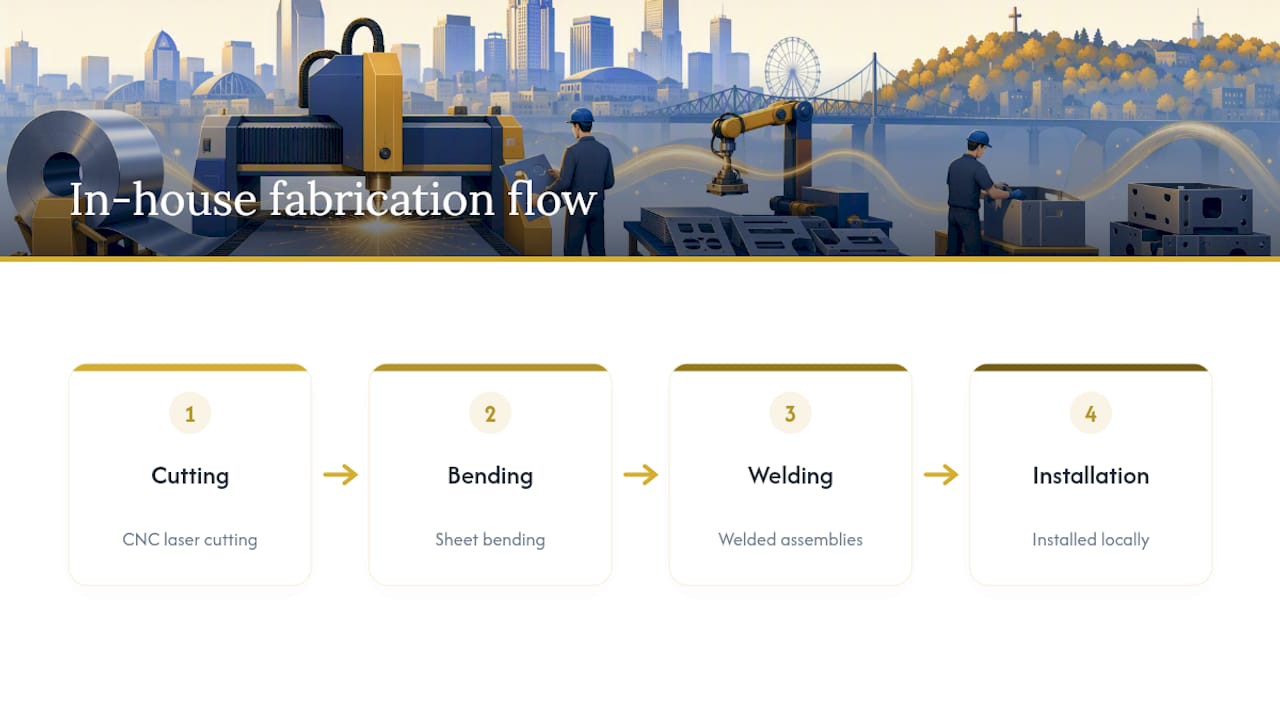
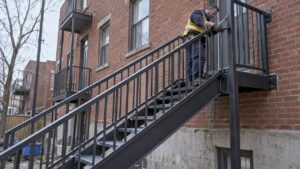
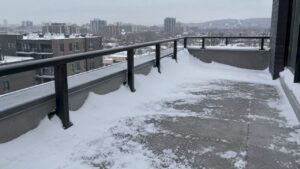
Typical work includes custom metal staircases, residential and commercial railings, fences, and welded structural assemblies for general contractors, architects, and homeowners. Jobs range from a single bracket to a full staircase installation. To request a quote, upload your files or describe the project on Manaracorp’s laser cutting page.
Instant quote platforms versus a local fabricator
Instant-quote platforms win on speed for flat, simple parts in common materials. The moment your job needs bending, welding, or site installation, a local shop earns back that time by handling the whole sequence under one roof.
The decision rule is simple: if the part ships as-is, an online quote works fine. If it needs to become part of something larger, on a site in Greater Montreal, talk to a local fabricator first.
— Ash
Ready to get a quote from Manaracorp
Local fabricators can provide quotes for cutting along with any needed bending, welding, or installation services, all fabricated in-shop and installed locally.
This matters most for railings, staircases, fences, and structural assemblies, projects where a shipped part still needs finishing and a crew on site to install it correctly. General contractors, architects, and homeowners often prefer working with a single local shop that handles cutting, forming, welding, and final installation for convenience and quality control.
Start by visiting the laser cutting services page to upload your files or describe your project, and a member of the team will follow up with a quote and realistic timeline.

Sources
For deeper technical detail, see Hypertherm on laser tolerances, Cutlistor on kerf and nesting, and Manaracorp’s own laser cutting tolerance guide.
- Laser tolerances — Hypertherm
- Plasma vs fiber laser — Eckert Cutting knowledge base
- Laser cutting with nitrogen gas — Canada Gas Solutions
- CNESST guidance on metallic dust capture and treatment — CNESST
FAQ
How much does it cost to laser cut metal?
Cost depends on material, thickness, cut length, and quantity, with thin mild steel costing the least per part and thick stainless or aluminum costing more due to slower cutting speed. Manaracorp doesn’t publish flat per-cut pricing since every job varies, so request a quote directly with your file and material specs for an accurate number.
How much does a laser cutting service typically charge for setup?
Small or one-off orders often carry a separate setup or pierce fee to cover the time spent programming and staging the job, while larger production runs spread that cost across more parts and lower the per-piece price. Ask your provider whether setup is itemized separately or already folded into the quote.
How much does a laser cutting machine for sheet metal cost?
Industrial fiber laser cutting machines range widely based on bed size, power, and automation level, and that capital cost is one reason shop rates vary so much between providers. This is a separate question from job pricing. What you pay for a cutting service reflects machine time and material, not equipment purchase cost.
How do I calculate sheet metal laser cutting cost for my project?
Add up material cost by weight or area, then factor in cut length and pierce count, since longer paths and more pierces mean more machine time. Nesting efficiency also matters. A well-nested sheet layout, which reduces scrap material, lowers your effective cost per part even before quantity discounts apply.
What tolerance should I expect from a laser-cut part?
Modern fiber lasers typically hold ±0.030 to 0.050 mm on production runs, which is significantly tighter than plasma cutting. Actual tolerance depends on material thickness, machine condition, and part geometry, so confirm the specific tolerance your shop guarantees for your material before finalizing a design.