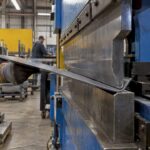
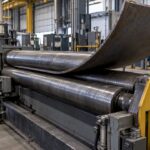
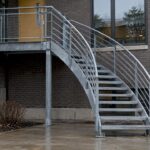
For most custom metal parts, laser cutting is the better fit: railing components, stair stringers and plates, brackets, panels and enclosures. Laser is fast on sheet and light plate, holds very tight tolerances and leaves a narrow heat-affected edge. Waterjet is a different tool, built around very thick material and materials that heat damages. This guide compares the two on thickness, precision, edge quality, speed and cost, then shows where architectural and renovation work lands. We run CNC laser cutting in-house at our Lachine shop, so we know the process from the cutting table to the installed railing.
TL;DR
- Laser cutting suits thin to medium metal: tight tolerances, small holes, high speed and a narrow heat-affected edge.
- Waterjet cuts through almost any material and very thick sections, but it removes material far more slowly.
- Railings, stairs, fences and architectural plates are mostly in the thickness range where laser works well.
- Waterjet costs more per hour to run because of abrasive, pump wear and water handling. Laser’s main consumables are assist gas and nozzles.
- Waterjet is a CNC process too, so the real difference is how each one removes metal, not how it is programmed.
Table of Contents
- How the two processes work
- Side-by-side comparison
- Thickness and materials: where each process works
- Precision, edge quality and heat
- Speed, cost and what drives the price of a part
- Is waterjet CNC, and how does it compare with laser?
- Which process fits railings, stairs and architectural parts
- Laser cutting at Manara
- Our point of view
- FAQ
- Sources
How the two processes work
Laser cutting focuses a high-power beam on the metal, melts or vaporizes it along the programmed path and blows the molten material out with an assist gas. It is a thermal process. Power has grown a great deal: one manufacturer notes that laser power for metals has gone from 300 W for 1 mm carbon steel to 20,000 W for 50 mm carbon steel, with 12,000 W accepted as the high-end norm for a 25 mm cut.
Waterjet cutting is a cold, erosive process. A pump pressurizes water and pushes it through a tiny orifice to form a high-velocity jet. For metal, abrasive garnet is added, and the abrasive particles do most of the material removal. The metal never heats up, which is the process’s defining trait.
Both are controlled by a CNC and a CAD/CAM program. The drawing you send becomes a toolpath either way. What differs is the physics at the cut, and that is what drives thickness limits, edge character, speed and cost.
Side-by-side comparison
| Criterion | Laser cutting | Waterjet cutting |
|---|---|---|
| How it cuts | Focused beam with assist gas (thermal) | High-pressure water with abrasive (erosion) |
| Typical thickness | Mostly 6 mm (1/4 in) and under, up to 30 mm (1.25 in) in some cases | Up to 305 mm (12 in) and thicker with modified support |
| Kerf at 12 mm | Under 1 mm | About 1 mm |
| Heat-affected zone | Very narrow | None |
| Small holes and fine detail | Very accurate | Accurate, with slight taper |
| Speed on thin and medium sheet | High | Slow |
| Main running costs | Assist gas, nozzle replacement | Garnet, pump wear, orifices, water treatment |
Thickness figures come from Hypertherm’s process comparison, and kerf and heat-zone figures from KEVOS’s cutting method guide.
Thickness and materials: where each process works
Thickness is the first filter, and it is simpler than most comparison pages make it.
SSAB’s guidance on cutting plate gives indicative choices by thickness:
- Thinner than 2 mm: laser cutting.
- Thinner than 3 mm: plasma or laser.
- Thinner than 10 mm: waterjet, plasma or laser.
- Thicker than 10 mm: laser, plasma, oxy-fuel or waterjet.
- Thicker than 30 mm: plasma, oxy-fuel or waterjet.
- Thicker than 50 mm: oxy-fuel or waterjet.
Laser is on the list at every step up to 30 mm. That is the range where most fabricated building components live. A Canadian equipment source puts it plainly: lasers are well suited to metals under 1 inch, while waterjets can handle more than 12 inches.
On materials, the metals a Montreal fabricator sees most are mild steel, stainless steel, aluminum and copper. Linde describes laser cutting as ideal for aluminum, copper, stainless and mild steel, with excellent cut quality at high speed. We cut all four in our shop. Waterjet’s reach beyond metal into stone, glass and composites is real, but it matters only if your project is not a metal project.
A quick thickness check for your project
Before choosing a process, write down three numbers: the material, its thickness and the tightest tolerance on the drawing. Typical guardrail balusters, handrail brackets, stair risers, tread plates, base plates, decorative panels and fence infill all sit comfortably in laser territory. Only heavy structural plate, in the range of several centimetres, moves toward a different conversation, and that is rare in residential and light commercial metalwork.
Precision, edge quality and heat
Both processes are precise. Paramount reports waterjet tolerances as close as ±0.003 in and laser as close as ±0.002 in. Another source notes that waterjet tolerance depends on nozzle health and machine upkeep, ranging from ±0.002 in to ±0.020 in, and that laser tolerances are often superior to waterjet’s.
A few practical points follow:
- Small holes and tight features. Fibre laser is very accurate with small holes and performs best on thin plate, according to KEVOS.
- Kerf. At 12 mm, laser kerf is under 1 mm and waterjet is about 1 mm. For nested parts, a narrow kerf means parts can sit close together on the sheet.
- Edge on abrupt direction changes. Waterjet edge quality can suffer where the jet pierces the material or changes direction sharply. Laser follows tight corners at speed.
- Distortion. Linde notes laser cutting gives little or no distortion and highly reproducible results, which matters when 40 identical balusters must fit one rail.
The heat-affected zone is the point waterjet advocates raise most. Laser leaves a very narrow one, and for guardrails, stairs, plates and enclosures that are going to be welded, bent, painted or galvanized anyway, that narrow edge is the normal state of the part, not a problem to solve. Where a part is later formed or rolled, laser-cut blanks go straight into the next operation.
Speed, cost and what drives the price of a part
Every cutting process has a cost per minute of cutting and a cost per setup. For most jobs, the minutes decide the invoice.
Waterjet is slow. KEVOS describes it as slow even where it leaves no heat-affected zone, and a technical comparison puts typical waterjet travel speeds around 1 to 20 inches per minute for most materials. Laser on thin and medium sheet runs many times faster. Fewer minutes on the machine means less machine cost in each part.
Waterjet also carries running costs that laser does not:
- Abrasive. Garnet can account for as much as 75 percent of a waterjet system’s hourly operating cost. Typical metal plate cutting uses 1 to 2.3 lb per minute, which is US$18 to US$36 per hour in abrasive alone (US figures, 2021).
- Machine upkeep. Pump spares, orifices, cutting head parts and water treatment add to the hourly rate. One US shop-cost breakdown estimates machine operating cost at US$15 to US$45 per hour, most commonly about US$28, before labour, overhead and depreciation (US figures, 2015).
- Waste handling. Spent garnet and water have to be dealt with.
Laser’s main consumables are assist gas and periodic nozzle replacement. And because the finished edge goes directly to welding or finishing, there is less handling between cutting and assembly.
Why “waterjet is expensive” is not the whole story
A waterjet machine costs less than a comparable laser, and some sources point to that. But machine price is not job price. Total system cost includes the power supply, cutting head, table, CNC, software and ancillary equipment such as water treatment and abrasive removal. What you pay as a customer reflects hours on the machine, material, programming and finishing. On thin and medium metal, laser’s speed is what keeps the price per part down. Our guide to what drives laser cutting cost in Montreal walks through the factors in detail: material, thickness, cut length, quantity and nesting.
Is waterjet CNC, and how does it compare with laser?
Yes. Waterjet is a CNC process. The controller tells the cutting head where to move, how fast to travel and when to pierce or change direction, working from a CAD/CAM program, as one waterjet buyer’s guide explains. Laser cutting works the same way from the file side. For you, that means the same DXF or DWG drawing can drive either process. The difference lies in the cutting mechanism, so judge them on thickness, edge, speed and cost, not on “CNC or not”.
Which process fits railings, stairs and architectural parts
Consider the components a typical Montreal renovation or new-build project needs:
- Guardrail and railing components. Posts, base plates, infill panels and brackets, mostly in steel, stainless or aluminum at modest thickness. Laser handles all of it, cleanly and quickly. See our railings page for the range.
- Stair parts. Stringers, tread supports, risers and landing plates. These are plate parts at thicknesses well inside laser’s range, then welded and finished. Our metal staircases are built that way.
- Decorative and architectural panels. Perforated screens, logo cutouts, fence infill. Fine detail and small holes are where laser’s accuracy shows.
- Industrial and prototype parts. Repeatable parts with tight tolerances, nested efficiently on the sheet.
- Restaurant and retail stainless work. Counters, shelving and fittings in thin stainless, where fast, accurate cutting and a clean edge matter.
Quebec adds a layer on top. Guards and stairs on buildings are governed by the National Building Code of Canada as adopted in Quebec’s construction code, and condo boards and property managers have to keep balcony guardrails in compliance, with CNESST rules applying to workplace safety on site. The cutting process is one input. The design, the connections and the installation are what a guard has to get right. For specification details, see our guide to architectural metal specifications for railings and stairs.
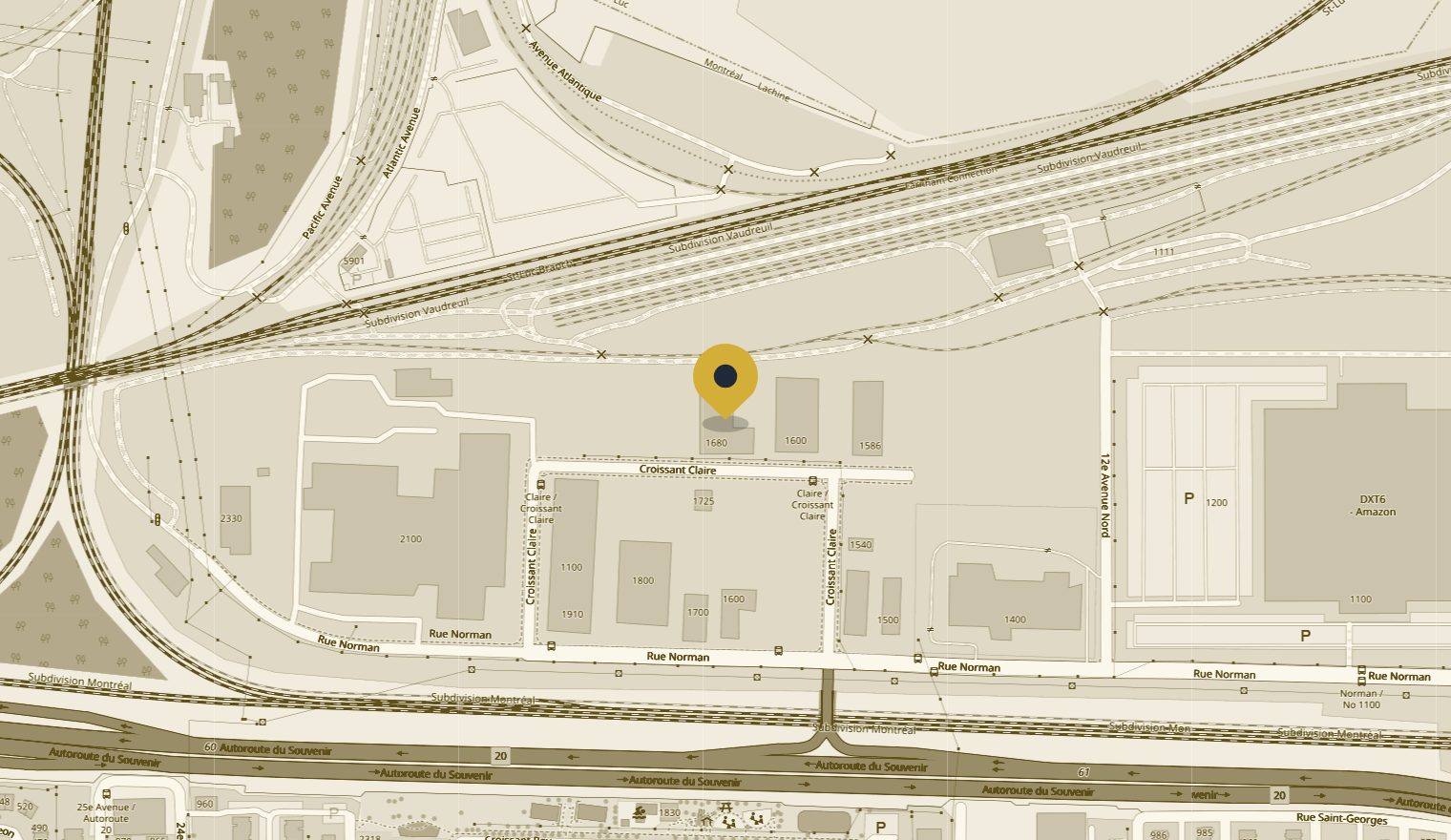
Laser cutting at Manara
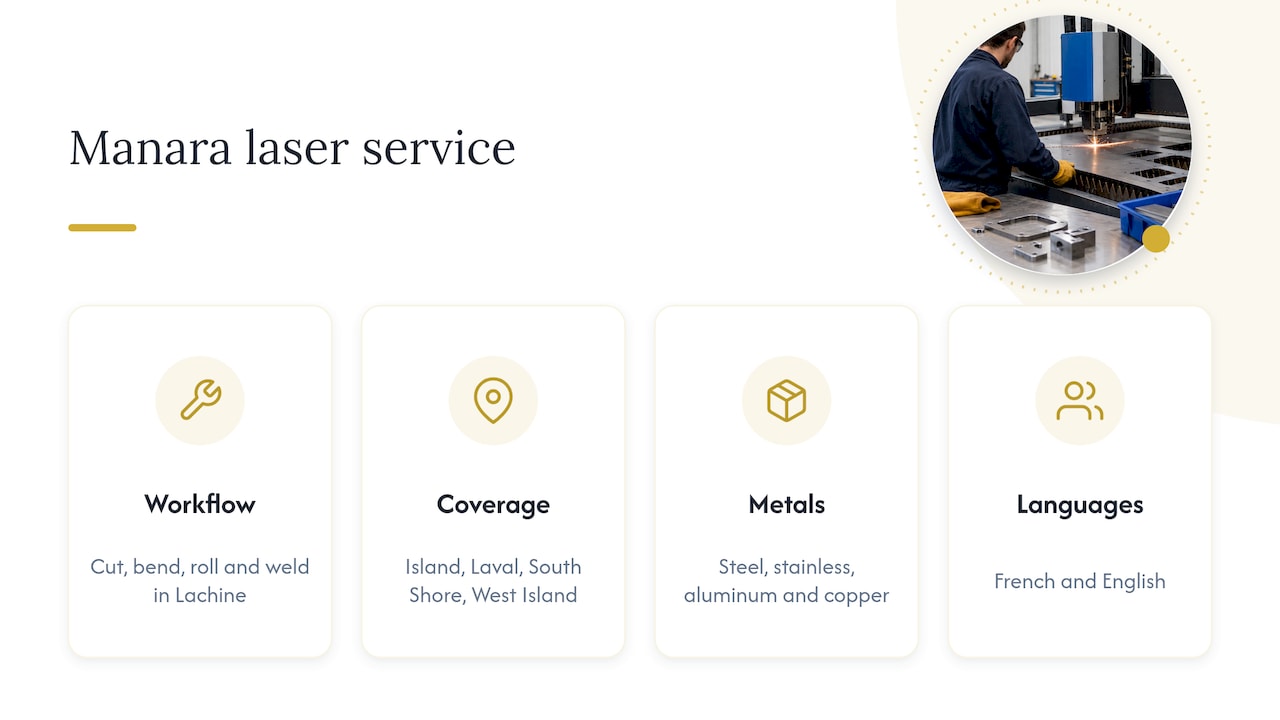
Our CNC laser cutting service is part of a single in-house workflow in Lachine. We cut, bend, roll and weld steel, stainless steel, aluminum and copper, then install throughout Greater Montreal: the island, Laval, the South Shore and the West Island. Because fabrication and welding happen under one roof, we keep direct control over quality, code compliance and timelines, on small jobs and large ones. We work with contractors, architects, designers, manufacturers, property managers and homeowners, in French and in English.
If you have a drawing or a rough sketch, send it through the Manara Corp site with the material and thickness, and we will tell you what the job involves.
Our point of view
Most of the people who ask us about waterjet versus laser are not really asking about technology. They are asking whether the parts they need will come out right, arrive on time and fit on site.
For railings, stairs, fences and architectural metalwork, our answer is laser. The thicknesses are in range, the tolerances are tight, the edge goes straight into welding and finishing, and the speed keeps the job moving. Our laser cutting is designed to feed our own bending, rolling and welding, so a part is cut, formed, welded and installed by one team.
That matters more than any single spec line. When the cutting, fabrication and installation sit in one shop in Lachine, we control the whole chain from drawing to guardrail on your balcony, and we stand behind the result.
Ash
FAQ
Is laser cutting better than waterjet for metal?
For thin to medium metal parts, laser is the stronger choice: it is fast, accurate on small holes and leaves a narrow heat-affected edge. Railing, stair and architectural components almost always fall in that range. Waterjet’s strengths come into play mainly with very thick sections or heat-sensitive materials.
How thick can a laser cut?
Laser is typically used on material 6 mm (1/4 in) and below, and up to 30 mm (1.25 in) in some cases. High-power systems have pushed this further, up to 50 mm carbon steel at 20,000 W. Most building and renovation parts need far less.
Why is waterjet cutting expensive?
Waterjet consumes abrasive garnet, which can make up as much as 75 percent of the hourly operating cost, and it needs pump upkeep and water handling. It also cuts slowly, so each part occupies the machine longer. See the ESAB cost breakdown for the US figures.
Is waterjet cutting CNC?
Yes. A CNC controller drives the cutting head from a CAD/CAM program, exactly as it does on a laser. The same drawing file can serve either process.
What should I send to get a laser cutting quote in Montreal?
Send a drawing (DXF, DWG or a clear sketch), the material, the thickness, the quantity and where the part will be installed. We work in French and English across Greater Montreal. Our page on laser cutting cost explains what moves the price.
Sources
- Choosing a cutting process, Hypertherm
- 20 questions about cutting, SSAB
- Waterjet and laser cutting machines, Paramount Machinery
- Laser, plasma or oxy-fuel comparison, Thermacut
- Choosing a cutting or gouging method, KEVOS
- Cutting methods comparison, Linde
- Sheet metal DFM design guidelines, Five Flute
- How to choose a CNC waterjet cutting machine, HMaking
- How much does waterjet cutting cost, ESAB
- Different types of jobs, different types of quotes, Flow Waterjet Blog