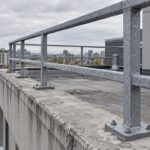
There is no single fence height for all of Montreal. The City’s general guidance sets a maximum of 0.90 m (3 ft.) at the front and 2 m (6 ft. 6 in.) in the rear and along the sides, but each borough can set its own numbers, and a pool changes the rules again. Check your borough before you buy a single post.
That answer disappoints people who want a clean number. It also explains why a 7-foot fence that is fine in one part of the island can be refused in another. Below you will find the general limits, how they shift by borough and lot, what applies around a pool, which permits to check and what a non-compliant fence can cost you.
TL;DR
- The City’s general guidance: 0.90 m at the front and 2 m at the rear and sides, but boroughs set their own limits.
- Borough rules differ on height, materials and corner-lot visibility. A 7-foot fence (about 2.1 m) is above the general 2 m limit, so assume it needs a written answer from your borough.
- Pool enclosures follow a separate provincial regulation, and a yard fence only counts if it meets its criteria.
- Non-compliant work can mean fines of $350 to $4,000 and an order to modify or remove it.
- Call the permit counter of your borough first. It takes a few minutes and costs nothing.
Table of Contents
- The general Montreal limits at a glance
- Why your borough’s number may differ
- Is a 7-foot fence allowed in Montreal?
- Fences on the property line: who decides?
- Pool fences: a separate set of rules
- Permits: what to ask and when
- What happens if the fence does not comply
- Fence, guard or railing: not the same thing
- Our perspective: build to the strictest reading
- Custom metal fences and railings from our Lachine shop
- A short checklist before you build
- FAQ
- Sources
The general Montreal limits at a glance
The City of Montreal’s page on installing a fence or planting a hedge gives the baseline most residents are looking for. According to the Ville de Montréal guidance, the maximum is:
| Part of the lot | General maximum height |
|---|---|
| Front, including side boundaries starting at the building’s façade | 0.90 m (3 ft.) |
| Rear and side boundaries | 2 m (6 ft. 6 in.) |
Two points matter in practice.
First, “front” is not just the strip along the street. The front limit also covers the side boundaries from the façade forward. A fence that is legal along the back half of your side line can become illegal once it passes the corner of the house.
Second, the City itself says to contact your borough to confirm the rules that apply to your situation. The citywide page is guidance, not a universal rule for every address.
Why your borough’s number may differ
Montreal is a city of 19 boroughs, and each one applies its own zoning bylaw. The City’s guidance confirms that height, permitted materials and corner-lot visibility requirements differ from one borough to another.
The borough-specific pages show how wide the gap can be. In the City’s French-language guidance, one set of rules shows 1 m in the front yard and 1.8 m for the rest of the lot, while another shows 1.2 m in the front yard and 2 m in the rear and side yards.
So three owners on three streets can each be told a different thing:
- One may be allowed 2 m at the back.
- The next may be capped at 1.8 m.
- A third may be allowed a taller front fence than the citywide figure suggests.
If you quote a neighbour’s experience from another borough, or a number from a fence retailer’s website, treat it as a starting point only.
Corner lots and the visibility triangle
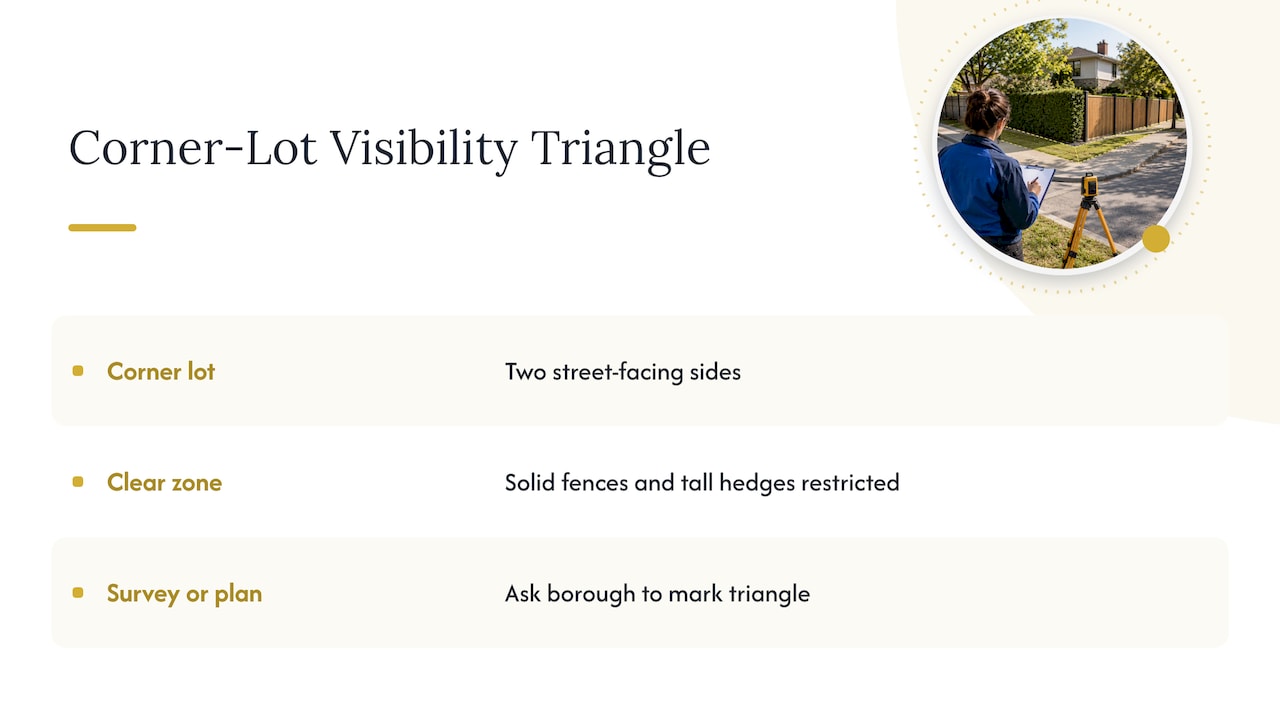
Corner lots are where homeowners get caught most often. Many boroughs require a clear zone near the intersection so drivers and pedestrians can see each other. Inside that zone, solid fences and tall hedges are restricted, and the limit can be well under the usual front-yard figure. A corner lot has two street-facing sides, so you may have a “front” limit on both. Ask the permit counter to mark the triangle on your survey or plan.
Materials and design
Height is not the only criterion. Boroughs can also regulate what the fence is made of and how it looks. Typical points to check:
- Which materials are allowed in front yards and which are not.
- Whether a solid fence is allowed along the street side, or whether it must be open or semi-open.
- Whether the finished side must face outward.
- Whether barbed wire, electric fences or sharp elements are prohibited in residential zones.
For a wider look at what provincial guidance says about gaps and boards, see the pool section below, where openness matters most.
Is a 7-foot fence allowed in Montreal?
Seven feet is about 2.13 m. That is above the City’s general 2 m rear and side limit and well above the front limit, so in most cases a plain 7-foot fence will not pass as an ordinary residential fence.
That said, “most cases” is not “all cases”. Three situations come up:
- A borough with a higher limit. Some zones, especially commercial or industrial ones, are not governed by the residential figures.
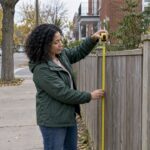
- Fence on a retaining wall or raised terrain. Height is typically measured from the ground, and a fence set on a wall can add up faster than you expect. Your borough’s wording on measurement decides this.
- A minor-exemption request. Where the bylaw does not allow what you want, the usual route is to ask the borough whether a derogation is possible. It is never automatic, and you should not build first.
The City states that whether a permit is required varies by borough, so the permit counter is where a 7-foot plan gets a real answer. Bring a sketch, your lot survey if you have one, and the proposed material.
Fences on the property line: who decides?
The City’s general page states that it has no jurisdiction over a fence placed on the dividing line between two lots and sends residents to the Government of Quebec for the rules in that situation. In plain terms, a shared boundary fence is partly a matter between neighbours under provincial law, while height and appearance are still controlled through your borough’s bylaw when you build on your own side.
Before you build on or near the line:
- Know exactly where the line is. A certificate of location or a land surveyor’s report settles it.
- Talk to your neighbour before the first post goes in. A written agreement on who pays and what gets built avoids most disputes.
- If you share the cost, agree on the height and material in writing.
If a disagreement is already underway, a notary or lawyer is the right professional. A fence installer cannot settle a boundary dispute.
Pool fences: a separate set of rules
If your fence surrounds a pool, the yard-fence figures above are not the whole story. Quebec’s Règlement sur la sécurité des piscines résidentielles controls children’s access to residential pools, and municipalities can adopt stricter standards. According to the Government of Quebec’s application guide, an enclosure is required around:
- in-ground and semi-in-ground pools;
- above-ground pools whose wall is less than 1.2 m high at any point from the ground;
- demountable pools whose wall is less than 1.4 m high.
The same guide sets out the characteristics an enclosure must meet, and a municipal permit is needed for work on a pool and its installations, including the enclosure. The rules cover several elements:
- Height. The enclosure has a minimum height, commonly cited as 1.2 m.
- Openings. Gaps must be small enough to stop a child passing through, and the design must not offer footholds.
- Gates. A gate must close and latch by itself, and the latch must be out of a small child’s reach.
- Clearances. Anything a child could climb, such as a bench, a compressor or a planter, must be kept away from the enclosure.
Read the guide itself for the exact wording of each requirement before you finalize a design.
Does my existing yard fence count?
Sometimes, but do not assume it. A fence around a yard can serve as the pool enclosure only if it meets every criterion. Common reasons an old fence fails:
- Horizontal rails that a child could climb like a ladder.
- Boards spaced too far apart, or a flexible material that does not hold its shape. This is the reason many owners were surprised in recent years, when media reported on Montreal residents whose pool fences were judged non-compliant because of the material.
- A gate with no automatic closing and latching.
- A fence that is tall enough but has a gap at the bottom.
If your fence is borderline, ask the borough inspector to confirm before the pool season, not after a notice arrives.
Permits: what to ask and when
Whether you need a permit for a fence depends on the borough. Permit counters act as the first stop for this, and the City encourages residents to check bylaw requirements in person or online before starting any renovation or construction. LaSalle’s counter, for instance, can help you work out which standards apply and whether a permit or certificate is needed.
When you call or visit, ask these questions in this order:
- What is the maximum height for the front, side and rear of my lot?
- Does my lot count as a corner lot, and is there a visibility triangle?
- Which materials are allowed along the street?
- Do I need a permit or a certificate of authorization for this fence?
- Does the fence enclose a pool, and if so, what inspection applies?
- How long does the review take?
Write down the name of the person and the date. If a dispute arises later, that note matters.
What happens if the fence does not comply
The consequences are real, and they escalate. The City explains that if work does not comply, a notice of infraction may be issued. If you do not correct it in time, a statement of offence with a fine can follow. Boroughs may also inspect work at any time.
For residential work, the City’s Verdun page lists fines of $350 to $4,000 and orders to demolish or modify the work. The same page notes that non-compliant work can reduce a property’s value and complicate a future sale.
That last point is the one owners underestimate. A buyer’s notary or inspector who finds an unpermitted or over-height fence can ask you to fix it or lower the price. Correcting a fence before listing is cheaper than doing it under deadline.
Fence, guard or railing: not the same thing
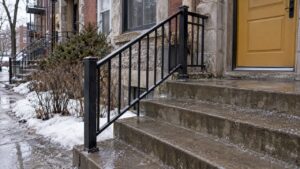
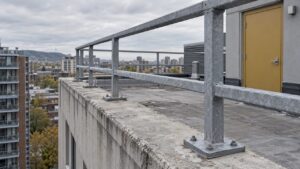
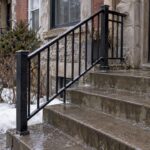
A fence marks or secures a boundary. A guard (garde-corps) protects people from a fall, on a balcony, stair, terrace or deck. Guards come under the building code (the CNB as adopted in Quebec), not under the fence height rules in this article, and the requirements for height, openings and strength are different. Condo boards and property managers in Montreal often run into this when a fence at the edge of a raised terrace turns out to be a guard in the eyes of an inspector.
If your project includes a raised deck, a balcony or exterior stairs, plan the guard separately. We cover how the choice of fastening affects strength and appearance in welded versus bolted railings, and the technical side in our architectural metal specifications for railings and stairs.
Our perspective: build to the strictest reading
We fabricate and weld metal in our Lachine shop and install it across Greater Montreal, so we see the same pattern on many projects. The fence that gets redone is rarely the one built badly. It is the one built before anyone asked the borough a question.
Here is how we approach it when a client brings us a fence, railing or enclosure:
- We start from the borough’s number, not the internet’s. The citywide 0.90 m and 2 m figures are a useful orientation, but the design drawing uses the figure your permit counter gives you.
- We design to the stricter requirement when two apply. A pool enclosure, a corner-lot triangle or a guard on a raised area each has its own criteria, and the strictest one governs the drawing.
- We prefer open, non-climbable metal designs around pools. Vertical pickets with limited spacing and no horizontal rails respect the logic of the pool regulation, and steel or aluminum holds its shape through Quebec winters.
- We fabricate and install ourselves. Because the cutting, bending and welding happen in-house, we can adjust a panel height by a few centimetres without waiting on a supplier. That matters when a borough answer comes back a few centimetres under your plan.
Our advice to any owner: get the borough’s answer in writing, measure from the ground as the bylaw describes, and only then order material.
— Ash
Custom metal fences and railings from our Lachine shop
If your project needs a steel, stainless steel or aluminum fence, a guard or a staircase in Greater Montreal, we can fabricate it in-house and install it with our own team. We work with homeowners, contractors, architects, property managers and commercial owners, in French and English. Our railings page shows what we build for residential and commercial sites, and our welding services page explains the metals we work in.

Send us your lot plan and the height your borough confirmed, and we will build to it. Start from our main page to request a quote. We install within Greater Montreal only and do not ship fabricated parts elsewhere.
A short checklist before you build
- Confirm your borough’s front, side and rear height limits.
- Find out whether your lot is a corner lot and where the visibility triangle sits.
- Check allowed materials, especially at the street.
- Ask whether a permit or certificate is required.
- If there is a pool, check the enclosure criteria and the gate.
- Settle the boundary line and speak to your neighbour in writing.
- Keep the borough’s answer and your permit on file.
FAQ
What is the maximum fence height between neighbours in Montreal?
The City’s general guidance gives 2 m (6 ft. 6 in.) along side and rear boundaries, with 0.90 m at the front, including the side line from the façade forward. Boroughs can set different limits, and a fence on the dividing line also involves provincial rules, so confirm with your permit counter.
Is a 7-foot fence too high in Montreal?
Usually yes for a residential lot, since 7 feet is about 2.13 m and the general rear limit is 2 m. Some zones and borough rules differ, so ask your borough before you design anything above 2 m.
Do I need a fence around my pool if my yard is already fenced?
It depends on the pool type and on the fence. In-ground pools, and above-ground pools with a low wall, need an enclosure under Quebec’s pool safety regulation. Your yard fence can serve only if it meets the enclosure criteria, including its gate and openings.
Do I need a permit to build a fence in Montreal?
The requirement varies by borough. Pool-related work needs a municipal permit under the provincial regulation, so check even if a simple fence does not. Call your permit counter before starting.
What happens if my fence breaks the rules?
You can receive a notice of infraction, then a statement of offence with a fine if you do not correct the problem. Fines for residential work can run from $350 to $4,000, and you may be ordered to modify or remove the fence.
Sources
- Install a fence or plant a hedge, Ville de Montréal
- Installer une clôture ou une haie, Ville de Montréal
- Permit counter – LaSalle, Ville de Montréal
- Besoin d’un permis à Verdun?, Ville de Montréal
- Règlement sur la sécurité des piscines résidentielles: guide d’application, Gouvernement du Québec