Grating is an open, bar-built surface well suited to drainage and industrial platforms, while checker plate is a solid patterned sheet suited to surfaces that must stop small objects from falling through. Slip resistance and housekeeping often decide the winner between them. Fabrication details like serrated bars, banding and edge finishing can shift which one actually works for your site.
TL;DR:
- Choose grating for outdoor walkways, trench covers, and platforms where water or snow must drain; choose checker plate when tools or fasteners must stay contained.
- Grating tends to shed contaminants, while checker plate holds grease, ice, and debris on its surface; both still need regular cleaning to maintain traction.
- Confirm the load rating for the span and support spacing before fabrication, and select a grade and finish suited to water, salts, or chemicals.
- Checker plate stamping is generally faster than assembling grating panels, but galvanizing, paint, or mill finish can add lead time to either option.
Table of Contents
- What is metal grating: construction, types and materials
- What is checker plate: patterning, materials and how traction works
- Drainage, weight, slip resistance, load and maintenance compared
- Where to specify grating and where to specify checker plate
- How to choose: questions to ask your fabricator
- Fabrication realities that affect lead time and price
- When to pick grating, when to pick checker plate
- Getting grating or checker plate fabricated and installed
- FAQ
- Sources
What is metal grating: construction, types and materials
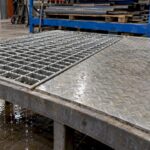
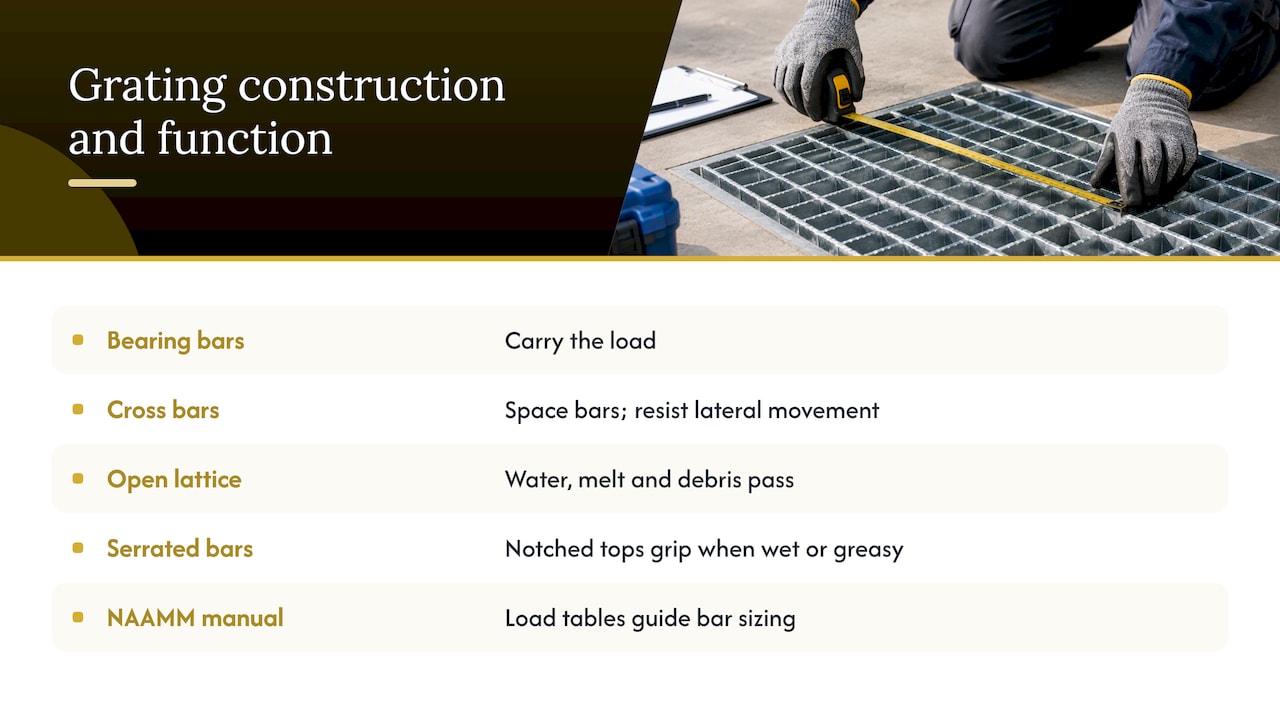
Metal grating is built from parallel bearing bars that carry the load, joined by cross bars at regular intervals and fused together by welding, pressing or riveting into a rigid panel. The bearing bars do the structural work, while the cross rods or bars space them and resist lateral movement. This open lattice lets water, snow melt and debris pass through instead of pooling.
Grating comes in carbon steel, stainless steel and aluminum, often galvanized or powder-coated for corrosion resistance in exterior or industrial settings. Where extra traction matters, fabricators specify serrated bearing bars: a bar with a notched top edge that bites into boot soles even when wet or greasy. That detail can be useful on exterior walkways, loading platforms and stair treads exposed to Quebec winters.
Panel geometry, bearing bar depth and spacing aren’t arbitrary. The NAAMM metal bar grating manual sets out engineering load tables and recommended bearing bar sizes for steel, stainless steel and aluminum grating, giving designers a standard way to size a panel for a given span and expected load.
What is checker plate: patterning, materials and how traction works
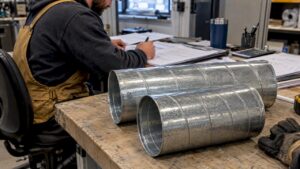
Checker plate, also called chequered plate, is a solid sheet with a raised pattern stamped or rolled into one face during manufacturing. The most common pattern is the diamond or “tread” style, though raised bar and other textured patterns exist for different wear and grip profiles. Unlike grating, the sheet itself is continuous: nothing passes through it.
Thickness and grade depend on the job. Lighter gauges suit decorative panelling or light-duty flooring, while thicker plate goes into stair treads, vehicle decks and industrial flooring expected to take repeated foot or wheel traffic. CCMC product evaluation records document test data, including nominal thickness and tensile performance, that helps specify stamped plate for structural use.
The raised pattern can provide grip, but its effectiveness depends on its condition and on regular cleaning. Checker plate may be painted or galvanized for corrosion protection. Choose a finish suited to the environment and maintenance requirements.
Drainage, weight, slip resistance, load and maintenance compared
The clearest technical split between these two materials comes down to five practical factors.
- Drainage: grating’s open structure lets water and snow melt pass through; checker plate is solid, so consider how standing water and ice will be managed on exterior surfaces.
- Structural behaviour: grating and checker plate should be selected with the expected load and support conditions in mind.
- Slip resistance: CCOHS guidance on slips, trips and falls notes that replacing a walking surface with proper grating or non-slip decking can meaningfully cut fall risk, since grating’s open structure gives inherent traction, while checker plate depends on its stamped pattern staying intact and on regular cleaning to stay effective.
- Maintenance: grease, ice and compacted debris reduce traction on both surfaces, but grating tends to shed contaminants on its own while checker plate holds them on top, where they need to be swept or washed off.
- Cost and fabrication: stamping a checker plate sheet is typically a simpler single-step process, while assembling a grating panel involves cutting, spacing and welding or pressing bars together, plus finishing choices like galvanizing that add time and cost on either material.
CCOHS notes that high-tech flooring still requires consistent good housekeeping to remain safe, meaning neither grating nor checker plate is slip-proof without regular cleaning. That single point shapes most of the maintenance planning that follows a material choice.
Where to specify grating and where to specify checker plate
Matching the material to the job usually comes down to whether drainage or containment matters more.
- Grating fits: industrial platforms, outdoor walkways, trench covers, and drainage grates where water, snow or airflow needs to pass through the surface.
- Checker plate fits: stair treads, vehicle deck flooring, and work platforms where tools, fasteners or other small items must not fall through to the level below.
The choice for pedestrian traffic depends on the footwear, surface conditions and maintenance needs; serrated grating may be considered where traction is a concern. Select a suitable surface for vehicle traffic and have an appropriate professional assess structural loads and applicable Quebec requirements before fabrication.

How to choose: questions to ask your fabricator
Before you call a shop for a quote, settle a few basics: how exposed is the surface to water or snow, what load will it carry, is it pedestrian or vehicle traffic, who maintains it, and will it see oils, salts or other chemicals that affect material choice.
When you do call, ask directly:
- What load rating can you confirm in writing for this span and support spacing?
- What material grade and finish do you recommend for this environment?
- Are serrated bearing bars available if slip resistance is a concern?
- How will edges be banded and sealed, especially on removable panels?
- What are your lead times and estimated costs for this quantity and finish?
Pro Tip: Ask your fabricator to size and fit banding bars for removable panels so drainage remains clear and the panel is properly supported at the frame.
Fabrication realities that affect lead time and price
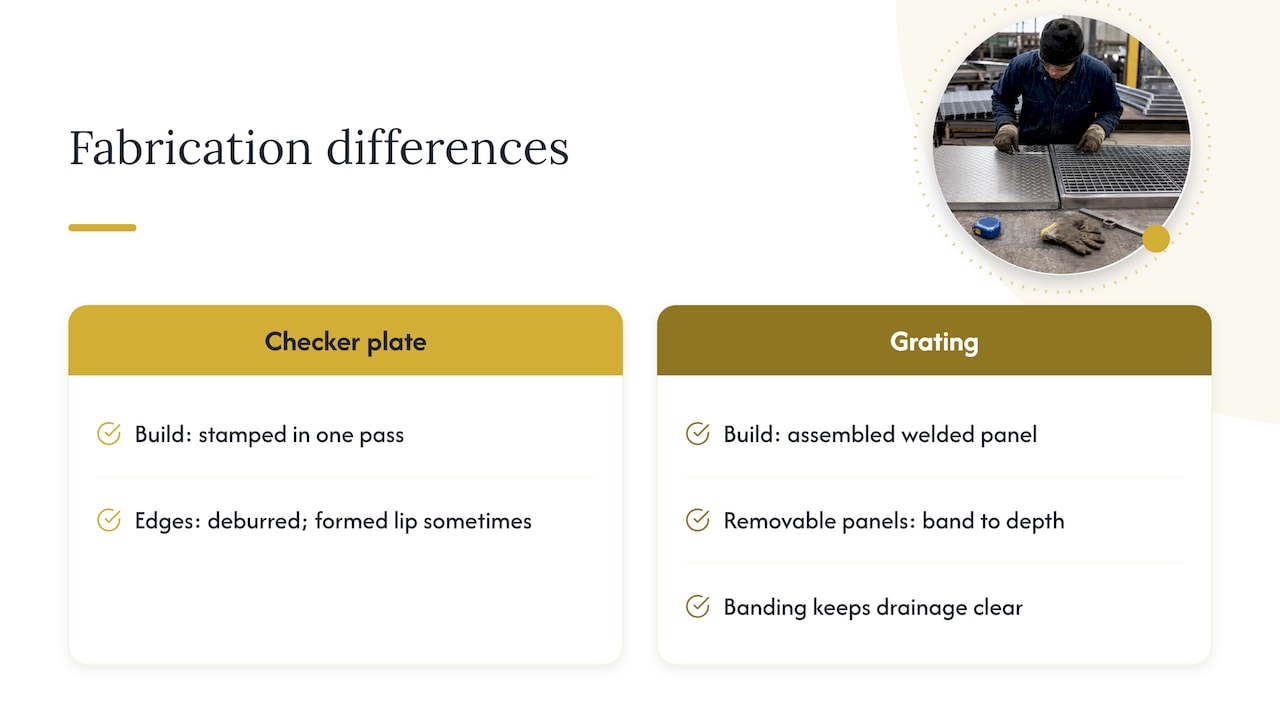
Edge banding and sealing aren’t cosmetic. Removable grating sections need banding bars sized to the panel depth so drainage stays clear without creating a weak point at the frame. Checker plate parts, by comparison, usually need clean, deburred edges and sometimes a formed lip if they’re bolted into a frame.
Stamping a checker plate sheet is generally a faster single pass than assembling a welded grating panel, which affects both price and turnaround. Finishing choices, galvanizing versus paint versus mill finish, add their own lead time on either material. In-house laser cutting, bending and welding let a shop move a job from sheet or bar stock to a finished, banded panel without passing it between multiple vendors.
When to pick grating, when to pick checker plate
If drainage is the real requirement, grating is often a good fit; a solid surface may require a plan to manage standing water. If a solid, sealed surface or small-part retention matters more, checker plate is the right call. Either way, long-term safety comes down to maintenance and housekeeping as much as the material itself, so plan for cleaning before you plan for traffic, and get a proper load calculation before fabrication begins.
— Ash
Getting grating or checker plate fabricated and installed
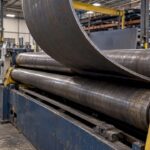
We fabricate and install custom metal products using our laser cutting, sheet bending and rolling, profile rolling and welding capabilities. Everything we build is cut, formed and welded in our Lachine shop and installed on-site across Greater Montreal, so one team carries the job from drawing to finished install.

To get an accurate quote, bring your measurements, expected load and traffic type, finish preference, and how the surface will be maintained once it’s in place. If you’re comparing stair tread options, our guide to stair tread options walks through how checker plate and grating treads perform for residential projects, and our anti-slip metal stairs page covers nosing details worth specifying alongside either material. When you’re ready to move forward, request a quote through our metal staircases or railings pages, or reach out directly for a site assessment.
FAQ
What is the difference between grating and checker plate?
Grating is an open bar structure that lets water, debris and air pass through, while checker plate is a solid sheet with a raised pattern stamped into the surface. The choice usually comes down to whether drainage or a sealed surface matters more for the application, as CCOHS stairway guidance notes when comparing the two for fall prevention.
Is checker plate stronger than a flat, unpatterned plate?
The relative strength of checker plate and flat plate depends on the product and its specifications. Consult product test data and have the plate assessed for its intended use. CCMC evaluation records document thickness and tensile test data used to confirm a given plate meets the load it’s specified for.
What is another name for checker plate?
Checker plate is commonly called chequered plate, particularly in markets using British spelling conventions, and sometimes referred to by pattern style such as diamond plate.
What is the purpose of checker plate?
Checker plate provides a solid, textured walking or working surface where items must not fall through and where a raised pattern improves grip over bare sheet metal. It’s a common choice for stair treads, platforms and vehicle decking, though the pattern depends on regular cleaning to keep its grip, per CCOHS guidance on slips and falls.
How do I decide between grating and checker plate for my project?
Start with drainage exposure and traffic type: if water, snow or debris needs to pass through the surface, grating is the better fit, while a solid surface for pedestrians or small-part retention points to checker plate. From there, confirm load requirements and maintenance plans with a fabricator before finalizing material and finish.
Sources
- CCOHS: Prevention of Slips, Trips and Falls
- MBG 531
- CCMC 08384-L CCMC Standard compliance evaluation – National Research Council Canada