Clean your railings, check every anchor point and weld, scrape away loose rust, and seal any bare metal before the next rainfall. Steel needs active rust control; aluminum mostly needs regular washing and small touch-ups. If you find a loose post, a cracked weld or visible movement at a baluster, stop and call a professional before anyone leans on it.
TL;DR:
- Regular cleaning with gentle soap and water, especially after exposure to salt or coastal conditions, prevents most corrosion issues.
- Mechanical rust removal with fine steel wool is effective for surface rust, but severely damaged welds or loose anchors require professional repairs.
- Coatings like powder coating or anodizing offer longer-lasting protection, but targeted sealing at joints and seams is crucial for durability.
- Inspect railings twice a year for movement, rust, and structural damage, especially at anchor points, welds, and areas with visible staining.
- DIY touch-up paint and minor repairs are feasible for surface issues, but structural or weld repairs demand qualified metalworking professionals.
Table of Contents
- Identify your railing: steel, aluminum, stainless or brass
- Step-by-step routine cleaning: what to use, how often
- Mechanical rust removal and basic repairs
- Choosing coatings, sealants and lubricants that protect railings
- Inspection checklist and when corrosion becomes a safety issue
- When to hire a metal fabricator or welder
- Seasonal priorities worth acting on now
- FAQ
- Sources
Identify your railing: steel, aluminum, stainless or brass
Before buying a single cleaning product, figure out what metal you’re dealing with. Guessing wrong is how good aluminum gets scrubbed with the wrong chemical, or how a rusting steel rail gets ignored until the paint blisters.
Steel railings feel heavier for their size and almost always carry a painted or powder-coated finish. Scratch through the coating and you’ll see a dull grey base that rusts quickly once exposed to moisture. Galvanized steel has a slightly dimpled, matte grey surface, often with a spangled pattern visible up close, and resists rust far longer than bare steel because of its zinc coating. Aluminum railings are noticeably lighter, usually extruded with clean, uniform profiles, and rarely show true rust. Instead, they develop a white, powdery surface oxidation in damp conditions. Stainless steel has a brushed or polished sheen and resists corrosion well, though it can show light surface staining called “tea staining” in salty air. Brass or bronze hardware, less common on exterior guardrails but found on some decorative balusters, needs gentler handling since acidic or alkaline cleaners can accelerate dezincification in brass alloys.
The finish matters as much as the base metal:
- Powder-coated steel resists chipping better than liquid paint but still fails at edges and welds first.
- Galvanized steel sacrifices its zinc layer to protect the steel underneath, so surface dulling is normal and not a failure.
- Anodized aluminum has a sealed, harder surface than raw aluminum but can still pit in chloride-heavy air near major roads treated with de-icing salt.
- Bare or primed-only steel is the most vulnerable and needs the closest watching.
Where you live changes the maintenance calendar more than the metal itself. Railings near a heavily salted walkway, a balcony facing prevailing winter winds, or a coastal property all see accelerated corrosion in the same spots: joints, fastener heads and any horizontal ledge where water and salt sit. For aluminum specifically, coastal and road-salt exposure is a known driver of pitting around window and railing assemblies, and the same mechanism applies to balcony guardrails mounted close to grade.
Step-by-step routine cleaning: what to use, how often
A consistent cleaning routine does more to prevent corrosion than any product you can buy afterward. Dirt and road salt hold moisture against the metal, and moisture is what starts every corrosion problem.
For most residential railings, a light wash a few times a year plus one annual deep clean is enough. Balconies and fences in high-exposure spots (near a salted sidewalk, a snowplow route, or open to coastal wind) should be cleaned more frequently, as salt residue builds up faster.
- Rinse the full length of the railing with a garden hose to remove loose grit before you touch it with anything abrasive.
- Wash with warm water and a mild dish soap or a non-acidic metal cleaner, using a soft cloth or sponge rather than anything stiff.
- For aluminum and brass, avoid strong acids or alkalis entirely since they can etch the surface or trigger pitting on contact.
- Use a soft nylon pad on stubborn grime; save steel wool for rust removal only, since a wire wheel or coarse pad will dull a painted or anodized finish.
- Treat bird droppings and tree sap quickly, since both are acidic and will etch a finish if left for weeks.
- Rinse thoroughly with clean water to remove all soap residue, then dry with a towel rather than letting it air dry, especially in joints and under handrail caps.
Pro Tip: Wipe inside horizontal recesses, cap rails and around fastener heads by hand. These are the spots where moisture lingers longest and where corrosion typically starts first.
Skip pressure washers on older painted finishes, since the force can drive water behind the coating and accelerate the exact problem you’re trying to prevent.
Mechanical rust removal and basic repairs
Once rust appears, mechanical removal is the right first move, not a chemical stripper. Canadian Conservation Institute guidance on iron care recommends fine steel wool or very fine abrasive pads as the preferred method for removing surface rust without damaging sound metal underneath.
- For light surface rust, use 000 or 0000 grade steel wool and work in the direction of the original brushed finish where there is one.
- For finish-sensitive areas like powder-coated panels next to the rusted spot, a Scotch-Brite pad or a super-fine abrasive disc removes corrosion with less risk of scratching the surrounding coating.
- Avoid harsh acid-based rust strippers on structural railings. They can seep into joints and lap seams, continue reacting after you’ve rinsed, and weaken the metal at exactly the points that bear weight.
- Once the rust is off, wipe the area with mineral spirits to clear the oily slurry left behind by abrasion. Skipping this step is one of the most common causes of flash rust, a thin orange bloom that reappears within hours on bare steel exposed to humidity.
Pro Tip: Prime the cleaned spot the same day you abrade it. Bare steel left overnight, even indoors, can develop visible flash rust before you get back to it.
The repaint sequence that holds up outdoors follows a fixed order: clean and dry the surface, mechanically remove rust and old flaking paint, wipe with mineral spirits, apply a rust-inhibitive metal primer, then a topcoat rated for exterior exposure, allowing full cure time between coats rather than rushing a second coat on a tacky first one. A primer and paint matched to the base metal, zinc-rich primers for bare steel, self-etching primers for aluminum, hold up longer than a generic all-purpose product. Our guide on corrosion protection systems for steel walks through primer selection in more detail if you’re planning a full repaint rather than a touch-up.
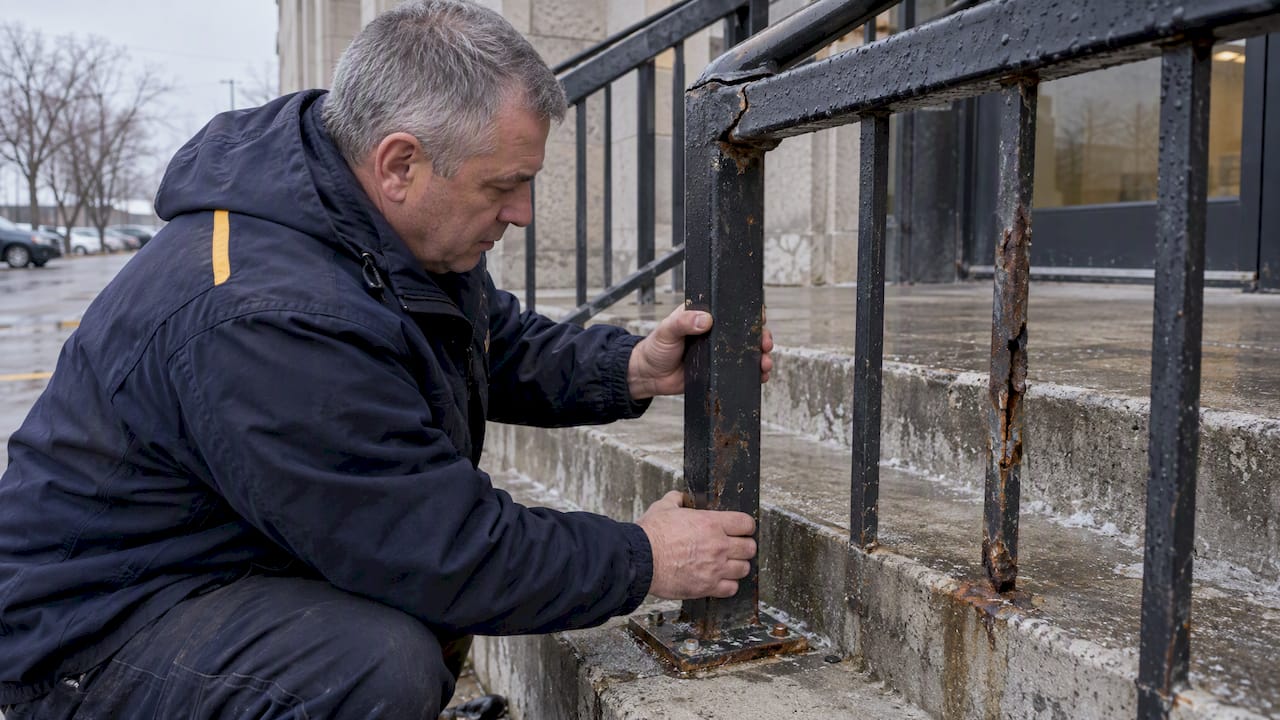
Some problems go past what sanding and paint can fix. A cracked weld, a post that rocks at its base plate, or a baluster that has lost enough material that it flexes under hand pressure all call for a structural repair rather than cosmetic patching. If you find one of these, tape it off or block access to that section as a temporary measure and arrange a proper weld repair or anchor replacement rather than painting over a weakened joint.
Choosing coatings, sealants and lubricants that protect railings
The finish system you choose determines how often you’ll be doing touch-up work later. Powder coat resists chipping and UV fading better than liquid paint and typically needs only washing and spot repair at damaged edges. Anodized aluminum has a harder, sealed surface than raw aluminum but will still show pitting over time in chloride-heavy air, particularly near coastal or heavily salted areas. Conventional painted steel offers the most flexibility for field repair but demands the closest watching at edges, welds and fastener heads where the coating is thinnest.
Targeted protection matters more than treating the whole surface the same way. Research on weathering steel exposed to de-icing salt found that chloride exposure causes localized pitting and premature coating failure concentrated at joints and recesses rather than evenly across a surface, and that sealing and protecting those specific micro-zones outperforms a uniform coat of paint applied without attention to detail.
- Seal lap joints and seams with a flexible exterior sealant rated for metal, since these spots trap water long after the rest of the railing has dried.
- Re-lap or feather new coating at chipped edges rather than leaving a hard paint line that invites peeling.
- Grease hinges, gate latches and any moving hardware once or twice a year to prevent seizing and wear-driven corrosion at contact points.
- Consider a light coat of paste wax or a commercial rust-preventive spray on bare or repaired steel spots as a temporary barrier before a full repaint is scheduled.
Coatings fail most often at the same few locations: top rail caps, weld seams, and anywhere two metal pieces overlap. Catching a small chip and resealing it within weeks is far less work than re-coating an entire run of railing after neglect lets corrosion spread underneath the paint film.
Inspection checklist and when corrosion becomes a safety issue
A short inspection twice a year catches most problems while they’re still cheap to fix. Walk the full length of every railing and guardrail, and check:
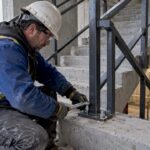
- Anchor points and base plates for rust staining on the concrete beneath them, which often signals corrosion happening out of sight at the fastener.
- Welds and joints for cracking, gaps or rust blooming specifically at the seam rather than the surrounding metal.
- Movement, by firmly pushing and pulling each section to feel for flex, rocking or give at the posts.
- Pitting depth, since light surface rust is cosmetic but pitting that has eaten noticeably into the metal’s thickness is a structural concern.
- Staining on adjacent masonry or concrete, which often indicates corrosion happening at the anchor well before it’s visible on the railing itself.
A loose anchor, a cracked weld, visible section loss or any movement under hand pressure means the railing needs a professional assessment before anyone relies on it for safety. In Quebec, owners of buildings five storeys or higher must carry out periodic verifications of facades and attached guardrails, with reports signed by an architect or engineer.
If you’re scraping old paint that might predate the 1990s, treat it as a possible lead hazard. CCOHS guidance on lead in construction calls for engineering controls, an N100 or P100 respirator, and proper containment and disposal rather than dry-sanding in open air.
When to hire a metal fabricator or welder
Call in a professional once the job involves welding, anchor replacement, suspected lead paint, or any spot you can’t safely reach from a ladder. DIY cleaning and touch-up paint are reasonable for surface work, but structural repair on a guardrail is not a place to improvise, given what’s at stake if it fails.
- Ask about experience specifically with railing and guardrail repair, not just general metalwork.
- Request photos of completed railing projects similar in scale and material to yours.
- Confirm which coating systems they use and whether the finish is backed by any warranty.
- Ask how they handle site safety and containment if old paint needs to be removed.
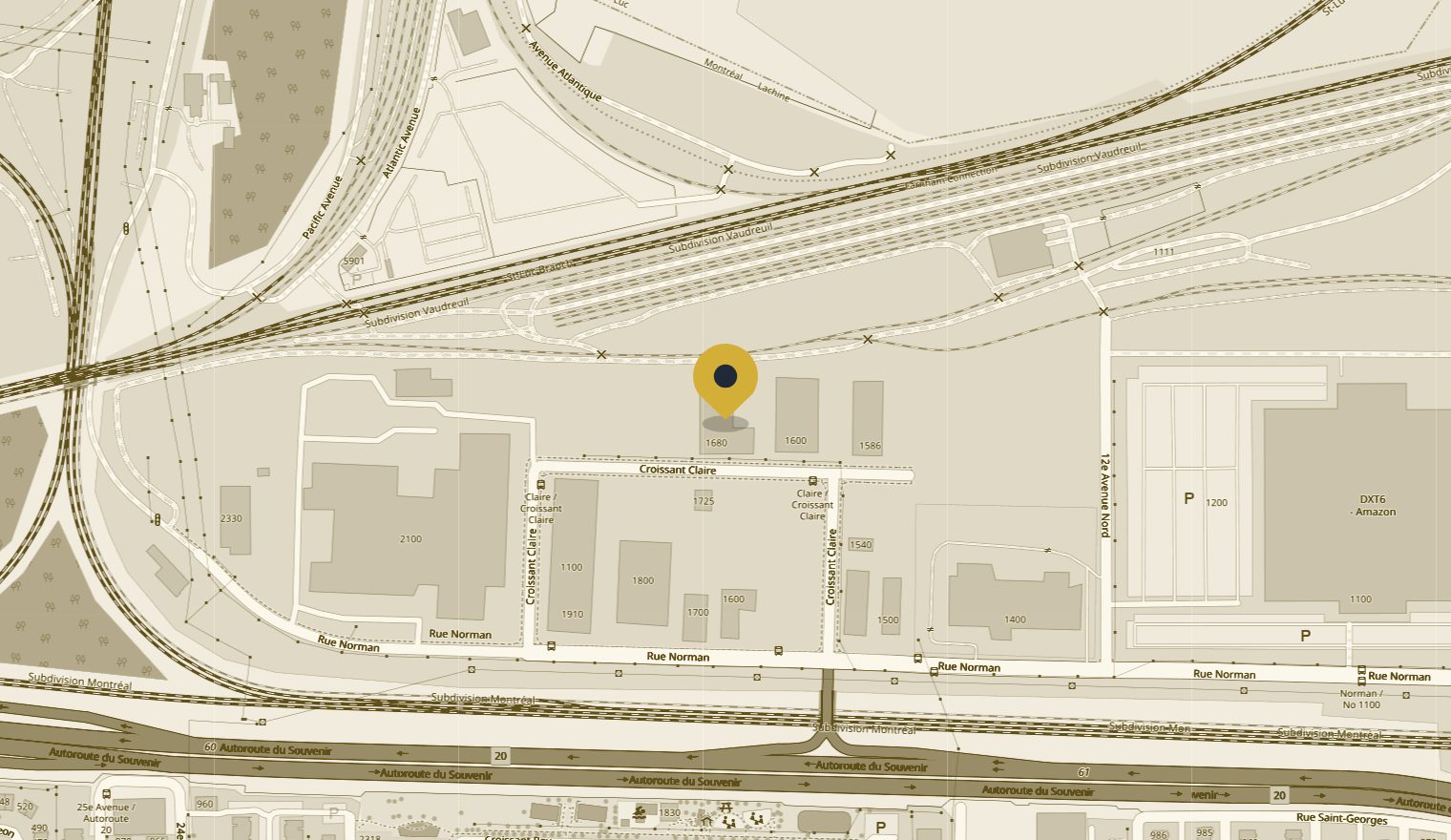
Bring clear photos of the damaged sections, approximate measurements, and the railing’s age if you know it. A proper quote should distinguish between a cosmetic repair and a structural one, since the two involve very different scope and materials. We handle both custom railing fabrication and on-site welding repairs for residential and commercial guardrails, working from our shop in Lachine and installing throughout Greater Montreal.
Seasonal priorities worth acting on now
The biggest mistake we see is treating railing care as an annual chore instead of a seasonal habit. Three things matter most right now: wash off accumulated grit, check every anchor and weld by hand, and seal any paint chip before moisture gets underneath it.
Targeted attention at joints and salt-exposed spots prevents more damage than scrubbing an entire railing that was never at serious risk. A few dollars of touch-up paint applied this month usually prevents a repair bill many times larger next year.
— Ash
FAQ
What is the best liquid for cleaning steel railings?
Warm water with a mild dish soap is sufficient for routine cleaning of steel railings, applied with a soft cloth rather than anything abrasive. For grease or stubborn grime, a non-acidic metal cleaner works without risking the paint or powder-coat finish.
What is the best way to clean metal railings?
Rinse off loose dirt first, wash with mild soap and water using a soft cloth or nylon pad, then rinse and dry thoroughly, paying close attention to joints and horizontal recesses where moisture collects. Avoid wire brushes or harsh acids on painted, powder-coated or anodized finishes since they can damage the surface.
What are the downsides of using aluminum railings?
Aluminum resists rust in the way steel does, but it can still develop pitting and surface oxidation in chloride-heavy conditions such as coastal or heavily salted environments. It’s also softer than steel, so it can dent more easily and requires gentler, non-acidic cleaners to avoid etching the finish.
What is the best cleaner for aluminum railings?
A mild soap and water solution is the safest routine cleaner for aluminum, since harsh acidic or alkaline products can accelerate pitting on the surface. Rinse and dry fully afterward, especially around joints and fastener points where salt residue tends to concentrate.
Do taller buildings in Quebec need professional railing inspections?
Yes. Owners of buildings five storeys or higher must carry out periodic verifications of facades and attached guardrails, with reports signed by an architect or engineer.
Sources
- Facades maintenance and inspection — RBQ (Quebec building code guidance)
- Lead in construction — Canadian Centre for Occupational Health and Safety (CCOHS)
- A practical guide to corrosion of weathering steel bridges exposed to de-icing salt — NRC Publications