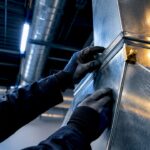
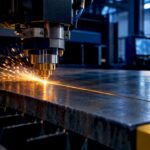
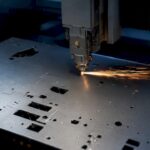
You're staring at a drawing package, a delivery date, and a shop ticket that could go three ways. One vendor can cut the parts fast, another can cut them cheap, and a third can cut, bend, and weld them before they leave the floor. The difference shows up later on site, when a railing doesn't fit, an HVAC part needs hand work, or a short run of brackets turns into a string of avoidable phone calls.
Table of Contents
- Why the Right Laser Cutting Service Changes Everything
- Preparing Files That Cut Clean the First Time
- Choosing the Right Material and Thickness
- Tolerances, Kerf, and Joints You Can Actually Build With
- What Actually Drives Your Quote
- Finishing, Forming, and When to Bundle Everything Under One Roof
- Lead Times, Red Flags, and a Practical Buying Checklist
Why the Right Laser Cutting Service Changes Everything
A contractor in Greater Montreal can get burned on a simple-looking job. A stair shop sends out railing plates for a laser cut, the pieces come back with rough edges or the wrong slot fit, and suddenly the installer is grinding, shimming, or waiting on a second run. The same thing happens on HVAC retrofits when duct parts arrive cut but not ready to fold, weld, or assemble. The machine matters, but the workflow around it decides whether the job stays tight or drifts.
The decision is bigger than the cut
Laser cutting service buyers usually compare price per part first, then discover the real cost later in fit-up, finishing, and extra handling. The fabricated metal product manufacturing sector in Canada employs a large workforce, and precision sheet-metal work shows up across a wide range of project types. The country's Manufacturing Sector Plan, published in 2022, also named Machinery & Equipment and Metal Fabrication as priority areas, which matches shop-floor conditions: precision parts are core production work, not a side job. Data Insights Market
That scale matters because fabrication output is tied to a broad base of manufacturers that need repeatable parts, short lead times, and clean edges. In a contractor's world, that means the right shop is not just the one with a laser. It is the one whose quoting, nesting, material handling, and secondary operations line up with the part you need.
Practical rule: If the part must be bent, welded, or installed the same week, choose the shop that can control the whole sequence, not just the cut edge.
For a local buyer, the main questions are straightforward. Can the shop read your files without a back-and-forth loop? Do they understand your material, tolerance, and finish requirements before they start? Can they keep the part in-house for forming or welding if that saves handling and saves you another vendor chase? Those answers matter more than a glossy machine spec sheet.
Preparing Files That Cut Clean the First Time
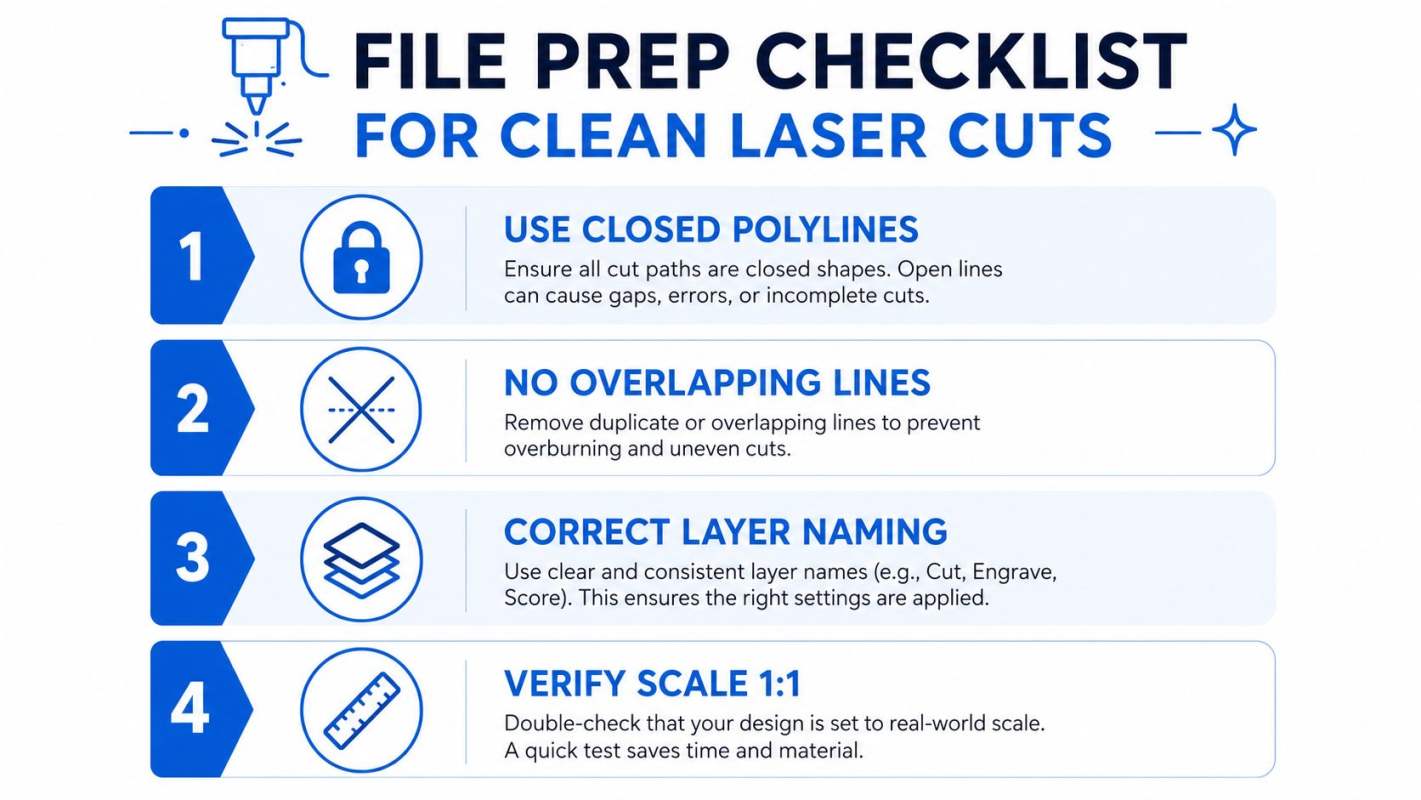
A shop can only cut what you send, and bad files create most of the avoidable friction. The cleanest laser jobs start with a file that's easy to read, easy to nest, and easy to check against the material on the rack. If your DXF or DWG is messy, the quote takes longer and the odds of rework go up.
What the shop wants to see before programming
Start with closed polylines, correct units, and one clear part per layer when possible. Remove duplicate lines, overlapping geometry, and tiny stray segments that can confuse the CAM operator. If the drawing says one thing and the scale says another, the shop has to stop and verify before cutting begins. That verification step is not busywork, it's how you avoid scrap from a file that looked fine in a viewport but failed on the table.
The most useful submission package is plain:
- Material and grade: Tell the shop exactly what alloy or grade you want.
- Thickness: State the sheet thickness, not just “thin gauge” or “plate”.
- Quantity: A one-off and a short run nest differently, so the quote changes.
- Tolerance notes: Flag any critical fit dimensions instead of assuming every edge matters equally.
- Inspection needs: Say whether you need check dimensions, visual finish, or both.
Send the drawing as if the programmer won't call you back, because the best quotes usually come from files that don't need interpretation.
The internal discipline matters too. The CA-region workflow described in the brief starts with CAD/DXF verification, material-grade confirmation, and nesting optimisation before the laser is programmed, and it explicitly warns against skipping DXF/DWG analysis, geometry verification, and material-spec confirmation. One capability sheet notes 85 to 95% material utilisation from nesting optimisation, which is useful as a benchmark when a shop is planning efficient sheet use. Wisconsin Stamping laser cutting services
If you're handing off a job for brackets, panels, or cut blanks, think like a fabricator, not a designer. A file that's clean, scaled, and tagged with the right material data lets the shop spend time on the cut, not on decoding the drawing.
Choosing the Right Material and Thickness
Material choice decides how the cut looks, how much finishing you'll need, and how painless the next operation will be. A part that leaves the table looking perfect can still cause trouble later if the alloy discolours, warps, or fights the weld sequence. That's why the material question is really a finish question and a downstream fabrication question.
Different metals behave differently on the table
Carbon steel is the easiest starting point for many general fabrication jobs because it's familiar, forgiving, and usually straightforward to bend and weld after cutting. Stainless steel is where edge appearance starts to matter more, especially if the part will be visible on a railing, appliance frame, or architectural panel. Aluminum cuts well when the parameters are right, but it's more sensitive to heat and reflectivity, so setup quality matters more than on plain steel. Copper and brass are also cut on modern fibre systems, but they're typically chosen when appearance, conductivity, or a specific design requirement justifies the material choice.
The brief's background notes that laser cutting is commonly used for stainless steel, aluminium, carbon steel, copper, and brass because it can produce clean edges with high dimensional accuracy. That lines up with shop-floor reality, the cut may be precise, but the finish still depends on assist gas, thickness, and how the part will be handled later. If the plan is to polish, anodise, passivate, or weld after cutting, material choice should be decided with the final finish in mind, not just the price of the sheet.
For buyers comparing a laser against other methods, the most useful question is not “Can it be cut?” It's “Will the cut create extra work later?” The internal comparison between laser and plasma is worth checking if you're weighing rougher cut speed against cleaner edges and less cleanup. Laser cutting vs plasma cutting
Thickness changes the job more than most buyers expect
Thin sheet can move, heat up, and distort if the cut parameters are too aggressive. Thicker stock slows the cut, increases pierce time, and can tighten the margin for clean edge quality. In practice, that means the quote for a flat bracket and the quote for a heavier plate part often come from very different realities on the machine.
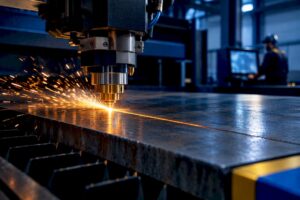
A 5 ft by 10 ft fibre table, like the one used by Manara Corp in Montreal, is a practical size for efficient nesting and common sheet formats, but it still doesn't change the basic rule, the part has to suit the material and the downstream process. If the part will be formed, welded, or shipped as a visible finish item, thickness choice should follow the whole build sequence, not only the cut itself.
Tolerances, Kerf, and Joints You Can Actually Build With
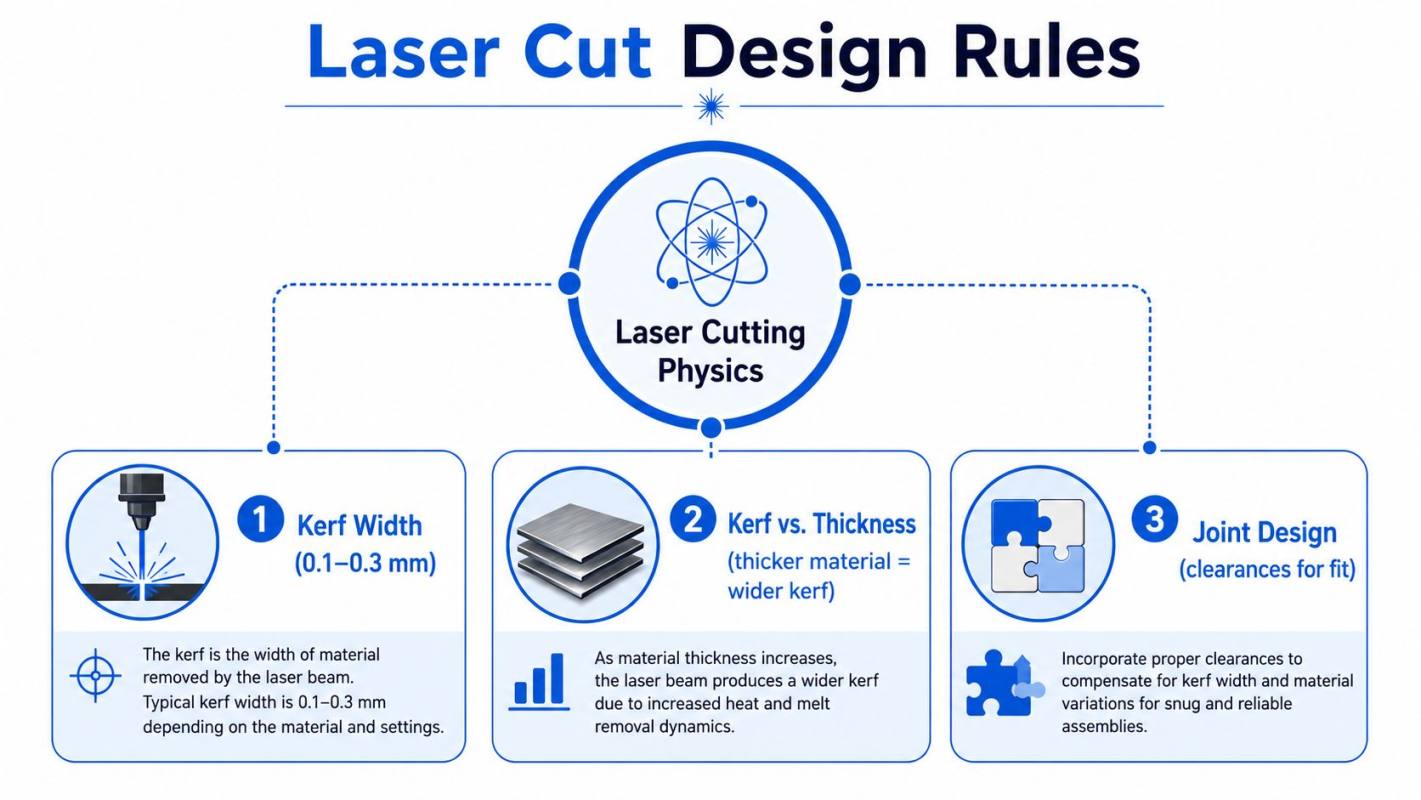
Most drawings fail at the connection points, not the obvious outlines. The laser can trace a clean profile, but if the tab, slot, hole, or mating edge is wrong, the assembly still goes sideways. That's why kerf and joint design matter just as much as machine precision.
Design around the cut, not against it
The technical guidance in the brief gives a usable baseline. Kerf is typically 0.1 to 0.3 mm, and it changes with thickness and material. The beam is focused, the assist gas clears molten material from the kerf, and the cut width stays close to the beam itself, which is why focus position, gas selection, and speed control all affect edge quality. TRUMPF laser cutting applications
Use these rules when you're redlining a drawing:
- Tab size: Make the tab roughly equal to the material thickness.
- Slot size: Make the slot equal to thickness plus kerf.
- Small feature limit: Keep small features at least 50% of material thickness to avoid distortion or part loss.
- Spacing between cuts: Leave at least 2× thickness between adjacent cuts.
- Corners: Add fillets instead of razor-sharp internal corners when the part will be stressed or handled.
Those are not cosmetic suggestions. They're practical geometry rules that help the part survive cutting and still assemble cleanly. When tabs and slots are sized properly, two laser-cut parts meet without forcing a shim into the joint. When small holes get too close to an edge in thick sheet, the part can distort or drop out before the run is done.
Shop-floor habit: If a joint needs sanding to fit, the drawing was probably optimistic, not the machine.
The other place buyers get caught is material spacing. Parts nested too tightly can distort heat-sensitive areas or leave weak bridges between features. Good shops compensate for kerf before production and check joint geometry during DFM review, because fixing a bad fit on the table is still cheaper than fixing it on a jobsite.
The technical part of this process is where many buyers need the most help, and the internal precision guide is a useful read if you're translating a concept drawing into something a laser operator can run without guessing. Exploring high precision laser cutting services
What Actually Drives Your Quote
A laser quote is not just “machine time”. It's material, programming, handling, gas, and the cost of making the part fit the job the first time. Once you understand the line items, it gets easier to see why one quote is cheaper on paper but more expensive in practice.
The quote follows the part, not the sales pitch
Material is the first obvious driver, and it changes with grade and sheet size. After that comes machine time, which rises with thickness, pierce count, and the complexity of the cut path. More pierces mean more stops and starts, and those add up even on a fast fibre system.
Assist gas also matters. The brief notes that nitrogen assist at 99.995% purity is used for clean edges in higher-volume work, and that matters most when a buyer wants cleaner stainless or aluminium edges with less discoloration. That doesn't mean every job needs the same gas setup, but it does mean edge finish is tied to process choice, not just material type.
Setup and programming are easy to ignore until you price a short run. A shop still has to verify files, nest the parts, dial in the cut, and inspect the first pieces. If the order needs deburring, grain finishing, or a dimensional check every so often, those are real operations, not afterthoughts. The CA workflow in the brief also notes dimensional verification every 50 pieces for high-volume runs, which gives buyers a sense of how in-process control gets built into repeat work. Wisconsin Stamping laser cutting services
Quantity changes the math, but only if the nest works
A better nest can reduce waste and keep the per-part price under control, especially when several parts fit into the same sheet pattern. That's where quantity starts to matter, because the shop can spread setup across more parts and use the sheet more efficiently. A rush order usually doesn't mean the laser runs faster, it means the shop has to reshuffle the schedule so your parts get on the table sooner.
If a quote seems oddly high, ask which part of the job is driving it. Often the answer is not the cut itself, but the inspection, the finish requirement, or the fact that the file needs too much cleanup before programming. The buyer who knows that can push on the right variable instead of arguing over a flat total that was built from several different costs.
Finishing, Forming, and When to Bundle Everything Under One Roof
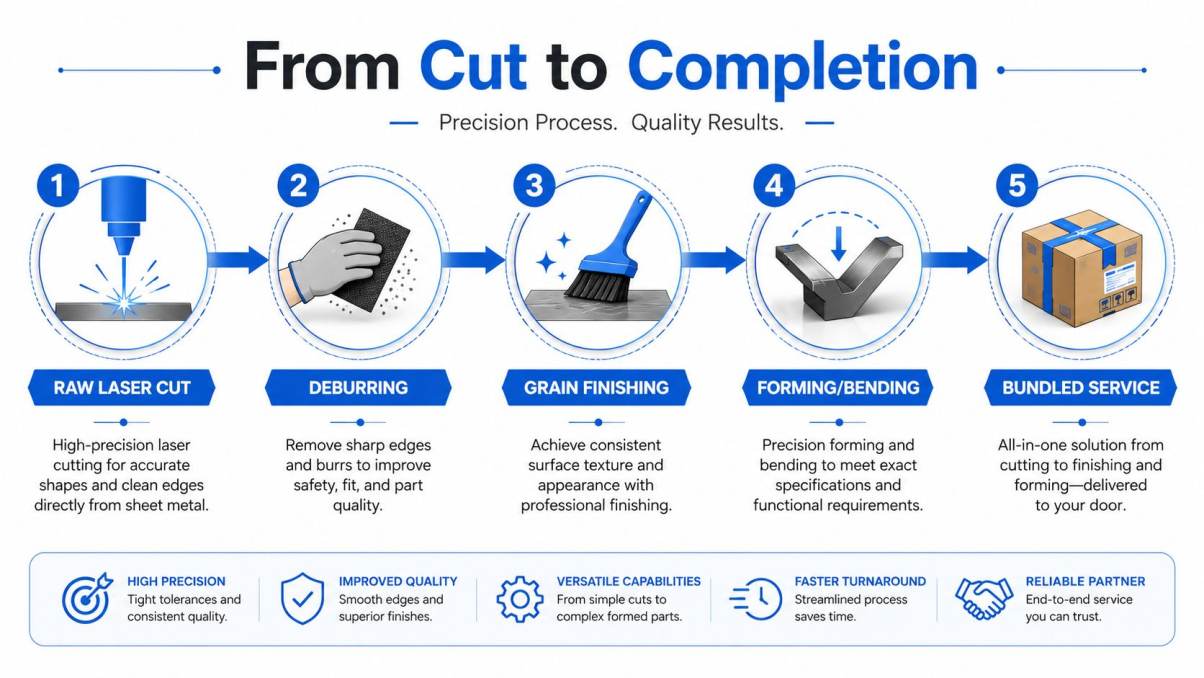
A clean cut is useful, but most fabricated parts are not done when they come off the laser table. They still need deburring, edge cleanup, forming, rolling, or welding, and that's where a cut-only order can become a logistics problem. Every handoff adds time, and every handoff adds a chance for the part to get bent, scratched, or measured differently by the next vendor.
Cut only works for simple parts
If you only need flat blanks, labels, or simple brackets, a cut-only relationship can be fine. The part leaves one shop, goes to another for bending or welding, and gets shipped after each stop does its piece. That works when the geometry is simple and the schedule is loose enough to tolerate extra travel between vendors.
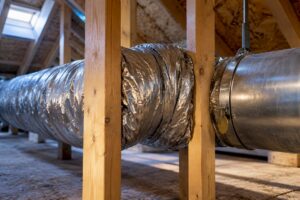
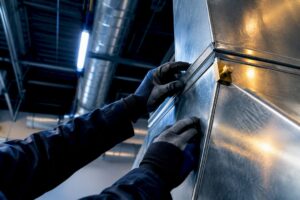
The problem appears on jobs that are already tight. Rectangular HVAC ductwork often needs a sequence of cuts, folds, and seams. Stair stringers and formed treads need cutting and bending to stay consistent. Railings and base plates often need cut parts to move straight into welding without a pile of in-between handling. When those steps happen on different floors, the schedule gets brittle.
That's why bundled workflow matters. The brief's publisher, Manara Corp, describes a single-shop process that combines laser cutting, forming, welding, and profile rolling for HVAC ductwork, railings, stairs, and other made-to-spec parts. On jobs like those, keeping the parts in one place means fewer chances for handling damage and less time spent trying to line up multiple vendors.
One floor, fewer surprises
Bundling cut, form, roll, and weld under one roof helps when the next operation depends on the first one staying true. A laser-cut panel that goes straight to a press brake and then into welding is easier to control than a part that gets boxed, transported, unloaded, and rechecked several times. If the same shop is doing the follow-on work, the team can also catch a bad tab, a tight slot, or a bend allowance issue before the part leaves.
For buyers comparing fabrication paths, the rolling side of the workflow is worth a look when the job involves tubes, angles, or long profiles. Sheet bending and rolling solutions for businesses
Lead Times, Red Flags, and a Practical Buying Checklist
A good quote is clear before you place the order. It tells you what's being cut, what finish to expect, what tolerances matter, and what happens next if the part needs a secondary operation. If those answers are fuzzy, the cheapest number on the page can become the most expensive job in the shop.
What to ask before you issue the PO
Healthy quote packages usually include more than a total price. Look for file review, material confirmation, and a realistic schedule for the cut and any follow-on work. If the shop only gives you a lump sum and won't discuss edge finish, you're carrying more risk than the quote admits.
Use this checklist on the next RFQ:
- File review: Has the shop checked the DXF or DWG for geometry and scale?
- Material confirmation: Is the grade and thickness stated clearly?
- Tolerance expectation: Which dimensions are critical, and which ones are standard cut tolerance only?
- Edge finish: Will the part need deburring, cleanup, or a finish pass after cutting?
- Secondary operations: Are bending, rolling, welding, or assembly included or separate?
- Inspection and documentation: Does the shop provide any measurement or traceability notes?
- Lead time: Is the schedule realistic for the shop's current workflow?
Red flags that usually cost you later
A quote that hides the material spec is a warning sign. So is a refusal to talk about how the edge will look on stainless or aluminium, because finish affects whether the part can go straight to install or needs extra work. Unrealistic lead times are another problem, especially when the job is not just cut-only and the shop still has to form or weld the parts.
The practical buyer does one more thing. They ask whether the shop can hold the job through the steps that matter most. If the answer is yes, the schedule stays simpler and the parts usually arrive closer to what the drawing needs.
If you need cut parts, formed parts, or a one-shop fabrication path in Greater Montreal, Manara Corp handles laser cutting, forming, welding, and profile rolling under one roof. Visit Manara Corp to discuss a part, a drawing package, or a fabrication job that has to fit the schedule and the site the first time.
Drafted with Outrank tool