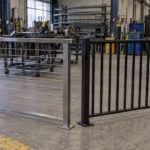
For structural frames, welded assemblies, and anything that gets painted or buried in a wall, hot-rolled steel is the right call. It costs less, welds cleanly, and handles rough forming without complaint. Cold-rolled steel earns its higher price when the part needs a smooth, paint-ready surface right off the shelf, tight dimensional tolerances, or a finished appearance — think decorative railings, precision enclosures, or appliance panels. One caveat worth knowing upfront: weld heat can locally erase cold-rolled strength gains at the heat-affected zone. Therefore, specifying cold-rolled for a heavily welded assembly often buys you nothing at the joints.
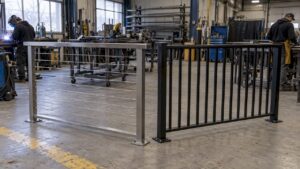
A structural beam supporting a mezzanine floor? Hot-rolled, no question. A custom stainless railing in a Montreal condo lobby where every surface is visible and the fit must be exact? Cold-rolled, because the smoother finish and tighter tolerances reduce secondary prep work and produce a cleaner result.
Key takeaways
| Point | Details |
|---|---|
| Structural vs cosmetic split | Use hot-rolled for welded frames and structural members; use cold-rolled for visible, precision-fit, or decorative parts. |
| Welding erases cold-rolled strength | Weld heat anneals the heat-affected zone, removing work-hardened strength gains at every joint. |
| HRPO bridges the gap | Hot-rolled pickled and oiled strip removes mill scale at the mill, giving a paint-ready surface without the full cold-rolled cost. |
| Spring-back compensation | Cold-rolled parts require a 2–5° overbend on the press brake to reach the intended angle. |
| Cold-rolled vs cold-formed | Cold-rolled is a mill process (material spec); cold-formed is a fabrication process — they are not interchangeable terms. |
Table of Contents
- How hot rolled vs cold rolled steel are actually made
- Properties, advantages, and applications of hot-rolled steel
- What cold-rolled steel is and how it gets made
- Properties, advantages, and applications of cold-rolled steel
- Side-by-side comparison of hot-rolled and cold-rolled steel
- How to choose between hot-rolled and cold-rolled steel
- Shop-tested fabrication tips for working with each material
- Environmental and sustainability considerations
- Cold-rolled vs cold-formed: they are not the same thing
- How dimensional stability compares over time
- A fabricator’s perspective on material selection
- Sources
- FAQ
How hot rolled vs cold rolled steel are actually made
Processing temperature is the single difference that cascades into every property gap between the two materials. Hot-rolled steel is rolled above its recrystallization temperature, which for most carbon steels sits in the 1,100–1,250 °C finishing range. At those temperatures the steel is soft and plastic, so the rolling mill can push it into shape with relatively little force, and the grains recrystallise continuously as they deform.
The basic process runs like this:
- A slab or billet is reheated in a furnace to above recrystallization temperature.
- It passes through a series of rolling stands that reduce thickness and shape the cross-section.
- The finished product cools on a run-out table or is coiled while still hot.
- As it cools in air, the surface oxidises into mill scale — a blue-grey iron oxide layer that is hard, brittle, and loosely bonded to the steel beneath.
Mill scale is the most practically important consequence of hot rolling. It looks industrial and rough, and it causes real problems downstream: it must be removed mechanically or chemically before painting, powder coating, or welding to avoid adhesion failures and accelerated corrosion. Sandblasting and pickling are the two common removal methods. Hot-rolled, pickled and oiled (HRPO) strip is the result of that pickling step applied at the mill — a cleaner surface without the full cold-rolling premium.
Properties, advantages, and applications of hot-rolled steel
Hot-rolled steel is softer, more ductile, and dimensionally looser than its cold-rolled counterpart — and those traits are features, not bugs, for the right applications. Because the grains recrystallise during rolling, internal stresses are low, which makes the material easier to weld and less prone to warping during fabrication.
Advantages:
- Lower cost per tonne and faster production throughput at the mill
- Good ductility and toughness — bends and forms without cracking under heavy deformation
- Low residual stress, which means less distortion during welding and cutting
- Available in a wide range of sections: plate, sheet, bar, angle, channel, I-beam, tube
Disadvantages:
- Mill scale requires removal before painting, powder coating, or precise welding
- Looser dimensional tolerances compared to cold-rolled equivalents
- Rougher surface finish — unsuitable for visible or cosmetic applications without secondary prep
Common applications include structural beams and columns, rebar and reinforcing sections, heavy equipment frames, ship hull plating, rail track, and welded pipe. For fabricators, it is the go-to for anything structural, load-bearing, or destined for a hidden location. When a part will be painted after fabrication, specifying HRPO avoids the mill-scale problem without paying for full cold-rolled processing.
What cold-rolled steel is and how it gets made
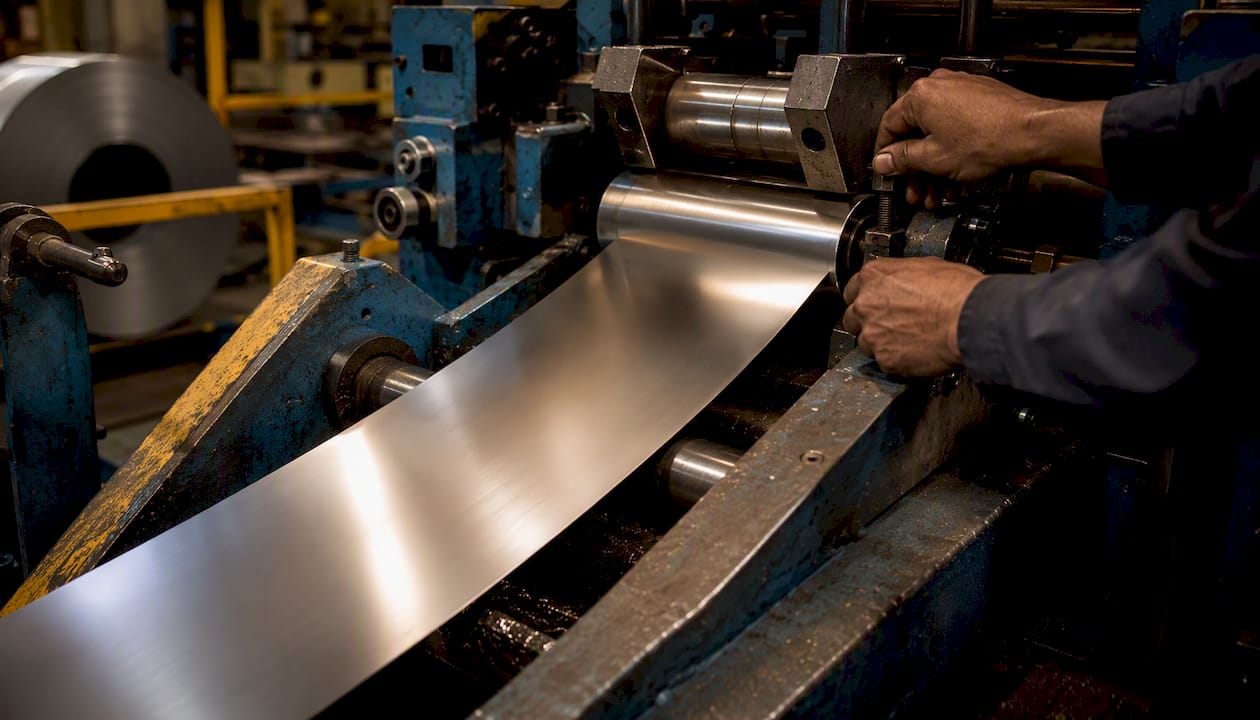
Cold-rolled steel starts life as hot-rolled strip. The extra steps that follow are what change its character entirely. After hot rolling, the coil is pickled in an acid bath to strip the mill scale, then re-rolled at or near room temperature through a cold reduction mill. That cold reduction work-hardens the steel, compressing the grain structure and increasing dislocation density — which is the microstructural reason yield and tensile strength climb.
The typical process flow:
Hot roll → pickling → cold reduction → optional anneal → skin pass
The optional anneal matters. Cold working stores residual stress in the material and reduces ductility. When the finished part needs to be formed, deep-drawn, or machined, a recrystallisation anneal is applied after cold reduction to restore ductility while retaining much of the dimensional improvement. A final skin pass (a very light rolling pass) then corrects any surface waviness and sets the surface finish. Dislocation accumulation during cold working is the microstructural mechanism behind the strength gain — and also behind the reduced elongation that makes cold-rolled steel less forgiving in heavy forming operations.
Properties, advantages, and applications of cold-rolled steel
Cold-rolled steel is stronger, smoother, and more dimensionally consistent than hot-rolled — and it costs more for all three reasons. Work-hardening raises yield and tensile strength compared to the same base grade in hot-rolled form, while the pickled and re-rolled surface is bright, clean, and ready for painting or powder coating with minimal prep.
Advantages:
- Smooth, bright surface finish — minimal prep required before painting or coating
- Tighter dimensional tolerances and more consistent thickness across the coil
- Higher yield and tensile strength than the equivalent hot-rolled grade
- Better surface for decorative, visible, or precision-fit applications
Disadvantages:
- Material cost is typically higher than comparable hot-rolled grades
- Lower ductility and elongation — less forgiving in heavy bending or deep drawing
- Residual stresses from cold working can cause warping during machining or cutting
- Spring-back during bending is more pronounced, requiring overbend compensation
Cold-rolled sheet is the standard choice for automotive body panels, appliance casings, office furniture, HVAC ductwork where surface appearance matters, and decorative architectural components. Custom metal railings are a classic case: the smooth surface takes powder coat evenly, the tight tolerances make joints fit cleanly, and the finished product looks the part in a visible installation.
Side-by-side comparison of hot-rolled and cold-rolled steel
The table below covers the dimensions that actually drive material selection decisions.
| Dimension | Hot-Rolled Steel | Cold-Rolled Steel |
|---|---|---|
| Surface finish | Rough, blue-grey mill scale | Smooth, bright, paint-ready |
| Dimensional tolerances | Looser (wider thickness variation) | Tighter, more consistent |
| Yield strength | Lower (base grade) | Higher (work-hardened) |
| Ductility / elongation | Higher — more formable | Lower — less forgiving |
| Residual stress | Low | Higher — may need stress relief |
| Weldability | Excellent | Good, but HAZ reduces local strength gain |
| Painting / powder coat | Requires mill-scale removal first | Ready with minimal prep |
| Material cost | Lower | Higher |
| Production speed | Faster | Slower (extra processing steps) |
| Typical applications | Structural, welded, heavy fabrication | Automotive, appliances, decorative, precision |
| Standard availability | Wide range of sections and gauges | Primarily sheet and strip |
Quick selection rules from the table:
- If the part is structural or will be welded heavily, hot-rolled is almost always the better economic choice.
- If surface finish, tight tolerances, or visible appearance drive the spec, cold-rolled is worth the premium.
- For painted welded assemblies, HRPO is often the cost-effective middle ground — the pickling step removes mill scale without the full cold-rolling cost.
- Never specify cold-rolled purely for strength in a heavily welded assembly; the heat-affected zone will reduce the work-hardening benefit at every weld.
How to choose between hot-rolled and cold-rolled steel
One decision rule covers most situations: if appearance and tolerance drive the spec, choose cold-rolled; if weld-ability, structure, and budget drive it, choose hot-rolled.
Selection checklist:
- Define your tolerance requirement. If thickness variation across the part matters (precision enclosures, fitted panels, formed brackets), cold-rolled is the starting point. If ±1 mm is acceptable, hot-rolled works fine.
- Assess the finish requirement. Will the part be visible and painted or powder-coated without heavy prep? Cold-rolled or HRPO. Hidden, primed over blasted surface, or left bare? Hot-rolled.
- Evaluate forming and bending demands. Heavy bends, deep draws, or complex forms favour hot-rolled ductility. Moderate bends on a press brake can use either, but budget an extra 2–5° of overbend for cold-rolled spring-back.
- Consider the welding scope. Lightly welded or bolted assemblies can benefit from cold-rolled strength. Heavily welded frames lose that benefit at every joint — specify hot-rolled and save the cost.
- Check budget and lead time. Cold-rolled sheet is widely stocked in standard gauges; heavier sections and structural profiles are almost exclusively hot-rolled.
Questions to ask your supplier:
- What grade and specification is the material (e.g., ASTM A1008 for CR, A36 or A572 for HR)?
- Is the hot-rolled material HRPO, or does it carry full mill scale?
- What is the anneal condition on the cold-rolled coil — full anneal or skin-passed only?
- Are mill certifications (MTRs) available for the heat?
- What are current lead times for the gauge and width you need?
Red flags:
- Specifying cold-rolled for a painted welded frame when HRPO would do the same job for less.
- Accepting hot-rolled material without mill certifications for a structural application.
- Using standard hot-rolled yield values when designing with cold-finished sections — cold-finished mechanical tables give the correct, higher figures.
Shop-tested fabrication tips for working with each material
Pro Tip: For any part that will be painted or powder-coated after welding, ask your steel supplier for HRPO rather than standard hot-rolled. The mill-scale removal is already done, the surface is oiled for corrosion protection in transit, and you skip a sandblasting step in the shop — often saving more than the small HRPO premium.
A railing assembly is a good illustration. Specifying HRPO for the structural posts and base plates, then cold-rolled sheet for the infill panels, splits the cost intelligently: the structural members get the right material for welding, and the visible panels get the smooth surface that takes powder coat cleanly. The alternative — cold-rolled throughout — adds material cost with no structural benefit at the welds.
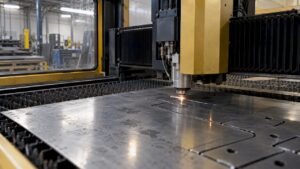
For precision sheet-metal panels, cold-rolled is the right call precisely because it avoids secondary surface prep. A laser-cut cold-rolled panel arrives at the powder coater ready to hang; the same part in hot-rolled needs blasting first, which adds time, cost, and the risk of surface contamination.
Welding notes:
- Weld heat anneals the surrounding metal in the heat-affected zone, removing the cold-worked strength locally. For lightly welded brackets or tack-welded assemblies this is manageable; for continuous structural welds it largely negates the cold-rolled strength advantage.
- Pre-heat is rarely required for low-carbon cold-rolled sheet in thin gauges, but stress-relief annealing after welding helps if the part will be machined or needs to hold tight flatness.
- Hot-rolled material welds with fewer surprises — lower residual stress means less distortion and less risk of weld cracking.
Bending and tolerancing tips:
- Cold-rolled parts spring back more consistently than hot-rolled, so the overbend correction is predictable once you dial it in for a given gauge and grade.
- Residual stress in cold-rolled material can cause a part to move during machining. Stress-relief annealing before finish machining is worth the step on tight-tolerance parts.
- For sheet bending and rolling operations, edge quality matters: cold-rolled laser-cut edges are cleaner and require less deburring than hot-rolled flame-cut edges.
Environmental and sustainability considerations
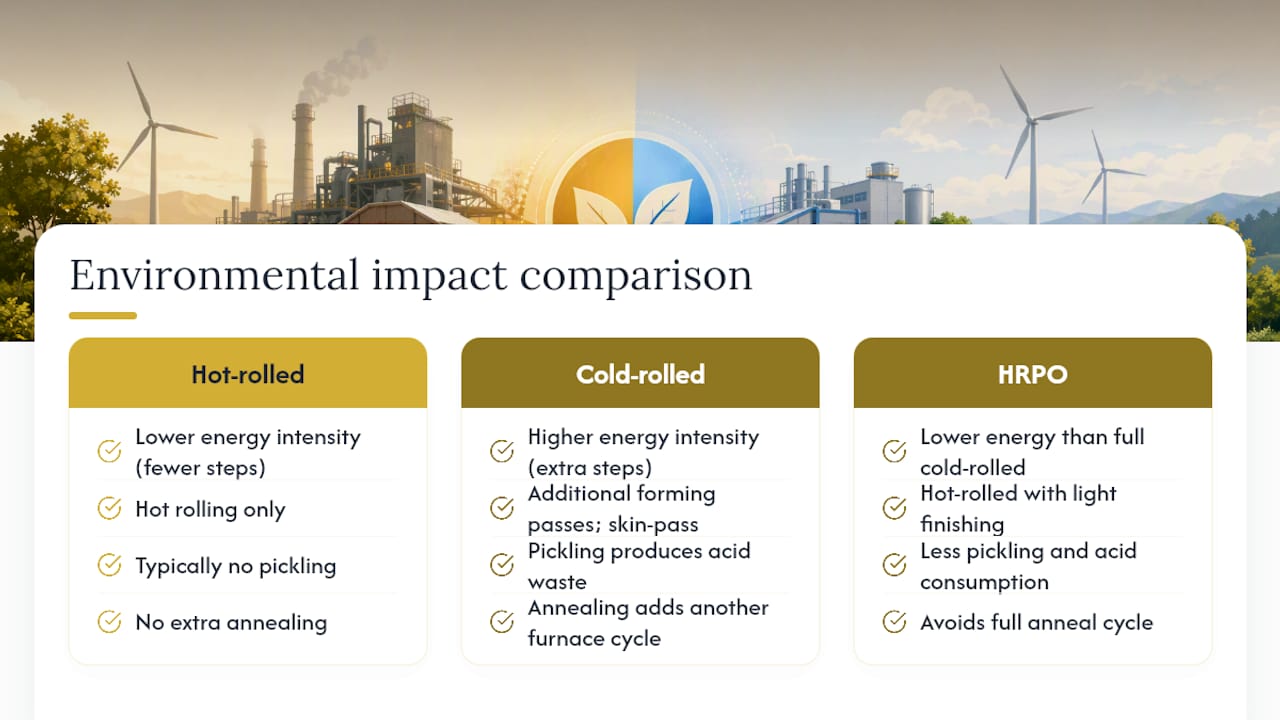
Steel is one of the most recycled materials on the planet, and both hot-rolled and cold-rolled products share that advantage — the base material can be melted and re-rolled indefinitely without significant property loss. The sustainability difference between the two processes is primarily one of energy intensity. Cold rolling requires additional passes, pickling (which generates acid waste requiring treatment), annealing (another furnace cycle), and a skin pass. Each step adds energy consumption and process emissions beyond what hot rolling alone requires.
For projects where embodied carbon matters — LEED-certified buildings, green infrastructure tenders — specifying hot-rolled where the application allows it is the lower-impact choice. When cold-rolled is genuinely necessary for the application, the energy premium is justified by reduced secondary processing (less blasting, less primer, less rework). Industry-level sustainability data from the World Steel Association provides context on steelmaking’s overall carbon trajectory, including the growing role of electric arc furnace production, which reduces the carbon intensity of both product types.
Specifying HRPO instead of full cold-rolled for painted structural parts is also the more sustainable path: fewer process steps, less acid consumption, and the same end result for most painted applications.
Cold-rolled vs cold-formed: they are not the same thing
This distinction trips up architects and engineers regularly. Cold-rolled refers to the mill process described above — a coil of hot-rolled strip that is pickled and re-rolled at room temperature to improve surface finish, tolerances, and strength. It is a material specification.
Cold-formed refers to a fabrication process: taking sheet or strip (which may be hot-rolled, cold-rolled, or galvanised) and forming it into a structural shape — a stud, a purlin, a channel — at room temperature, without heating the steel. Cold-formed steel framing (governed by standards like AISI S100 in North America) uses relatively thin, high-strength sheet that is roll-formed into C-sections, Z-sections, and tracks. The incoming material is often cold-rolled, but it does not have to be.
Hot-rolled bars and tubes are sometimes “cold-finished” by drawing or turning rather than by rolling — a third category that is neither cold-rolled sheet nor cold-formed structural section. Confusing these terms in a specification can result in ordering the wrong product entirely.
The practical rule: cold-rolled is what the steel is; cold-formed is what you do with it.
How dimensional stability compares over time
Hot-rolled steel, because it cools slowly from high temperature with low residual stress, is dimensionally stable after fabrication. Cut it, weld it, machine it — it holds its shape predictably. The grain structure is uniform and relaxed.
Cold-rolled steel carries stored residual stress from the cold-reduction passes. In most applications this is inconsequential — the part is formed, welded, and painted, and the stresses never manifest. But in two situations they matter. First, when cold-rolled material is machined (particularly when significant stock is removed), the stress redistribution can cause the part to bow or twist after the cut. Second, over long periods in a high-temperature service environment, stress relaxation can cause slow dimensional drift in tight-tolerance assemblies.
For structural applications where long-term dimensional stability is the priority — precision frames, machine bases, jig plates — either specify hot-rolled (lower residual stress from the start) or specify cold-rolled with a stress-relief anneal before finish machining. The anneal largely equalises the two materials on this dimension. For standard sheet-metal parts in normal service conditions, the difference is academic.
A fabricator’s perspective on material selection
The textbook answer on hot rolled vs cold rolled steel is accurate, but it misses the practical nuance that actually saves money on a project. The real question is rarely “which is stronger?” — it is “which one avoids the most rework downstream?”
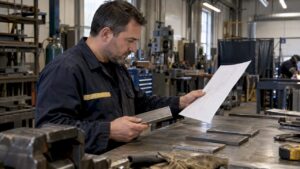
At Manaracorp, the shop handles both materials daily across welding, sheet bending and rolling, laser cutting, and profile rolling. The pattern that repeats: clients over-specify cold-rolled for structural work that will be welded and painted, paying a material premium that disappears the moment the welder touches the joint. Conversely, clients sometimes under-specify and order hot-rolled for a visible decorative component, then spend more on surface prep than the cold-rolled upgrade would have cost.
The smarter path is to split the spec by function. Structural members and hidden frames: hot-rolled or HRPO. Visible panels, railings, and precision-fit components: cold-rolled. That split captures the cost advantage of hot-rolled where it matters and the finish advantage of cold-rolled where it shows.
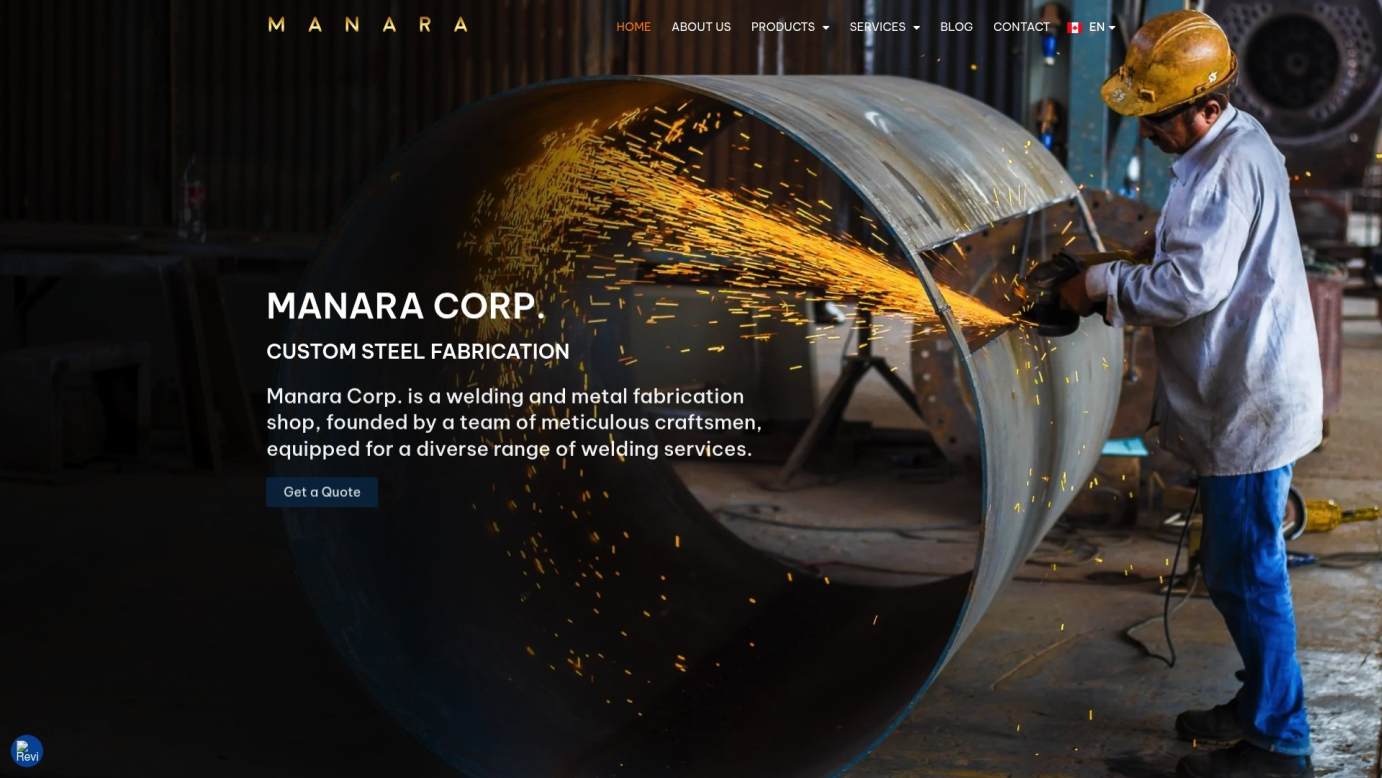
If you have a project where the material choice is genuinely unclear, Manaracorp’s team in Lachine can review the drawings and recommend the right incoming material before fabrication starts. Reach out through Manaracorp for project-specific advice.
Sources
- Comparing Hot and Cold Rolled Steel | Machine Design
- Hot Rolled vs. Cold Rolled Steel: Key Differences, Properties and Applications – Steel Technology
- Cold Rolled vs Hot Rolled Steel: Surface, Strength, and Real Cost Difference – PrecisionFab
- Hot Rolled vs Cold Rolled Steel: Structural Guide & Design Tips – RISA Blog
- Cold Rolling vs Hot Rolling: Microstructure, Properties and Applications – Metallurgy Zone
FAQ
Which is better, hot-rolled or cold-rolled steel?
Neither is universally better — the right choice depends on the application. Hot-rolled is better for structural, welded, and budget-sensitive work; cold-rolled is better when surface finish, dimensional accuracy, or visible appearance are priorities.
What are the main disadvantages of hot-rolled steel?
The two practical drawbacks are mill scale and looser tolerances. Mill scale must be removed before painting, powder coating, or precision welding, which adds a prep step; and thickness variation is wider than cold-rolled equivalents.
Is cold-rolled steel always stronger than hot-rolled?
Cold-rolled steel has higher yield and tensile strength due to work-hardening, but that advantage disappears at weld joints, where heat anneals the surrounding metal and removes the cold-worked strength locally. For heavily welded assemblies, the net strength benefit is often negligible.
Is 4140 steel cold-rolled?
Certain alloy steels are available in both hot-rolled and cold-finished (drawn or turned) forms. The “cold-finished” version of bar stock is not cold-rolled in the sheet-rolling sense — it is drawn or turned to tighter tolerances, which is a different process. Always confirm the specific condition (hot-rolled, cold-drawn, or stress-relieved) with your supplier when ordering.
What is the difference between cold-rolled and cold-formed steel?
Cold-rolled is a mill process that re-rolls pickled hot-rolled strip at room temperature to improve surface finish, tolerances, and strength. Cold-formed is a fabrication process that shapes sheet or strip into structural sections (studs, purlins, channels) at room temperature — the incoming material may or may not be cold-rolled.