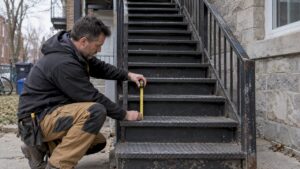
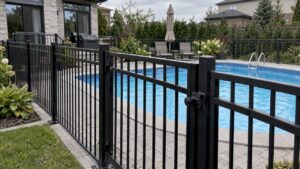
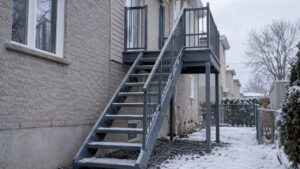
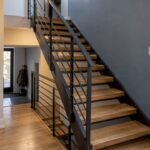
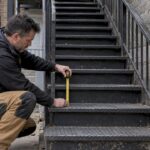
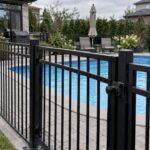
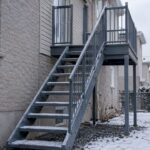
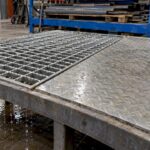
For exterior stairs in Greater Montreal, metal usually wins: steel or aluminum handles freeze-thaw cycles, road salt and moisture better than wood, and needs less upkeep. Wood wins indoors, where its warmth and look matter more than its weak points. For many interiors the best answer is both: a steel structure with wood treads. Below we compare the two on durability, maintenance, code, appearance and cost, so you can decide before you ask for quotes.
TL;DR
- Outdoors in Quebec: metal (hot-dip galvanized steel, stainless or aluminum) is the safer long-term choice. Wood is cheaper to build but needs regular sealing and replacement.
- Indoors: wood feels warmer underfoot and suits traditional interiors. Metal suits open, slim, contemporary designs.
- Hybrid stairs: a steel stringer with wood treads gives you the structure of metal and the finish of wood.
- Code applies to both: run, rise, guard height and guard openings are the same whatever the material. Check them with your municipality before fabrication.
- Cost: compare the cost over the life of the stair, not just the first quote.
Table of Contents
- What we mean by metal and wood stairs
- Durability in a Montreal climate
- Maintenance: what you do each year
- Code: the rules don’t change with the material
- Look and feel
- Cost: first price against lifetime price
- Which one for which job
- Our perspective: where we draw the line
- Getting a metal staircase in Greater Montreal
- A checklist before you decide
- FAQ
- Sources
What we mean by metal and wood stairs
The comparison is looser than it sounds, because each side covers several things.
Metal stairs are most often carbon steel (painted or galvanized), stainless steel or aluminum. Treads can be plate, perforated, grating or a steel pan that holds another material. Stringers can be channel, tube or a folded plate cut on a laser.
Wood stairs range from pressure-treated softwood on a back deck to oak or maple treads on a hallway staircase. Natural Resources Canada notes that softwoods are the standard for structural parts because of cost and availability, while hardwoods such as maple and oak are preferred for decorative finishes. Designers often combine the two so the core meets code and the visible treads look right.
That last point matters for this article. The real question is rarely “all metal or all wood”. It is “which material should carry the load, and which should you see and touch”.
Durability in a Montreal climate
Montreal is hard on anything left outside. Snow, de-icing salt, rain and repeated freezing and thawing all test a stair, and the structure is where the weak points show up first.
Exterior stairs
Wood absorbs moisture. It swells, shrinks, splits and eventually rots where water sits, typically at end grain, fastener holes and the joint where the stringer meets a landing. Sealing and staining slow this down but have to be repeated.
Steel does not rot, but it rusts if the coating fails. This is why finish matters more than the metal itself. Hot-dip galvanizing, with a paint system over it where appearance matters, and stainless fasteners at the connections are what separate a stair that lasts from one that streaks orange after three winters. We go through those finishing choices in our guide to exterior metal stairs with hot-dip galvanizing, duplex coatings and 316 fasteners. Aluminum doesn’t rust at all, though it is softer and costs more per kilogram.
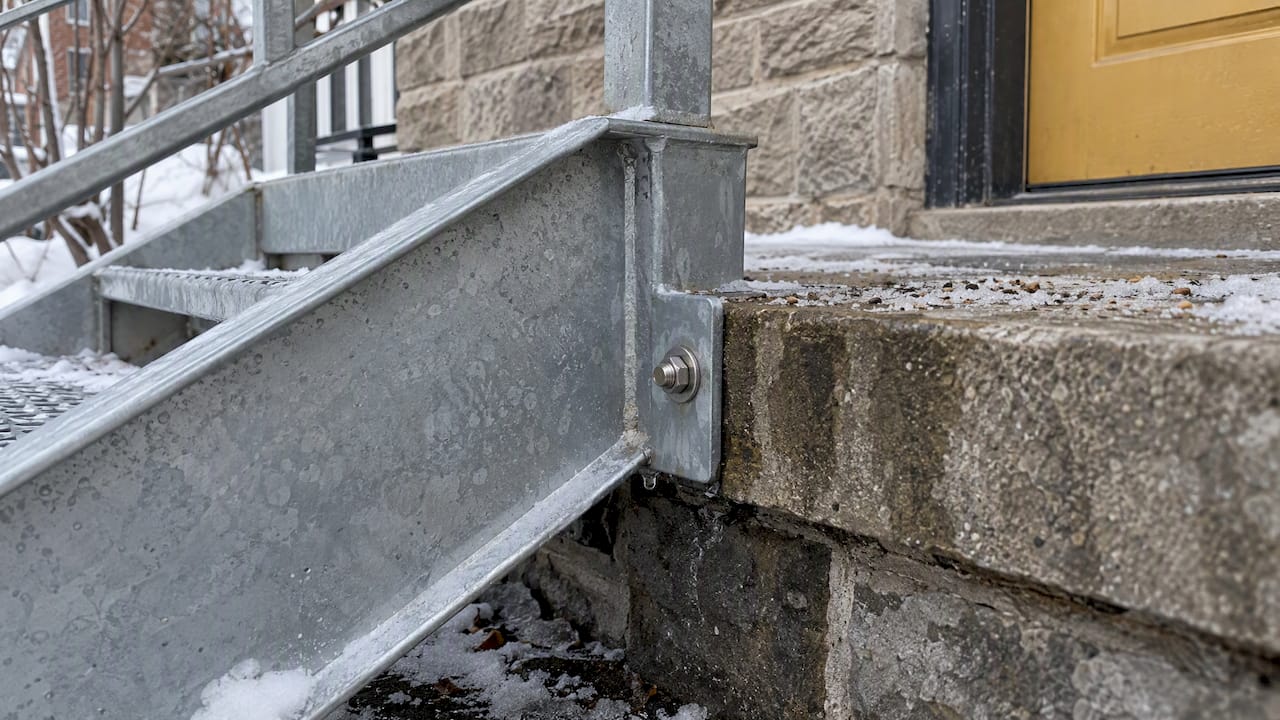
On load, a welded steel stringer spans farther with a slimmer profile than a wood one, and it doesn’t creep or sag over time. That is why exterior stairs for walk-ups, commercial entrances and multi-storey balconies are almost always steel.
Interior stairs
Indoors, moisture is less of a threat and wood can last for generations. Hardwood treads wear well and can be sanded and refinished. The weak points are squeaks, as joints loosen with seasonal humidity swings, and wear on the nosing. Steel stairs don’t squeak from loose wood joints, but a bare steel tread can feel hard and noisy, which is why many designers add wood or a sound-damping finish.
Maintenance: what you do each year
| Metal (galvanized or coated steel, aluminum) | Wood | |
|---|---|---|
| Outdoors, yearly | Rinse off road salt, check coating at welds and bolts, touch up chips | Inspect for rot and splits, tighten fasteners, reseal or restain every one to three years |
| Indoors, yearly | Dust and wipe, check anti-slip surfaces | Clean, check for squeaks, refinish when worn |
| Long-term | Repaint or recoat the damaged area | Replace rotted treads, sometimes stringers |
| Fire | Does not burn | Combustible |
The schedule for the wood column depends on the product and exposure, so follow the manufacturer’s instructions for your sealer. For the metal side, our page on metal railing maintenance in Canada explains how to protect each material, and the same logic applies to stairs.
If your stair sits in a factory, warehouse or yard, an engineering-oriented guide to keeping catwalks and access platforms safe lists the kind of inspection routine that applies to steel walkways in demanding settings.
Code: the rules don’t change with the material
Homeowners sometimes assume a metal stair is held to different rules from a wooden one. It isn’t. The geometry that makes a stair safe is the same, and an inspector will check the same numbers.
According to an NRC publication on the National Building Code, the minimum run for dwelling unit stairs is 255 mm (10 inches), guards must be at least 920 mm (36 inches) for drops from 600 mm to 1,800 mm and 1,070 mm (42 inches) above that, and guard openings must stop a 100 mm (4-inch) sphere. For risers, the accessible housing standard from Accessibility Standards Canada sets a maximum of 200 mm and requires uniform risers and treads.
Those are national figures. In Quebec, the Construction Code (the provincial adaptation of the National Building Code, usually called the CNB) governs, and a municipality such as Montréal can add its own requirements. Part 9 of the NBC also changed in 2015: almost half of the changes affect stairs, ramps, handrails and guards, so older rules of thumb may be out of date. Confirm the current figures for your project with your municipality, and with your architect or engineer for commercial work. For workplaces, CNESST rules also apply to stairs used by employees.
Where material does change the picture is in how easily you can meet the requirements:
- Guards and balusters: welded steel guards can hold tight spacing and a rigid top rail without bulky posts. Wood balusters need wider posts and more connections to achieve the same stiffness.
- Slip resistance: steel needs a deliberate surface (grating, perforation, grit or a profiled tread). Our page on 40 to 60 mm nosing on anti-slip metal stairs covers what to ask for. Wood has natural grip when dry but becomes slick when wet or iced.
- Handrails: heights and continuity requirements vary between City, RBQ and NBC documents. We reconcile them in our article on stair handrail heights in Montreal.
If you are a contractor or property manager working on a commercial building, see our page on code-ready commercial metal stairs for Quebec. For plants and warehouses, there is a crosswalk of industrial stair standards for safety officers.
Look and feel
This is where wood fights back, and honestly it should.
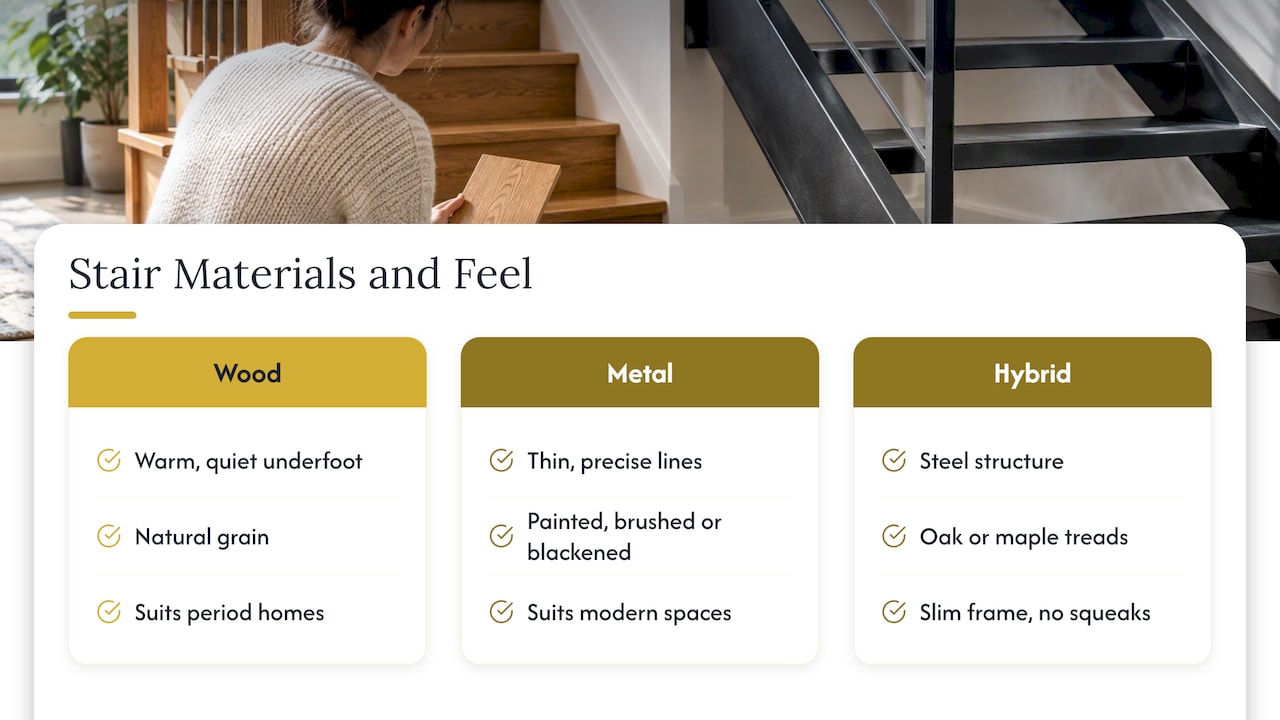
Wood is warm, quiet underfoot and familiar. It suits period homes, plexes with existing woodwork and any space where you want natural grain. A hardwood tread under bare feet is hard to beat.
Metal is thin, precise and cleaner in its lines. A folded-plate stringer or a single steel spine can make a staircase look like it floats. In a loft, a restaurant, a retail space or a modern addition, that slenderness is the point. Metal can be painted any colour, left in a brushed finish or blackened.
The approach we see work best in interiors is the hybrid: keep the structure in steel, and finish the treads with oak or maple. You get a slim profile and no squeaks from the frame, with the warmth of wood where your hand and foot actually touch. Tread choices affect both code and cost, which we cover in our guide to stair tread options for homeowners.
Cost: first price against lifetime price
We don’t publish prices on our site, because each stair is custom and the price depends on the design, finish, site access and installation. What we can give you is how the costs are built up, which is the same whichever fabricator you ask.
- Wood usually has the lower purchase price, especially for a simple straight outdoor flight built from softwood. Its costs come later: sealing, repairs and often full replacement.
- Steel costs more up front because of fabrication, welding, finishing (galvanizing, paint) and sometimes engineering. Over a long period it usually costs less to keep, since the structure doesn’t rot.
- Aluminum and stainless cost the most for materials, and suit coastal, pool-side or high-visibility applications where a coating failure would be unacceptable.
- Hybrids sit in the middle: you pay for the steel frame and for the wood, but you avoid replacing a rotted frame.
When you request quotes, make them comparable: same dimensions, same finish, same fasteners, installation and removal of the old stair included or not. Frost depth and footing work are common sources of gaps between quotes on exterior stairs, and our piece on Montreal exterior metal stair costs explains where those gaps appear.
Which one for which job
| Situation | Our recommendation |
|---|---|
| Exterior stair to a balcony or entrance, Montreal or Laval | Galvanized steel or aluminum, with a proper coating and stainless fasteners |
| Exterior stair for a plex or condo building | Steel, built to the structural and code requirements of a multi-unit building |
| Condo or commercial common stairwell | Steel, with a code-compliant anti-slip tread |
| Interior stair in a period home | Wood, or steel structure with wood treads if the structure needs replacing |
| Interior stair in a modern loft or commercial space | Steel with wood, glass or steel treads |
| Small deck with two or three steps, low budget | Treated wood can be reasonable, if you accept regular upkeep |
| Space-constrained access | Look at spiral or straight stairs, since code treats them differently |
Our perspective: where we draw the line
We fabricate and weld everything in our Lachine shop and install it ourselves across Greater Montreal, so we see what happens to stairs after they leave the drawing board. Our view is simple.
Outdoors, we steer clients towards metal, because the failures we are called to fix are almost never about the steel. They come from the coating, the connections and the drainage: water that is allowed to sit in a joint, a mild steel fastener in a galvanized part, a stringer that was bolted without thinking about expansion. Choosing metal is the start. Detailing it for Quebec winters is the rest, which is why we keep fabrication, finishing and installation under one roof.
Indoors, we don’t push metal for its own sake. If a client loves wood, we’ll build the staircase to carry wood treads, and we’ll make sure the frame is as stiff as it needs to be so nothing squeaks. A steel stringer under oak treads is often the best of both.
Whatever the material, we start from the code, not the look. A guard that is the wrong height or has openings that are too wide is a failed inspection and, more importantly, a risk. Our job is to make the safe version also the good-looking one.
— Ash
Getting a metal staircase in Greater Montreal
If you are leaning towards steel, aluminum or a steel and wood hybrid, we can help. Manara Corp. designs, fabricates and installs custom metal staircases and railings in Montreal, Laval, the South Shore and the West Island, working with homeowners, contractors, architects and property managers in French and English. Stair stringers are the part most prone to costly connection mistakes, so our guide to metal stair stringers in Montreal is a good thing to read before you send us drawings. If you are still choosing a shop, three filters to vet a metal fabricator will help you compare quotes properly. We install only within Greater Montreal and do not ship fabricated parts elsewhere.
A checklist before you decide
- Location: inside or outside? Outside tilts strongly to metal.
- Drop and use: what is the total height, and who uses it (family, tenants, employees, the public)? This sets the guard and handrail requirements.
- Existing structure: is the frame sound? If the stringers are rotting, replace them with steel and keep wood treads if you like the look.
- Finish: for steel, agree the coating system and fastener material in writing.
- Permit and code: check with your municipality, and ask your fabricator how the design meets the CNB.
- Total cost: ask for the price of the stair, installation, finishing and removal of the old stair, in the same format from every bidder.
FAQ
Are metal stairs stronger than wooden stairs?
For the structure, yes in most cases. A welded steel stringer carries more load over a longer span with a slimmer section than a wood one, and it doesn’t rot or sag. A well-built wood stair is still strong enough for a house when sized to code, so strength alone rarely decides the matter.
Do metal stairs rust in Quebec winters?
Uncoated carbon steel will. Hot-dip galvanized steel, properly detailed and with compatible fasteners, resists rust far longer, and aluminum and stainless steel resist it by nature. Road salt is the main enemy, so rinsing and checking the coating at welds each spring is worthwhile.
Are metal stairs more slippery than wood?
They can be if the tread is smooth plate, especially when wet or icy. Fabricators avoid this with perforated, grated or profiled treads and with a defined nosing. Wood can be slippery when wet too, so for either material the tread surface needs to be chosen for the exposure.
Can I put wood treads on a metal staircase?
Yes, and it is a common choice indoors. The steel frame carries the load, and the wood treads are fixed to it. The tread thickness, fixings and nosing need to be planned together so the finished stair meets the run and riser limits in the code.
Is a metal staircase more expensive than a wooden one?
Usually the first price is higher for metal, because of fabrication, welding and finishing. Over the life of an exterior stair, metal often costs less because it avoids the sealing, repairs and replacement that wood needs. Compare quotes on identical specifications to see the real difference.
Sources
- Stairs, Guards and Handrails (NBC), NRC Publications Archive
- Hardwood, Natural Resources Canada
- 14. Stairs, Accessibility Standards Canada