Weathering steel railings suit open, well-drained exterior locations with low chloride exposure, not sheltered spots or areas hit by de-icing salt spray. Specify drainage details, isolate dissimilar-metal fasteners, and set a routine inspection schedule. Whatever the finish, the railing still has to meet guard code requirements for height and opening size.
TL;DR:
- Weathering steel performs best in open, rural environments where it experiences regular wet-dry cycles and is shielded from chloride sources like de-icing salts.
- The protective patina stabilizes typically within 18 to 36 months under suitable conditions, but prolonged dampness or salt exposure prevents proper oxide formation.
- Proper detailing, such as sloped surfaces, drainage paths, fastener isolation, and avoiding water-trapping gaps, is crucial for reliable patina development.
- Installation practices including careful welding, storage, and handling, along with routine inspections, significantly influence the long-term appearance and durability of weathering steel railings.
- It is essential to evaluate site-specific factors before specifying weathering steel, as environmental conditions directly impact its corrosion performance and maintenance needs.
Table of Contents
- What weathering steel is and how the patina forms
- Environments where weathering steel succeeds and where it fails
- Design and detailing rules for reliable performance
- Codes, safety and dimensional requirements for railings
- Fabrication and installation: welding, prep and quality control
- Maintenance, inspection and realistic service-life expectations
- Notes from the shop floor: what Manara Corp. sees on real projects
- Why the research points past “low maintenance” marketing
- How Manara Corp. can help with weathering-steel railings
- Sources
- FAQ
What weathering steel is and how the patina forms
Weathering steel, commonly called Corten, is a low-alloy steel with added copper, chromium and nickel, often specified under CAN/CSA G40.21 Type A or AT. Those alloying elements let the steel build a dense, adherent oxide layer instead of the loose, flaking rust ordinary carbon steel produces.
The patina develops through repeated wetting and drying. Each cycle deposits a thin oxide film, and over time these films bond into a stable, dark-brown crust.
- Field studies on Ontario bridge structures report the patina commonly stabilizes in roughly 18 to 36 months of normal outdoor exposure.
- Once stable, the oxide layer slows further oxygen and moisture penetration, which is the entire basis for weathering steel’s reduced-maintenance reputation.
- That protection only holds where the surface actually gets to dry out between wet periods, which is the constraint most failures trace back to.
Environments where weathering steel succeeds and where it fails
Weathering steel performs best in open, rural or low-pollution sites with clear alternating wet and dry periods and no chloride source nearby. It performs poorly wherever salt, standing moisture or shade keep the surface wet for extended stretches.
Chlorides change the chemistry of the process entirely. NRC research on bridge structures shows that chloride species from de-icing salts can prevent the protective patina from forming at all, promoting unstable, loose corrosion products instead. In-service monitoring of a weathering steel bridge found that corrosion behaviour varies significantly along a single structure, tracking local salt deposition and wetting patterns rather than the design as a whole.
Time-of-wetness and shading matter as much as chloride load. A railing under a roof overhang that stays damp, or one facing a parking area salted every winter, behaves nothing like a similar railing standing in open sun and wind.
Use a short site checklist before specifying Corten, especially when considering construction work truck lighting exposure on site:
- Is the railing within splash distance of a salted road, sidewalk or parking area?
- Will any section sit in permanent shade or against a wall that traps moisture?
- Does the site have industrial or marine air pollution that could sustain wetness longer?
- Can the railing dry completely between rain events, or does geometry hold water?
Design and detailing rules for reliable performance
Good patina formation depends on geometry as much as alloy. A well-detailed railing sheds water fast and never lets it pool or wick into hidden gaps.
- Slope every horizontal surface and add drip edges so water never sits on a flat plane.
- Design weep paths at the base of posts and rails so trapped water always has somewhere to go.
- Avoid crevices and lap joints where capillary action can hold moisture indefinitely.
- Isolate fasteners with washers or sleeves, and use stainless steel hardware where contact with dissimilar metals is unavoidable.
- Separate weathering steel from aluminum, stainless steel, stone or concrete with a barrier material rather than direct contact.
- Handle pre-weathered panels carefully during installation, since scuffs and fingerprints can leave uneven staining once oxidation starts.
Fastener choice deserves particular attention. NRC galvanic-corrosion evaluation work found that galvanic rates depend on the environment, the area ratio between the two metals, and each alloy’s own corrosion behaviour, and it recommends isolation or compatible fasteners wherever that risk exists.
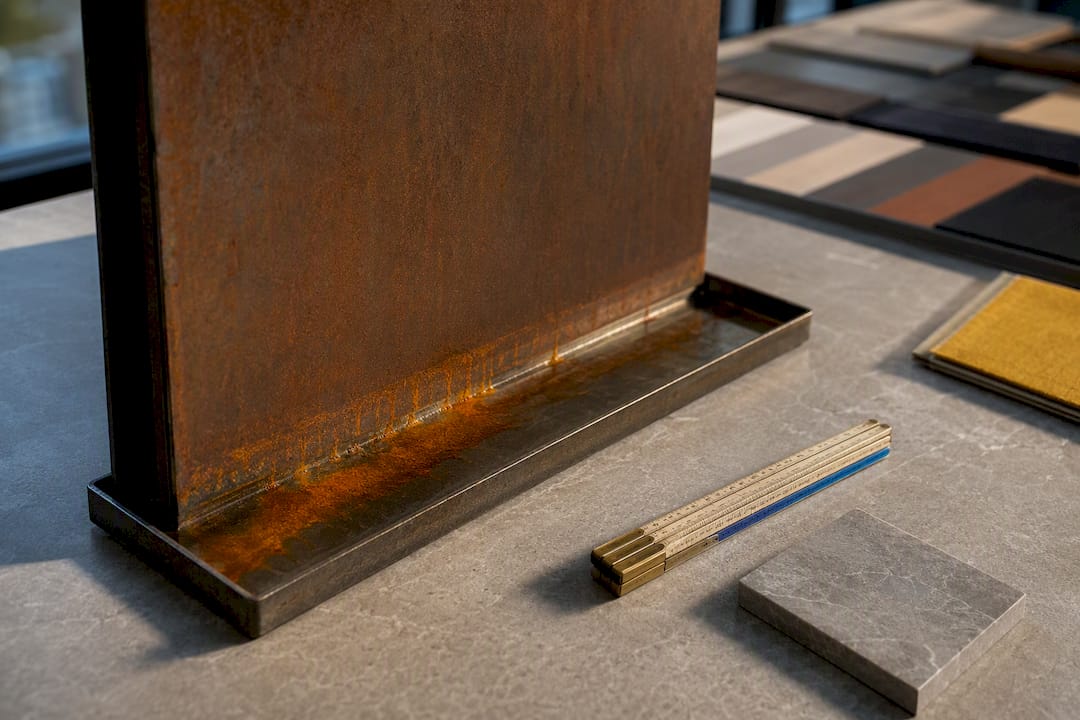
Pro Tip: Ask for a physical mock-up panel before full fabrication so everyone can see how staining and run-off will actually look against adjacent materials.
Codes, safety and dimensional requirements for railings
Weathering steel has to meet the same guard requirements as any other railing material. Proposed clarifications to guard provisions confirm that openings must prevent a sphere of 100 millimetres from passing through, with separate discussion of a 150 millimetre limit specific to open stringers. Confirm which version applies to your project before finalizing baluster spacing.
- Minimum guard heights vary with occupancy and platform elevation, so check the applicable code edition rather than assuming a single number covers every case.
- Weathering steel’s rough patina texture must not compromise handgrip comfort or create a wear hazard at frequently touched surfaces.
- Bolted connections carrying structural load need the same engineering review as any other material, regardless of finish.
Fabrication and installation: welding, prep and quality control
Shop practices influence how evenly a railing weathers as much as the alloy itself does.
- Follow consistent weld procedures across a run of railings so heat-affected zones do not oxidize at a visibly different rate than the parent metal.
- Grind and clean welds to remove slag and scale before the piece leaves the shop, since residual contamination causes blotchy early patina.
- Store fabricated sections dry and separated, never wet-stacked, because trapped moisture between pieces produces uneven, premature staining.
- Protect installed railings from mortar splash, paint overspray and other trades’ debris during the rest of construction.
- Inspect welds visually and, where load-bearing connections are in question, escalate to ultrasonic thickness testing or a full engineering assessment rather than guessing from surface appearance.
Maintenance, inspection and realistic service-life expectations
Weathering steel is lower maintenance than painted steel, not maintenance-free. Inspection frequency should match exposure risk.
- Low-exposure, open sites: a visual check once a year is usually sufficient.
- Moderate-exposure sites near occasional salt or shade: check twice a year, especially after winter.
- High-exposure sites near roads, sidewalks or marine air: inspect several times a year and after major storms.
Watch for flaking rather than a tight crust, streaking onto adjacent materials, or soft spots at welds and fastener points. When those appear, cleaning, targeted coatings or metallizing can extend service life, and a University of Waterloo thesis on weathering steel highway structures notes that protection methods like metallizing or sacrificial coatings can meaningfully extend life in aggressive exposures.
Published service-life figures often assume ideal, low-chloride conditions. Where salt exposure or persistent wetness is present, schedule non-destructive testing or an engineering review well before the finish looks like a problem, since ultrasonic gauges measure pit depth but not the lateral extent hidden under a layered patina.
Pro Tip: Keep a dated photo record of each inspection so gradual colour or texture changes are easy to compare year over year.
Notes from the shop floor: what Manara Corp. sees on real projects
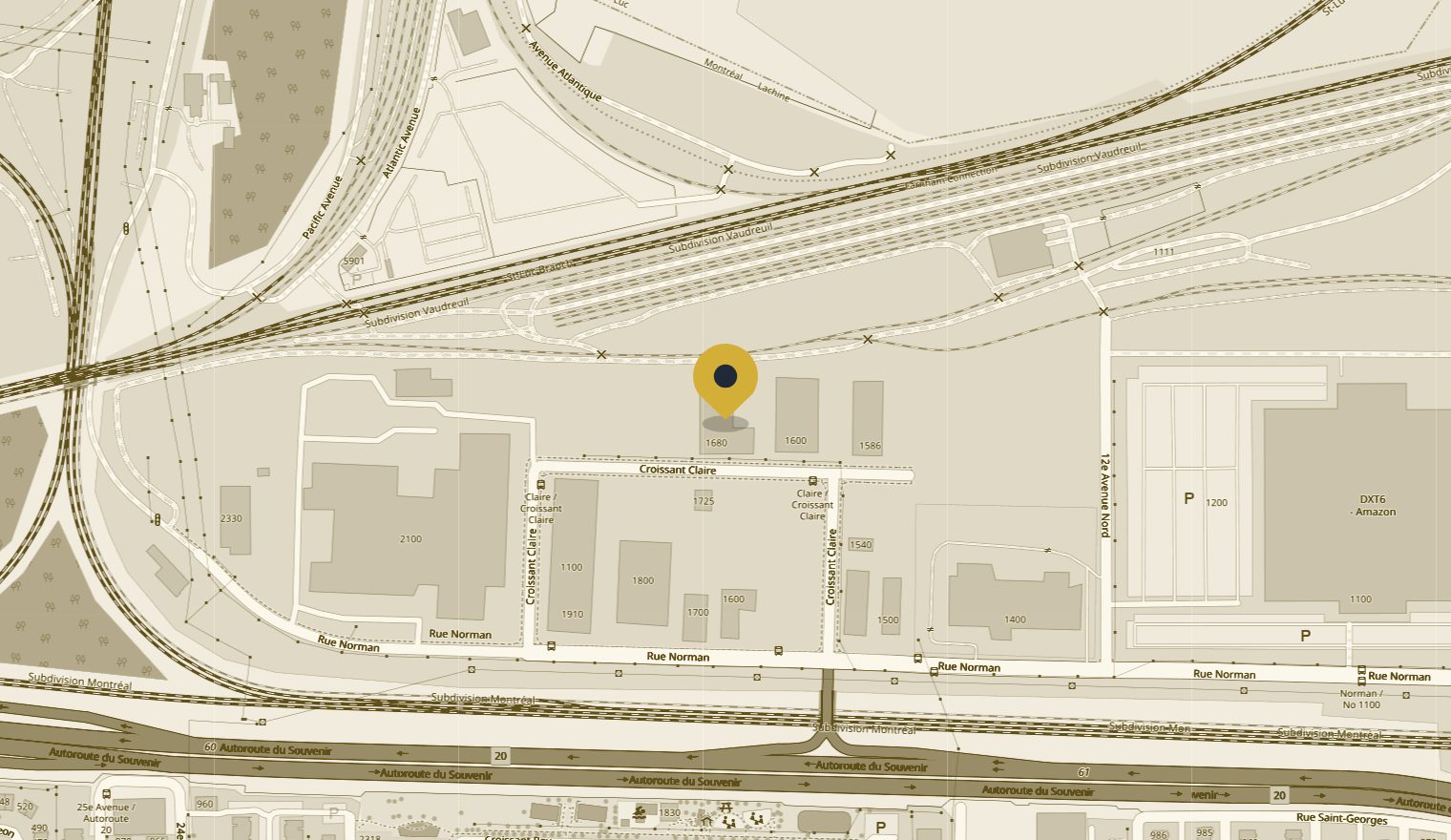
A local metal fabrication and welding shop fabricates and installs railings in-house, serving architects, contractors and property managers in the Greater Montreal area. Offering a combination of CNC laser cutting, sheet bending and rolling, profile rolling and welding under one roof helps ensure fastener schedules, isolation details and finish notes get resolved before steel leaves the shop.
Specification requests typically include a small mock-up panel, a documented fastener schedule showing where stainless hardware or isolation washers are required, and clear notes on whether the steel should arrive pre-weathered or be left to develop patina on site.
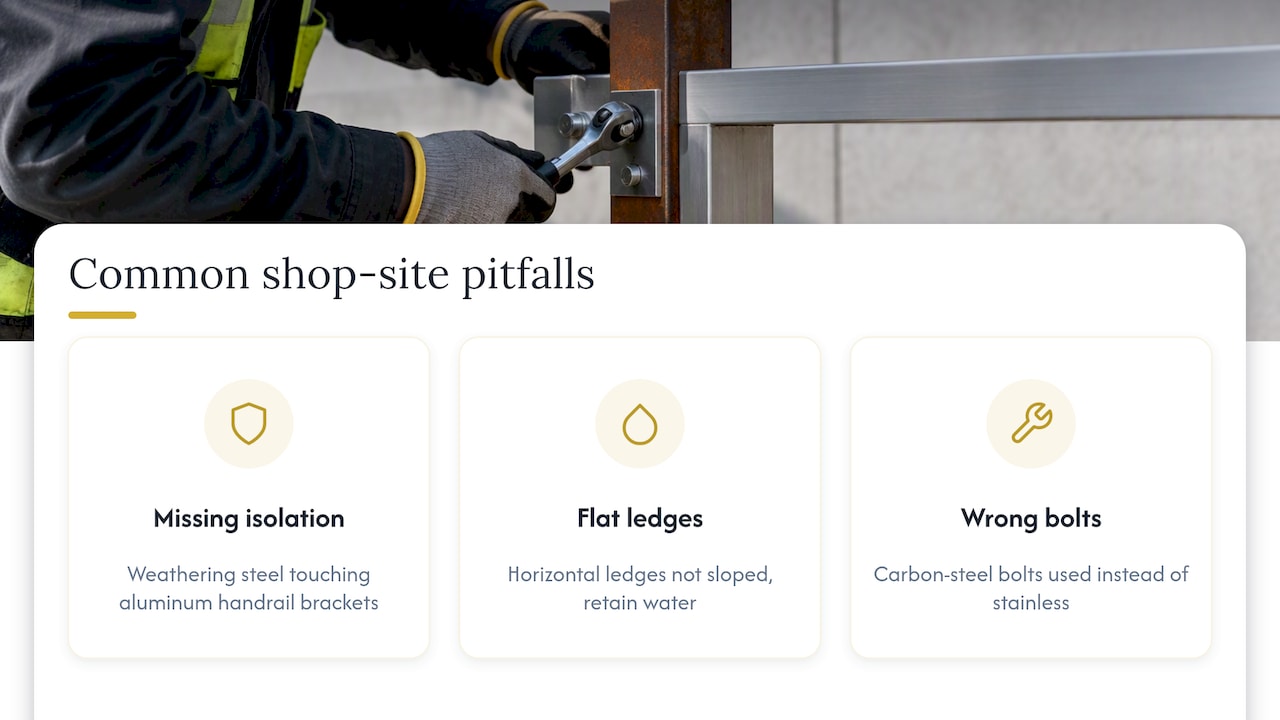
The most common pitfalls on site are missing isolation between weathering steel and aluminum handrail brackets, horizontal ledges that were never sloped for drainage, and carbon-steel bolts used where stainless was specified. Each is straightforward to correct at the shop drawing stage, expensive to fix after installation.
Why the research points past “low maintenance” marketing
The evidence here supports a narrower claim than the marketing language around Corten usually allows. Weathering steel is not a low-maintenance material in any general sense: it is a material whose performance is entirely conditional on site chemistry and detailing, and the same alloy that self-protects beautifully on an open rural overpass can corrode faster than painted steel a few metres from a salted sidewalk.
The conventional advice oversells the “leave it and forget it” framing and undersells the site assessment step. Too many specifications treat the chloride and shading checklist as optional when it should be the first decision, before finish or aesthetic even enter the conversation.
If you take one thing from the research, make it this: run the site screening before you commit to the material, not after the railing is installed and staining unevenly. Drainage geometry and fastener isolation are cheap to get right in a shop drawing and expensive to retrofit once welded steel is bolted to a building.
— Ash
How Manara Corp. can help with weathering-steel railings
Getting weathering steel right depends on decisions made before fabrication starts, and that is where in-house control over cutting, bending, rolling and welding pays off. Manara Corp. fabricates custom railings in its Lachine shop and installs them on site throughout Greater Montreal, so drainage details, fastener isolation and finish notes are handled by the same team from drawing to installation.

When you request a quote, ask for:
- A shop drawing showing drip edges, weep paths and any crevice-prone joints.
- A fastener schedule specifying stainless hardware or isolation washers at every dissimilar-metal contact.
- A short mock-up panel if the project involves a large run of railings or an unfamiliar profile.
- Written notes on whether panels will be pre-weathered or left to patina naturally on site.
Contact Manara Corp. through the railings page to start a project or request a quote for custom metal fabrication and welding.
Sources
For readers who want to verify the technical claims above: NRC’s galvanic corrosion research and evaluation procedure document chloride and fastener risks; the in-service bridge monitoring study and the Ontario corrosion products analysis cover real-world patina behaviour, and Canada’s proposed guard code clarifications set the dimensional rules any railing must meet.
- Galvanic corrosion in steel and aluminum bridges: standards research – NRC Publications Archive
- In-Service Corrosion Monitoring of a Weathering Steel Bridge in Canadian Climate
- Galvanic corrosion in steel and aluminum bridges: standards research – NRC Publications Archive
FAQ
What are the downsides of using Corten steel?
Corten steel can stain adjacent materials with rust run-off during its initial weathering period, and it needs specific detailing for drainage and fastener isolation to avoid trapped moisture and galvanic corrosion. In chloride-heavy environments such as areas exposed to de-icing salts, the protective patina may never stabilize, leading to ongoing corrosion instead of reduced maintenance.
Is weathering steel the same as Corten steel?
Corten is a trademarked brand name for weathering steel, and the two terms are generally used interchangeably in construction. Structural specifications typically reference the material by its CAN/CSA G40.21 Type A or AT designation rather than the brand name.
How do you speed up the weathering process on Corten steel?
There is no verified, universally reliable shortcut: the patina forms through natural wetting and drying cycles that field studies show typically take about 18 to 36 months to stabilize outdoors. Some fabricators offer pre-weathering treatments in a controlled setting before installation, which can shorten the visible transition period on site.
Is weathering steel more expensive than regular steel?
Published pricing for weathering steel versus standard carbon steel is not listed here, so exact cost comparisons depend on current material markets and the specific project. Manara Corp. provides quotes for custom railing fabrication and installation on request through its railings services.
Do weathering steel railings still need to meet guard code requirements?
Yes, weathering steel railings must meet the same dimensional and structural guard requirements as railings in any other finish. Guidance on guard openings requires that a 100 millimetre sphere cannot pass through, with separate discussion of a 150 millimetre limit specific to open stringers.