Choose anodizing when you want an integral, wear-resistant metallic finish that will not chip. Choose powder coating when you need thicker, colourful, repairable coverage on fabricated parts. The trade-off runs in both directions: anodizing gives permanence and a natural metal look but limits colour and can tint unevenly on the wrong alloy, while powder coating opens up colour and texture but adds a film that can chip at an edge. One regulatory note matters too: chromic anodizing involves hexavalent chromium controls that do not apply to powder coating.
TL;DR:
- Anodizing creates an integral oxide layer on aluminum, offering wear resistance and a natural metal look, but with limited color options and uneven tint risks on certain alloys.
- Powder coating applies a thick, colored resin film that resists impact and allows for more vibrant, textured finishes, though it can chip and often requires touch-ups.
- Hardcoat anodize (Type III) excels in wear resistance for high-contact applications, while powder coating is better suited for surfaces that need impact resistance and easy repair.
- Both finishes have long-term durability confirmed by industry testing, but anodize dulls gradually while powder coating is prone to impact chipping and crazing under improper application.
- Environmental regulations impact chromic anodizing due to hexavalent chromium, making sulfuric anodize and powder coating more eco-friendly choices depending on project needs.
Table of Contents
- What anodizing actually does to aluminum
- How powder coating differs from an oxide finish
- Anodizing versus powder coating side by side
- Where each finish actually gets used
- What lifespan and upkeep look like in practice
- Chromium rules and environmental trade-offs to know
- How to choose: a practical checklist
- A fabricator’s take on finish decisions
- Get the right finish on your next fabrication project
- Sources
- FAQ
What anodizing actually does to aluminum
Anodizing is an electrochemical process that converts the surface of the aluminum itself into aluminum oxide. A part is submerged in an acid electrolyte, usually sulfuric and sometimes chromic, and a current pulls oxygen ions into the metal surface to grow a hard, porous layer that becomes part of the substrate rather than sitting on top of it. That is the core difference from any paint or powder: there is no separate film to peel.
The Aluminum Anodizers Council and the MIL-A-8625 specification split anodize into types. Type II (sulfuric) is the common decorative and protective finish; Type III, often called hardcoat, is thicker and denser, built for sliding wear and dielectric needs. AAMA 611 further defines architectural performance classes: Class I requires a high-performance anodized finish thickness, Class II a moderate thickness, both tied to long-term exterior testing.
- The oxide layer can be dyed or electrolytically coloured, but colour range is narrower than paint and depends heavily on alloy.
- Anodizing is chosen when a job calls for a durable, natural-metal appearance rather than a painted look.
How powder coating differs from an oxide finish
Powder coating starts as dry pigment and resin particles, electrostatically sprayed onto a grounded part, then cured in an oven where the powder melts and fuses into a continuous film. Unlike anodizing, nothing about the aluminum itself changes: the coating is a separate layer bonded to a prepared surface.
Aluminum needs pretreatment before powder goes on, typically a cleaning and conversion coating step, because the natural oxide on raw aluminum resists adhesion otherwise. QUALICOAT guidance ties specific pretreatment and coating systems to the environment a part will face, with attention to edge coverage on cut or welded aluminum.
- Common resin systems include polyester, epoxy, and polyester-epoxy hybrids, each suited to different exposure conditions.
- The cured film runs thicker than most anodize layers, which is part of why it resists impact differently and why chips can be touched up rather than requiring a full strip.
Powder coating is a common pick for architectural elements that need consistent, saturated colour, a topic covered in more detail in our comparison of powder coating and liquid paint.
Anodizing versus powder coating side by side
The two finishes solve different problems, and the gap shows up clearly once you line up the variables that matter on a real project.
- Durability and hardness: Hardcoat (Type III) anodize produces an oxide layer often compared to sapphire in surface hardness, ideal for sliding or abrasive contact, while powder coating relies on a tougher, flexible film that resists impact chipping better than standard anodize.
- Corrosion and weathering: AAMA 611 sets the bar for anodize performance outdoors, while AAMA 2604 and 2605 set equivalent long-term weathering standards for high-performance organic coatings, so both finishes have a recognized durability tier, not just a marketing claim.
- Appearance: Anodizing keeps the look of metal, with colour limited mostly to bronzes, blacks, and metallic tones; powder coating offers close to unlimited colour and texture, including matte, gloss, and textured finishes.
- Thickness and permanence: Anodize is integral to the metal and cannot flake off the way a film can, but it is also thinner and cannot hide surface defects the way a heavier powder film sometimes can.
- Repairability: A chipped powder coat can often be touched up in the field; a damaged anodized surface generally needs to be stripped and re-anodized to match.
- Cost drivers: Batch size, colour complexity, masking requirements, and secondary operations like machining after finishing all swing the price in both directions.
Anodizing produces an oxide layer with hardness often compared to sapphire, which is why it remains the default for parts that see repeated sliding contact or handling.
Neither finish is a blanket winner. A storefront frame that needs a permanent bronze tone leans toward anodize; a fence panel that needs to match a specific paint colour and survive the occasional scrape leans toward powder.
Where each finish actually gets used
- Storefronts, curtain walls, and façades typically specify Architectural Class I or II anodize for its permanence and resistance to fading.
- High-contact hardware and sliding assemblies, like drawer slides or cylinder housings, often call for Type III hardcoat anodize because of its wear resistance.
- Fences, coloured railings, and outdoor furniture usually go to powder coating, since it delivers bold colour and can be touched up if scratched during installation or use.
- Parts requiring machining after finishing often steer away from powder coating, since the film tends to chip or delaminate under a cutting tool, while anodize formulated for post-machining can hold up better.
Alloy choice matters here too. Not every aluminum alloy anodizes evenly, which is one reason we point clients to our breakdown of 6061 versus 5052 aluminum before locking in a finish. Our railing projects illustrate the split well: some clients want a natural anodized look, others want a powder-coated colour that matches existing exterior trim.
What lifespan and upkeep look like in practice
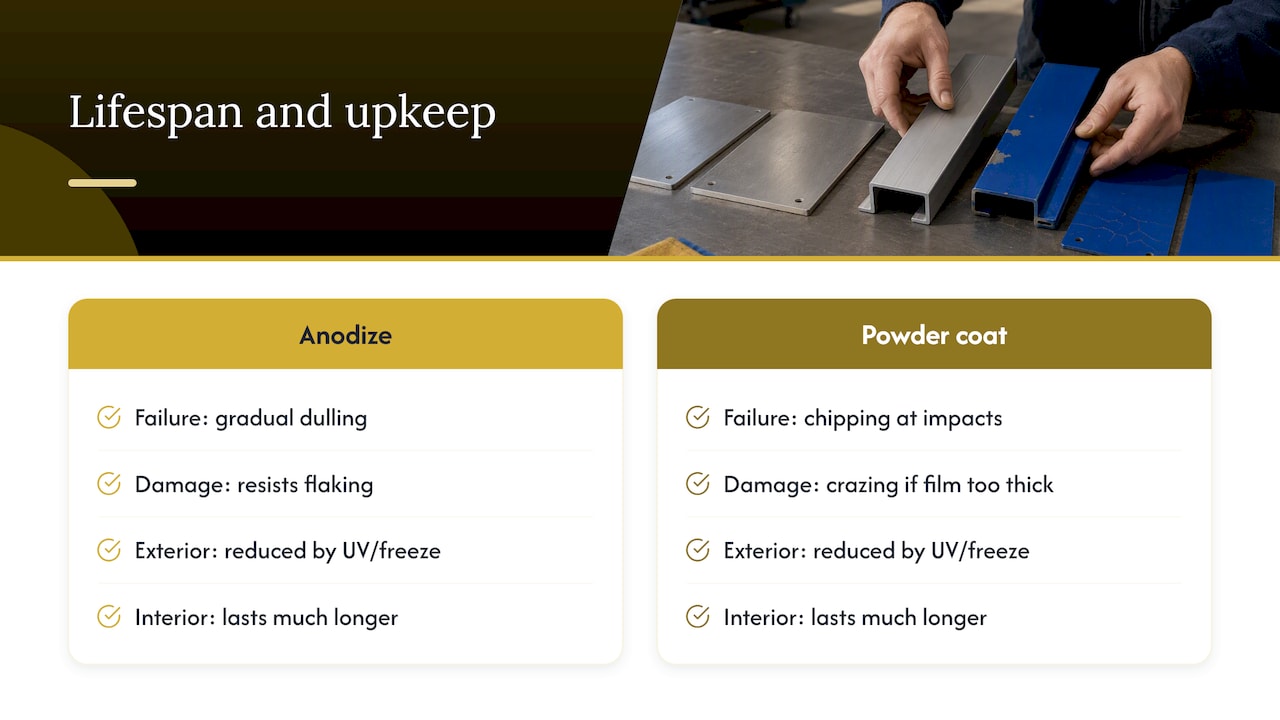
Both finishes are built to last for years when specified correctly, and AAMA testing protocols for both anodize (AAMA 611) and organic coatings (AAMA 2604/2605) are designed to predict multi-year exterior performance rather than lab-only results. In service, anodize mostly fails by gradual dulling rather than flaking, while powder coating can chip at impact points or show crazing if the film was applied too thick. Interior parts in either finish generally outlast exterior ones by a wide margin simply because they avoid UV and freeze-thaw cycling.
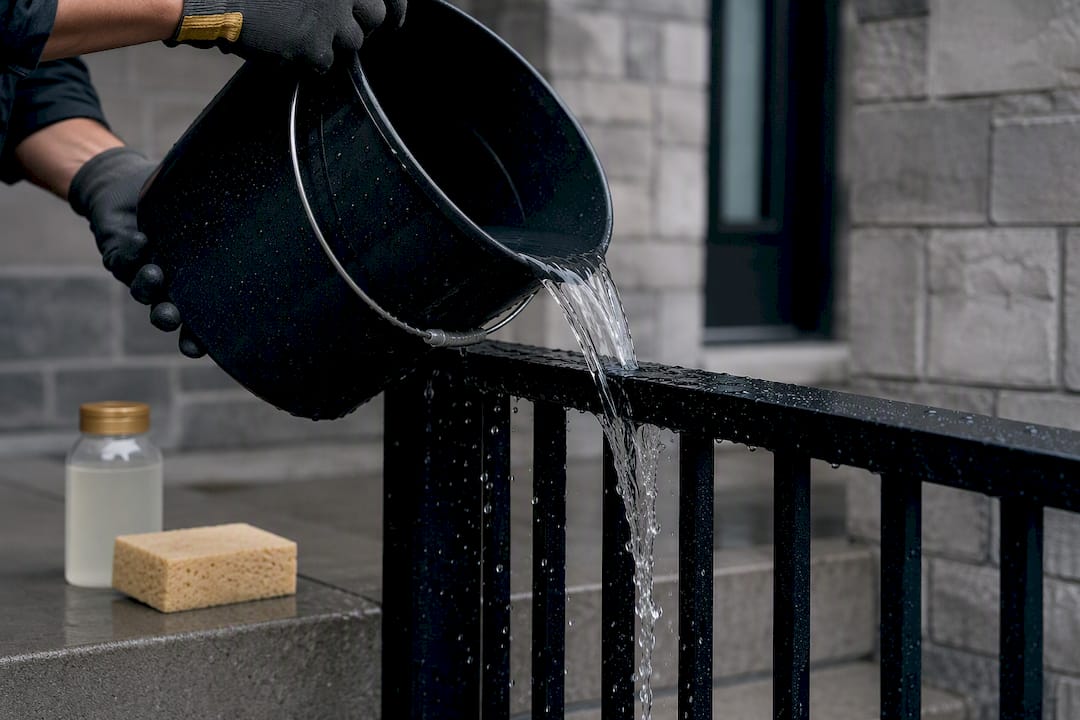
Pro Tip: Rinse anodized or powder-coated railings with mild soap and water a couple of times a year. Harsh solvents or abrasive pads dull anodize and can lift the edge of a powder coat film.
Chromium rules and environmental trade-offs to know
Chromic anodizing uses hexavalent chromium, and Canadian regulations require facilities using 50 kilograms or more of chromium trioxide per year to report releases and apply an approved control method such as point-source control, surface-tension limits, or tank covers. Many shops have shifted toward sulfuric anodizing partly for this reason, and the industry has also moved away from older PFOS-based fume suppressants.
- Powder coating produces essentially no volatile organic compound emissions during application, since it is applied dry and cured by heat rather than solvent evaporation.
- Powder coating is often considered a lower-emission process than liquid paint because it uses no solvents, while chromic anodizing carries its own regulated emissions profile that sulfuric anodizing avoids.
How to choose: a practical checklist
- Define the goal first: are you prioritizing a natural metal look, a specific colour, abrasion resistance, or ease of future repair?
- Confirm the alloy: ask whether the aluminum is anodizing-quality, since some 6xxx series extrusions anodize unevenly if not properly specified.
- Name the standard you expect: AAMA 611 for anodize, AAMA 2604 or 2605 for powder coat, or MIL-A-8625 if hardcoat performance is required.
- Ask for a sample panel: colour, gloss, and texture should be approved on a physical piece before a full run, not a swatch chart alone.
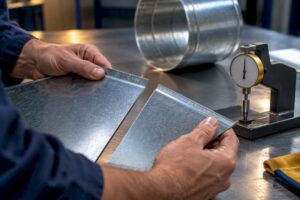
- Ask about coat thickness targets and test reports: a finisher should be able to state expected microns and point to test data, not just describe the process.
- Weigh lead time and batch size: small runs of coloured parts often favour powder coating, while large architectural runs of a single natural finish often favour anodizing.
A red flag worth noting: a quote with no mention of alloy, standard, or thickness target is a quote without enough information to compare against another one.
A fabricator’s take on finish decisions
Finish choice comes down to what the part has to survive and how it will be handled on-site. For railings and stairs, powder coating is generally coordinated in-house or through a trusted finisher when a specific colour is requested, and anodizing is subcontracted when the job calls for a natural aluminum look or hardcoat wear resistance. Edge prep and masking around welds decide more of the final result than the coating itself.
For most fabricated architectural metalwork in a residential or commercial setting, powder coating tends to be the more forgiving and flexible choice.
— Ash
Get the right finish on your next fabrication project
Choosing between anodizing and powder coating gets easier once you know what your part actually has to survive, and having that conversation with a fabricator before metal gets cut saves rework later. Custom railings, stairs, and fences are fabricated and welded in-house in Lachine and installed across Greater Montreal, including the West Island, Laval, and the South Shore, which means finish coordination happens under one roof instead of across multiple vendors. Whether you need a natural anodized look on a commercial railing or a powder-coated colour match on a residential fence, our team can advise on alloy, standard, and finishing sequence before fabrication starts. Get in touch through our contact page or explore our railing services to start planning your project.
Sources
- Ensuring long-term performance of architectural aluminium finishes – Construction Specifier
- Canada
- Specifying anodized finishes on aluminium – Aluminum Anodizers Council (AAC)
FAQ
Is anodizing more expensive than powder coating?
Cost depends heavily on batch size, alloy, and colour complexity rather than one process being flatly more expensive. Small architectural runs of a single natural finish can favour anodizing, while coloured runs with masking and multiple parts often cost less per piece with powder coating.
What are the disadvantages of anodizing aluminum?
Anodizing limits colour options compared with powder coating and can produce uneven tinting if the alloy is not anodizing-quality. Damaged anodized surfaces generally need to be stripped and reprocessed rather than spot-repaired, and chromic anodizing carries regulated hexavalent chromium emissions that sulfuric anodizing avoids.
Can you powder coat over anodized aluminum?
Powder coating can be applied over anodized aluminum in some cases, but adhesion depends on proper surface preparation since the anodic layer is smoother and less porous than bare aluminum. A finisher should confirm the anodize type and pretreatment approach before proceeding rather than assuming standard powder adhesion will hold.
How long does anodized coating last on aluminum?
Anodized coatings are designed for long-term exterior performance, with AAMA 611 testing protocols built around multi-year outdoor durability for Class I and Class II finishes. In practice, anodize tends to fail gradually through dulling rather than flaking, so interior parts generally outlast exterior ones by a wide margin.