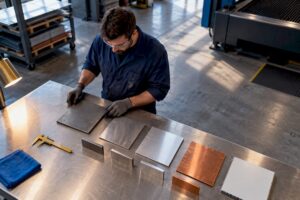
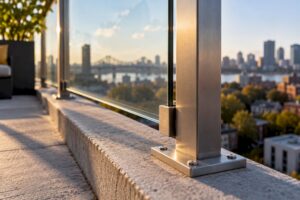
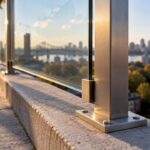
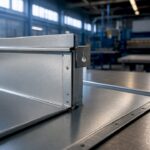
Choose corten for dry, well-drained, low-chloride sites where you want a maintenance-light rust finish, and choose galvanized steel wherever chloride exposure, road salt, or coastal air is part of the picture. The deciding factor is almost never the metal itself: it’s how much chloride the site delivers and whether water can sit on the surface long enough to break the protective layer down.
TL;DR:
- Corten requires a stable, dry environment to develop its protective rust patina, making it unsuitable for shaded or constantly wet locations.
- Galvanized steel excels in marine or de-icing salt environments because its zinc coating corrodes preferentially to protect the underlying steel.
- Proper drainage and separation from incompatible metals like copper or aluminum are critical to prevent corrosion issues with either material.
- Lifecycle maintenance includes annual inspections, rinsing corten surfaces, and recoating galvanized parts as needed, with exposure and detailing having more impact than initial cost.
- Fabrication details, such as avoiding water pooling and using compatible fasteners, are essential to ensure durability, regardless of whether choosing corten or galvanized steel.
Table of Contents
- Corten vs galvanized at a glance
- How each material actually holds up outdoors
- What each finish looks like over time
- Fabrication and welding considerations that change the choice
- Maintenance and what it really costs over the life of the project
- A short checklist for choosing between the two
- What years of fabrication work teach you about this choice
- How a local fabricator can help with your corten or galvanized project
- Sources
- FAQ
Corten vs galvanized at a glance
Both materials protect steel from corrosion, but they do it in opposite ways and reward different site conditions. Corten (weathering steel) builds a rust-like patina that seals the surface once it dries between rain events. Galvanized steel wears a zinc coating that sacrifices itself slowly, protecting the base metal even where the surface is scratched.
- Appearance: corten shifts from orange to deep brown over months; galvanized stays silver-grey until painted or left to weather.
- Best environments: corten suits dry, well-ventilated, low-salt sites; galvanized handles marine air and de-icing salt exposure better.
- Maintenance: corten needs periodic rinsing and drainage checks; galvanized needs occasional coating touch-ups if painted.
- Fabrication: both weld well with documented procedures, but galvanized needs fume control and coating repair after welding.
- Inspection signs: watch for flaking or uneven colour on corten, and white staining or coating loss on galvanized.
Initial material cost is often close between the two, so the real comparison is lifecycle: how much attention each surface needs once it’s installed and exposed to your specific climate.
How each material actually holds up outdoors
Corten’s patina forms when iron, copper, chromium, and nickel in the alloy oxidize and create a dense rust layer that slows further corrosion, provided the surface dries out regularly. Sites with constant wetting, shade, or poor drainage never let that layer stabilize, so the steel keeps corroding instead of protecting itself.
Galvanized steel takes a different route: the zinc coating corrodes preferentially, protecting the steel underneath even at cut edges or scratches, which is why it performs well in aggressive atmospheres including marine and de-icing salt zones, according to industry technical guidance.
One in-depth Canadian corrosion review found that atmospheric corrosion rates for steel vary significantly by climate and local factors, with chloride deposition from road salt identified as a critical driver of corrosiveness changes since the 1950s. That’s the practical reason a material that performs beautifully on a dry inland site can fail early near a highway or coastline.
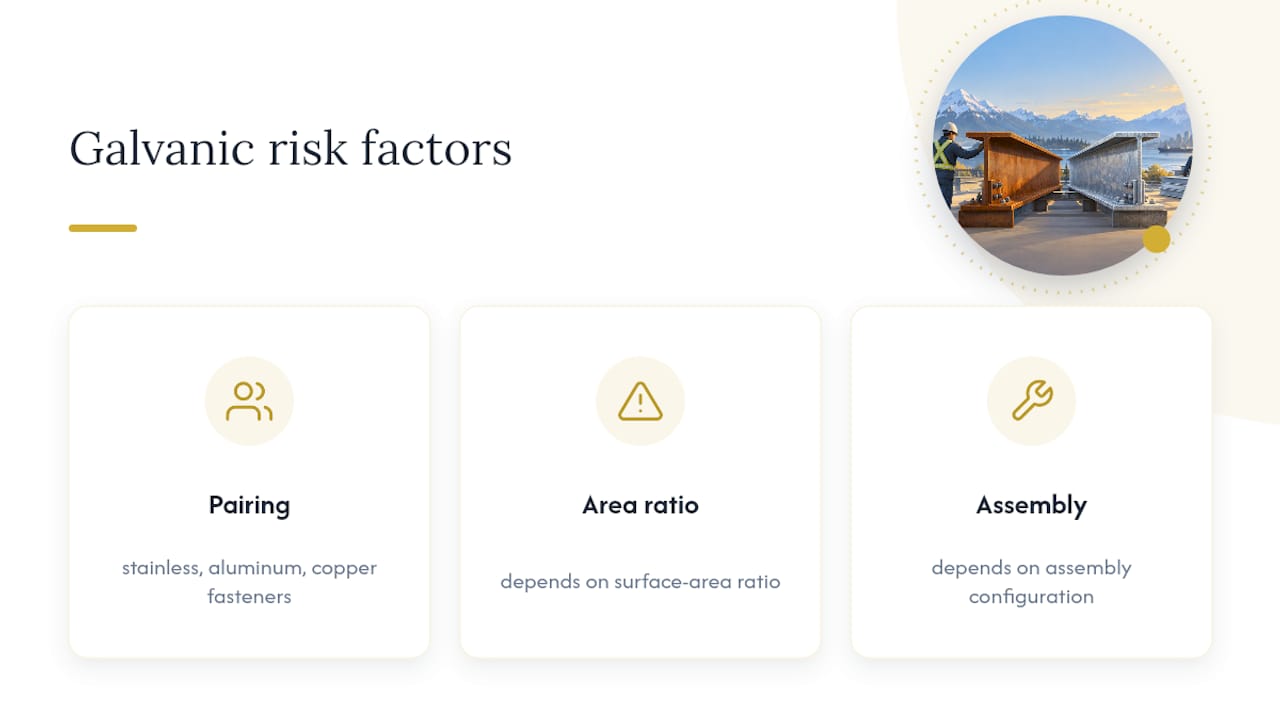
Mixing metals adds another risk: where corten or galvanized components touch stainless steel, aluminum, or copper fasteners, galvanic corrosion depends heavily on the surface area ratio and assembly configuration, sometimes producing corrosion rates well beyond what the base metals would suggest alone.
What each finish looks like over time
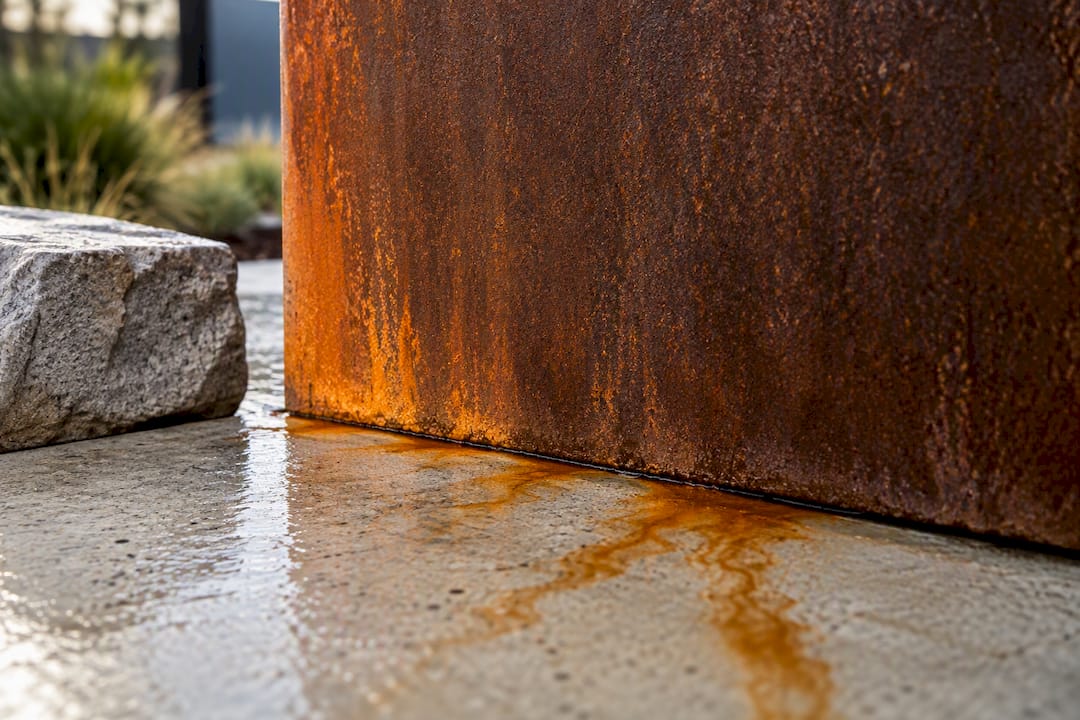
Corten starts bright orange and darkens to rust brown, then deep chocolate over several months of weathering, depending on rainfall and orientation. That colour shift is part of the appeal for planters, cladding panels, and landscaping edges, but it comes with a trade-off: run-off can stain adjacent concrete, stone, or light-coloured siding during the first wet seasons.
Galvanized steel keeps a matte silver, spangled finish unless it’s painted. Painting new galvanize is trickier than it looks: factory conversion coatings or several months of outdoor weathering are usually needed before paint will adhere reliably, since conversion coatings applied at the factory are the most effective way to guarantee adhesion.
Design details that reduce staining and streaking on either material:
- Add drip edges so run-off drains away from adjacent surfaces.
- Seal joints where water can pool against the metal.
- Route roof or gutter run-off away from corten panels during the first patina cycle.
Fabrication and welding considerations that change the choice
Welding either material is routine when procedures are documented and followed. CWB Group guidance confirms that welding before or after galvanizing is compatible with durable corrosion protection when best practices are followed, including fume control and post-weld coating repair on galvanized parts. Corten needs less post-weld treatment but benefits from grinding welds smooth so the patina forms evenly across the joint. For a closer look at handling fumes and post-weld touch-ups, see our guide on welding galvanized steel.
Practical shop-level notes:
- Plan fit-up before galvanizing: parts that need rework after dipping lose coating and require field repair.
- Choose fasteners of a compatible metal, or isolate dissimilar metals with washers or coatings to avoid galvanic couples.
- Detail drainage into every joint so water doesn’t sit against welded seams.
Pro Tip: Ask your fabricator for a small sample or mockup panel before committing to full production. Seeing the actual patina or coating under your project’s lighting and orientation avoids surprises later.
Maintenance and what it really costs over the life of the project
Corten needs periodic inspection for uneven patina, flaking, or staining, plus attention to drainage so water doesn’t pool against the surface. Galvanized steel needs less routine attention structurally, but painted galvanize will eventually need recoating, and any scratched or cut edge should be checked for coating loss.
- Inspect both materials at least once a year, more often near roads or coastlines.
- Rinse corten surfaces where road dust or salt spray accumulates.
- Touch up paint or zinc-rich coating on galvanized steel where damage exposes bare steel.
- Reassess drainage details if staining or pooling appears after the first season.
The bigger lifecycle driver isn’t the sticker price of either material: it’s exposure and detailing. A well-drained corten railing inland can outlast a poorly detailed galvanized one near a salted road, and vice versa. That’s consistent with findings that weathering steel performs poorly wherever salts or persistent wetting prevent a stable patina from forming, regardless of the alloy’s general reputation for durability.
A short checklist for choosing between the two
- Measure chloride exposure: how close is the site to a coast, or how much de-icing salt spray does it see each winter?
- Check drainage: can water pool on any horizontal surface, ledge, or joint, or does everything shed freely?
- Look at contact points: will the piece touch stainless steel, aluminum, or copper fasteners that could set up a galvanic couple?
- Decide on joinery: are you welding in the shop, bolting on site, or both, and does that affect coating repair?
- Set a maintenance budget: can someone realistically inspect and touch up the finish once a year?
- Confirm the aesthetic: are you comfortable with a colour that changes for a year, or do you need a stable finish from day one?
As a rule of thumb, moderate to high road salt or coastal exposure points to galvanized or a coated galvanized system, while dry, well-drained, aesthetic applications favour corten.
What years of fabrication work teach you about this choice
Most specification errors come from picking a material on appearance alone, without checking drainage details or what it will touch once installed. A corten panel butted directly against untreated fasteners, or a galvanized railing with a horizontal ledge that traps water, causes more field problems than the base material ever does.
Canadian welding and fabrication work is governed by CSA W59 and CSA W47.1 certification and procedure requirements, and any shop cutting corners on documented welding procedures is cutting corners on the finished product’s durability too. The fix is almost always in the detailing, not the metal.
— Ash
How a local fabricator can help with your corten or galvanized project
Once you’ve settled on a material, the next step is getting it fabricated and installed right. A local fabricator can produce both corten and galvanized components in-house, weld and finish them to the details your project needs, and provide installation on site in the Greater Montreal area.

If you’re still deciding, ask for material samples or a shop mockup before committing to a full run.
| What you can request | Where to start |
|---|---|
| Custom railings, stairs, or fences in corten or galvanized steel | Manaracorp |
| Welding and fit-up for post-galvanize or field assembly | Custom metal welding |
| Shaped or rolled panels for cladding or planters | Sheet bending and rolling |
Get in touch through Manaracorp to request a sample, a mockup, or a quote for your project.
Sources
- Atmospheric corrosion of steel infrastructure in Canada under climate change – NRC Publications Archive
- Hot-dip Galvanizing vs. Weathering Steel (GalvanizeIt PDF)
- Galvanic corrosion study and evaluation tool (NRC report)
- Welding steel before and after galvanizing (CWB Group presentation)
FAQ
What are the downsides of corten steel?
Corten can stain adjacent concrete, stone, or siding with rust-coloured run-off, especially in its first year of weathering. It also performs poorly in constantly wet, shaded, or chloride-exposed spots where the patina never gets to dry and stabilize.
Why is corten steel so expensive?
Corten’s alloying elements and controlled weathering process add cost compared to plain carbon steel, though pricing depends on the supplier and project scope. Ask your fabricator for a quote specific to your design rather than relying on a general figure.
Is corten steel just rusted steel?
No. Corten is engineered with alloying elements that let its rust layer form a dense, adherent patina rather than the flaking rust ordinary steel produces. That patina, once stable, slows further corrosion in the right conditions.
How can you tell if steel is corten?
Corten develops a distinctive orange-to-brown patina within months of outdoor exposure, unlike plain steel, which flakes and pits as it rusts. A mill certificate or supplier documentation is the reliable way to confirm the alloy before fabrication.