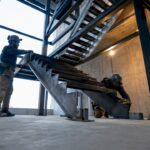
A professional industrial profile rolling service can shape most structural and custom sections in steel, stainless steel, and aluminium within standard thickness and length limits. Angles, channels, beams, tubes, and custom profiles are all fair game for a shop with the right tooling. Your next move: send a cross-section drawing and material specs, and you can have a binding quote back within a couple of business days.
TL;DR:
- Most shops can handle profiles up to 8 mm thick and lengths up to 27 meters, but custom shapes or heavier steel may require hot rolling or additional lead time.
- Accurate quotes rely on detailed drawings, specific material grades, dimensions, surface finishes, tolerances, and any fabrication notes being provided upfront.
- Shops with experience across different metals like steel, stainless steel, aluminium, and copper tend to be more flexible in handling varied projects and tolerances.
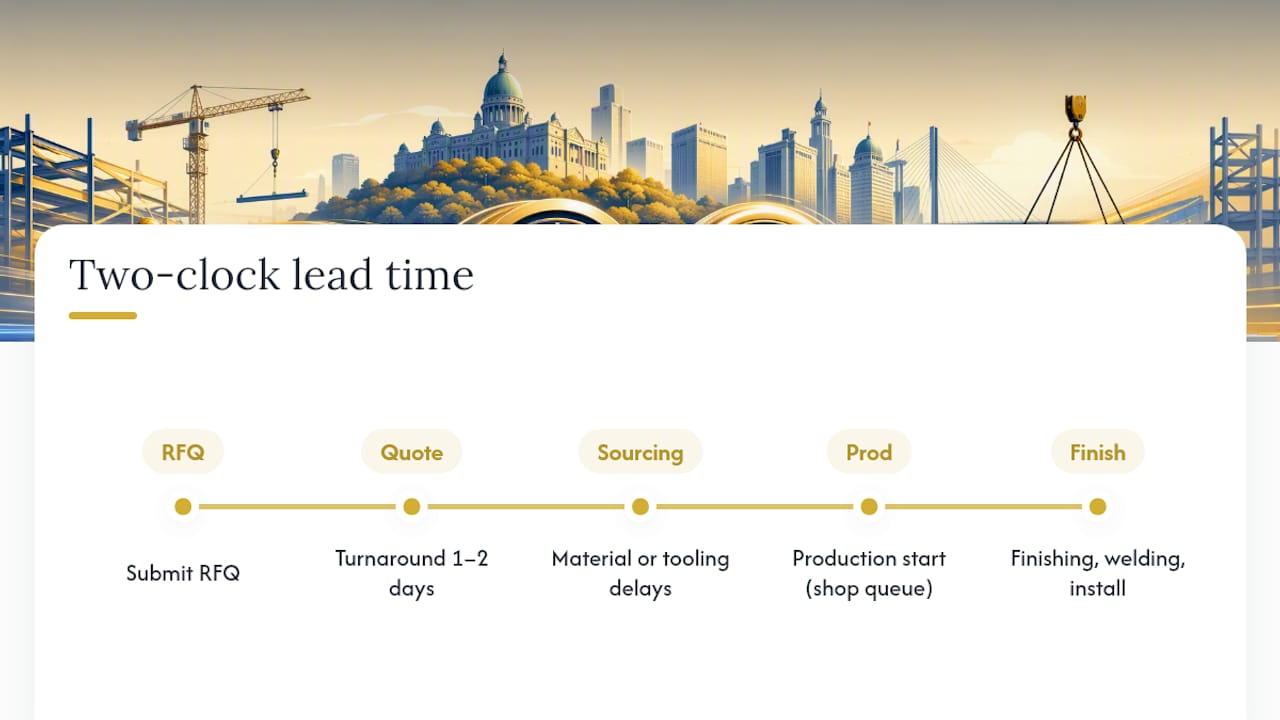
- Lead times are typically one to two days for quotes, but actual production start depends on tooling availability, material sourcing, and current shop backlog.
- Working with a vendor that offers both fabrication and installation reduces coordination delays and provides greater quality control throughout the project.
Table of Contents
- What does an industrial profile rolling service actually do?
- What thickness, length, and tolerance can you expect?
- How does the profile rolling and roll-forming process work?
- What should your RFQ include for a fast, accurate quote?
- Which industries rely on profile rolling services?
- Why work with an in-shop fabricator that also installs?
- How long does profile rolling actually take?
- How should you reach a profile rolling shop with questions?
- What are the delivery and installation options?
- How do you choose the right profile rolling vendor?
- Practical buying perspective for contractors and procurement managers
- How Manara Corp. can help with your next rolling project
- Sources
- FAQ
What does an industrial profile rolling service actually do?
Profile rolling bends a length of metal along its longitudinal axis, passing it through a series of shaped rollers that progressively curve it into an arc, circle, or custom radius. It differs from simple sheet bending because the tooling has to match the exact profile shape, whether that is an angle iron or a hollow tube, without collapsing the cross-section or distorting the flanges.
Most shops offering profile rolling services can handle:
- Angles (L-shapes) for framing, brackets, and structural bracing
- Channels (C-shapes) used in trailers, mezzanines, and support structures
- I-beams and H-beams for structural and architectural curved elements
- C and Z purlins common in roofing and wall systems
- Round, square, and rectangular tubes for railings, canopies, and equipment frames
- Custom extrusions designed for a specific architectural or mechanical application
Material compatibility usually spans carbon steel, stainless steel, aluminium, and copper, though each behaves differently under the rollers. Aluminium work-hardens faster and needs more passes at lighter reductions; stainless steel demands more rolling force and careful roller selection to avoid surface marking. Copper rolls easily but scratches if handled with the wrong tooling. A shop that regularly works across all four metals, rather than specializing in just one, tends to have the tooling flexibility your project actually needs.
What thickness, length, and tolerance can you expect?
Cold profile rolling generally handles material from roughly 0.3 mm up to 8 mm in thickness, depending on the alloy and the roller configuration, according to Welser’s roll forming overview. Heavier sections, or steel that needs specific mechanical properties beyond what cold work can deliver, may call for hot rolling instead.
Practical limits buyers should ask about:
- Maximum length: some cold roll forming lines produce profiles up to 27 metres long, per the same Welser data, though most fabrication shops work within shorter practical runs suited to shipping and handling.
- Profile height: varies by tooling, so confirm your section’s depth against the shop’s roller set before assuming a fit.
- Dimensional tolerance: expect a stated tolerance class for straightness, flatness, and camber, not just a nominal dimension.
- Economic batch size: rolling requires dedicated tooling passes, so very short runs of one or two pieces cost more per unit than a batch of twenty.
Pro Tip: Ask your shop for their camber and edge-wave tolerance up front, not after the parts arrive. A vague “within tolerance” quote leaves too much room for disagreement at acceptance.
How does the profile rolling and roll-forming process work?
Every project moves through the same basic sequence, though the details shift depending on the material and shape.
- Drawing review and tooling selection. The shop reviews your cross-section drawing and picks (or builds) rollers matched to the profile.
- Material staging. Stock is cut to length and, for hot processes, brought to temperature.
- Progressive forming. The section passes through multiple roller stands, each adding a small amount of curvature or shape change.
- Calibration. Final passes correct spring-back and lock in the target radius or bend.
- Finishing and inspection. Parts are checked for straightness, dimensional accuracy, and surface condition before shipping or welding into an assembly.
Cold roll forming runs at room temperature and suits long, repeatable profiles. It is the continuous, economical process most service shops use for purlins, guardrails, and cable trays, and modern lines often integrate punching and cut-off in a single pass.
Hot rolling and thermomechanical controlled processing (TMCP) sit at the other end of the spectrum. Finish rolling temperature and cooling rate directly shape the final microstructure and mechanical properties of structural steel, which is why heavy structural sections requiring guaranteed strength and toughness often go through hot rolling rather than cold forming. If your spec calls for TMCP-grade material, flag it clearly. Reheating that material later for secondary fabrication can alter its engineered properties, so tell your fabricator before, not after, they weld or reform it.
What should your RFQ include for a fast, accurate quote?
A vague inquiry gets a vague answer. Send these details and most shops can turn a quote around quickly:
- Cross-section drawing showing exact dimensions and radius or bend angle
- Material grade and thickness, plus alloy specification if it is stainless or aluminium
- Total length and quantity needed
- Surface finish requirements and any hole, slot, or notch locations
- Tolerance class and any mechanical property or heat-treatment requirements
- Fabrication or welding notes if the rolled piece feeds into a larger weldment
Shops commonly return a binding quote within one to two business days once they have complete drawings and specs in hand. Incomplete submissions, missing a thickness callout or a finish requirement, are the single biggest cause of quote delays.
Which industries rely on profile rolling services?
Construction crews use rolled angles and channels for framing and bracing; transport manufacturers roll tubing and channel for trailer frames and chassis components. Marine applications call for stainless and aluminium sections resistant to corrosion, while renewable energy projects need heavy structural curves for towers and support structures. Industrial equipment makers and architectural metalwork projects, curved railings, canopy frames, and decorative structural elements round out the list.
For any rolled component destined for a Quebec job site, confirm it meets applicable National Building Code requirements and CNESST site safety standards before installation, particularly for structural or load-bearing applications.
Why work with an in-shop fabricator that also installs?
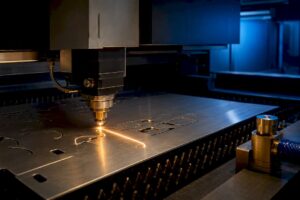
A shop that rolls, welds, and installs under one roof cuts out the coordination gaps that slow projects down. Manaracorp handles profile rolling, sheet bending, and laser cutting in-house at its Lachine facility, then installs the finished work across Greater Montreal, including Laval, the South Shore, and the West Island.
That structure means one team controls quality from raw stock to final weld, with bilingual service and no handoff between a fabrication shop and a separate installer.
How long does profile rolling actually take?
Lead time depends less on the rolling itself, which is often the fastest step in the process, and more on tooling availability, material sourcing, and queue position at the shop you choose. A straightforward job using stock the shop already carries, in a profile they have tooled before, can move from approved quote to finished part in a matter of days.
Custom tooling changes that math. If your cross-section is unusual and requires new rollers to be machined, budget extra lead time for tooling fabrication before production even starts. This is one reason it pays to ask early whether your shape matches an existing roller set or needs a custom build.
Material availability matters too. Common carbon steel angle or channel sizes are usually on hand or quickly sourced. Specialty stainless grades, less common aluminium alloys, or copper in specific tempers may need to be ordered in, adding days to the front end of the schedule regardless of how fast the rolling itself goes.
Quote turnaround and production lead time are two different clocks. As covered earlier, a complete RFQ typically gets a quote back in one to two business days. Production start depends on the shop’s current backlog, so ask directly when submitting drawings: “If I approve this quote today, when does rolling actually begin?” A shop that gives you a specific date, rather than a vague window, is usually one with a handle on its own schedule. For larger structural jobs feeding into a construction timeline, build in a buffer for finishing, welding into subassemblies, and any coordination with site installation.
How should you reach a profile rolling shop with questions?
Technical projects need more than a contact form that disappears into a queue. Look for a shop that offers a direct phone line for urgent spec questions, plus email for drawing submissions and formal RFQs, since PDF cross-sections and CAD files need a proper channel, not a chat widget.
Bilingual support matters across Greater Montreal, where project teams routinely mix English and French-speaking contractors, architects, and site supervisors on the same job. A shop that answers naturally in either language avoids the friction of a translated back-and-forth over technical specs where a small misunderstanding, a millimetre here, a grade there, gets expensive fast.
Response speed on technical questions is worth testing before you commit to a full order. Send a quick question about tolerance capability or material stock on a smaller inquiry first. How fast and how specifically a shop answers tells you more about their communication habits than anything on their website. A shop that replies with a generic “we can do that” versus one that asks for your exact radius and wall thickness before answering is signalling how they will handle your project once it is underway.
For ongoing projects, ask whether you will have a consistent point of contact or a rotating queue of whoever picks up the inquiry that day. Continuity matters more on multi-phase jobs, where the person who understood your original spec should be the one fielding your questions six weeks later.
What are the delivery and installation options?
Rolled profiles either ship as standalone components or get installed directly by the fabricator, and the two paths carry very different logistics. A shop that only fabricates hands you finished parts and steps away; you arrange trucking, unloading, and any site installation with a separate crew.
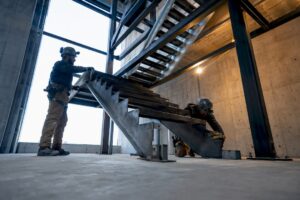
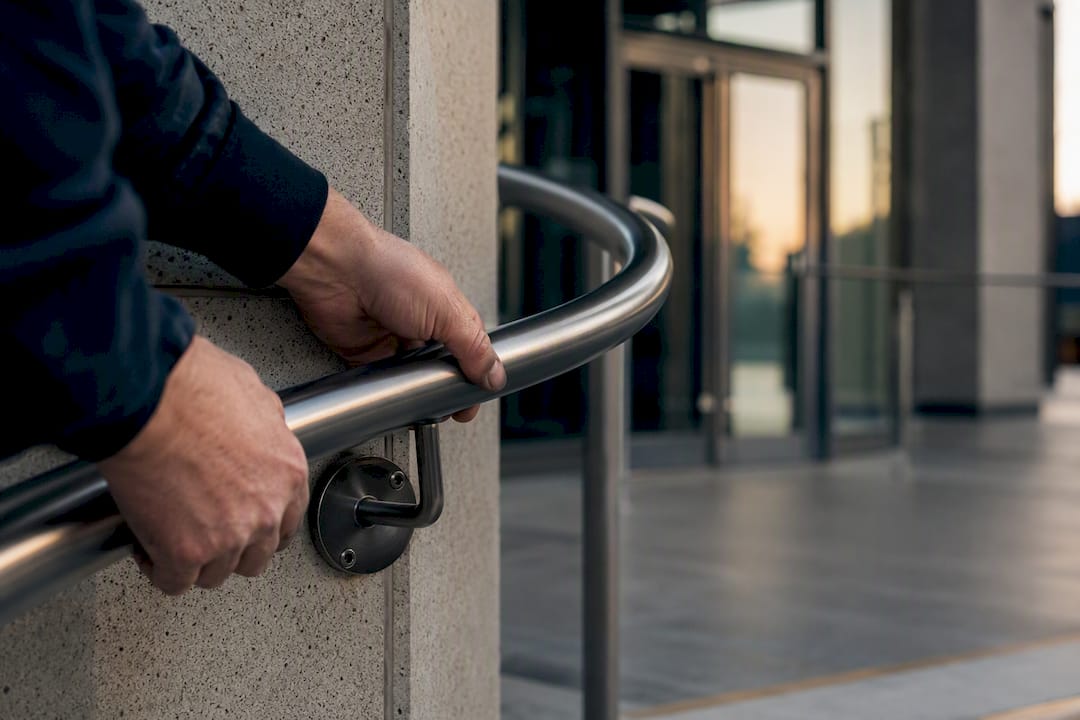
A shop that fabricates and installs coordinates delivery timing with its own installation schedule. That matters most on railing, staircase, and fencing projects where the rolled component is only half the job. Getting the curved handrail delivered on the right day, to the right site, with the crew that will actually mount it, removes a coordination step that otherwise falls on the contractor or property manager.
Ask any shop directly about delivery radius and whether installation is included or quoted separately. A fabricator that ships parts outside its normal service area may add freight costs or longer transit windows that were not obvious in the initial quote. For local projects within Greater Montreal, in-shop fabrication paired with local installation generally means fewer handling steps between the roller and the finished, mounted piece, which reduces the risk of transit damage to a finished curved or rolled section.
Packaging matters for finished surfaces too. Stainless and polished aluminium profiles need protective wrapping or dunnage during transport to avoid scuffing before installation. Confirm how a shop packages finished work, particularly for architectural pieces where surface finish is part of what you are paying for.
How do you choose the right profile rolling vendor?
Experience with your specific material and profile type matters more than general fabrication capability. A shop that mostly handles round tube may not have the tooling or the technique to roll a heavy I-beam cleanly, so ask directly about their track record with your shape and alloy combination.
Capacity is the second filter. Confirm the shop’s maximum thickness, length, and profile height against your part before assuming it fits, and ask how their current backlog affects your timeline. A shop with the right equipment but a six-week queue may not serve a project on a tight schedule.
Flexibility separates a good vendor from a great one on custom work. Can they build new tooling for an unusual cross-section, or are they limited to a fixed set of standard profiles? Ask how they handle a shape they have not rolled before, and whether that changes the quote timeline or the price.
Quality control practices deserve a direct question too. Ask what dimensional inspection process they run before parts ship, whether they check straightness and camber against a stated tolerance, and whether they can supply inspection documentation. A vendor with a defined check step, not just “we eyeball it,” is one that catches problems before they reach your site.
Finally, weigh in-shop versus outsourced fabrication. A shop that rolls, welds, and installs under one roof, rather than subcontracting pieces of the job to three different vendors, generally gives you one point of accountability if something does not fit on-site.
Practical buying perspective for contractors and procurement managers
Custom rolling earns its cost when your profile, tolerance, or finish falls outside standard mill stock. If a standard channel or angle does the job, buy it. Save custom tooling for shapes standard stock cannot deliver. Batch multiple parts into one order, specify tolerances up front, and confirm material grade before rolling starts. That checklist alone prevents most of the costly change orders on structural jobs.
— Ash
How Manara Corp. can help with your next rolling project
Some fabricators handle profile rolling, sheet bending, and laser cutting for steel, stainless steel, aluminium, and copper, fabricated in-house locally and installed within the service region.
Send a cross-section drawing, material grade, thickness, length, and quantity, and many fabricators can typically return a quote within one to two business days. Whether your project is a single custom rail bracket or a full run of structural channel for a commercial build, the same in-shop team handles fabrication and installation, so nothing gets lost between a rolling contractor and a separate site crew. Check the profile rolling service page for capability details, or send your drawings directly through the contact page to start a quote. For projects that also need bending or forming work alongside rolling, the sheet bending and rolling services page covers combined capabilities in one shop.
Sources
Further reading on rolling metallurgy and TMCP: see the MetallurgyZone hot rolling overview and the Constructalia TMCP reference.
- Hot Rolling of Steel: Recrystallisation and microstructure (MetallurgyZone)
- Effects of thermal cycles on microalloyed steels (PMC / peer-reviewed)
- Ultimate guide to cold roll forming machines (AISTubemill)
FAQ
What Materials Can an Industrial Profile Rolling Service Handle?
Most shops roll carbon steel, stainless steel, aluminium, and copper, with thickness capacity typically running from about 0.3 mm to 8 mm depending on the alloy and equipment.
How Long Does It Take to Get a Profile Rolling Quote?
Shops commonly return a binding quote within one to two business days once they receive a complete cross-section drawing and material specifications.
Can Manaracorp Roll Custom Profiles for a Structural Project?
Yes, Manaracorp performs profile rolling in steel, stainless steel, aluminium, and copper in-house at its Lachine shop, with local installation across Greater Montreal.
What Is the Difference Between Cold and Hot Profile Rolling?
Cold roll forming shapes material at room temperature and suits long, repeatable profiles, while hot rolling and TMCP use controlled temperature and cooling to engineer specific strength and toughness in structural steel.
What Information Do I Need to Send for an Accurate Quote?
Send a cross-section drawing, material grade and thickness, total length and quantity, surface finish requirements, and any tolerance class or heat-treatment specifications.