Choosing a metal fabricator comes down to one rule: screen for capability and documented quality systems before you ever compare price. Three filters separate qualified shops from risky ones fast. Confirm the processes your project needs are done in-house, not farmed out. Check for a current quality certification and real inspection records, not just a logo on a website. Then ask for proof of on-time delivery on jobs similar in size and complexity to yours. Suppliers that pass all three tend to deliver consistent first-article results and communicate proactively when a lead time shifts.
TL;DR:
- Verify that the metal fabricator has current ISO 9001:2015 or equivalent certifications, maintains documented inspection records, and regularly recalibrates equipment.
- Confirm that all critical processes such as welding, cutting, and forming are done in-house, with evidence of recent equipment upgrades and in-process quality control steps.
- Ask for detailed, itemized quotations that include material, labor, tooling, finishing, and shipping costs, and require a first-article sample or inspection report before proceeding.
- Conduct a site or virtual walkthrough to check for organized workflow, calibrated measurement tools, and recent maintenance, ensuring the shop’s operational discipline and capacity.
- Prioritize manufacturers with specific experience in your project type, proven on-time delivery, and a track record of repeat clients, especially if they can provide documented defect rates and inspection logs.
Table of Contents
- Key factors in choosing a metal fabricator: experience, equipment, and certifications
- What questions should you ask when quoting a metal fabricator?
- Common red flags when choosing a metal fabricator
- Evaluating proposals: pricing, tooling, and total project value
- What to check on a shop visit or first-article sample
- How Manara Corp. runs a technical review and first article
- A procurement rubric for scoring metal fabricators
- Get a quote from Manara Corp. for your next project
- Sources
- FAQ
Key factors in choosing a metal fabricator: experience, equipment, and certifications
Every strong fabricator you evaluate should pass on four fronts: relevant experience, in-house process control, equipment investment, and formal quality systems. Skip any one of these and you inherit someone else’s risk.
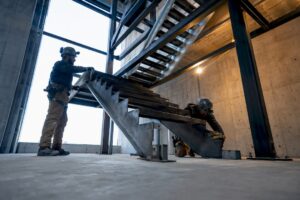
Experience matters more than years in business. A shop that has run hundreds of stair stringers or structural brackets for general contractors understands tolerances and finishing expectations that a shop new to that application will learn on your dime. Ask for examples of prototype-to-production work and whether clients return for repeat orders.
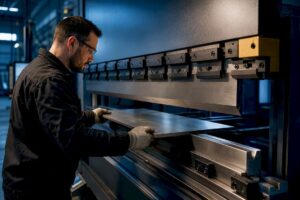
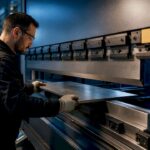
In-house capability is the biggest risk lever. A fabricator that keeps CNC laser cutting, bending and rolling, and welding under one roof controls tolerances end to end and avoids the delays that come from shuttling parts between subcontractors. When forming is outsourced, ask why, and ask who inspects the returned parts before final assembly.
Equipment reinvestment is a quiet but reliable signal. A shop that recently added a fibre laser or a robotic welding cell is telling you it plans to stay competitive on speed and tolerance for years, not just this quarter.
Certifications separate documented process control from good intentions:
- ISO 9001:2015 as the baseline quality-management standard for contract fabrication work.
- CWB (Canadian Welding Bureau) certification, which verifies welder qualifications and welding procedure control specific to Canadian shops.
- AWS credentials, a widely recognized benchmark for welder training and qualification on top of CWB.
- On-time delivery rate and capacity for blanket or seasonal orders, which tell you how the shop performs under real scheduling pressure.
What questions should you ask when quoting a metal fabricator?
The right questions expose capability gaps fast and give you answers you can actually compare across suppliers. Run every shortlisted shop through the same list.
- Which processes happen in-house, and which get subcontracted? If cutting is in-house but welding is farmed out, ask why, and who does final inspection on subcontracted work.
- What does your quality control process look like, step by step? Ask specifically about in-process inspection points, calibration records for measuring equipment, first-article inspection reports, and PPM defect rates.
- Can you show welder qualifications and WPS/WPQ documentation for the joints my project requires? This matters most on structural or pressure-critical welds.
- How long does a quote take, and what tools do you use to build it? Shops running modern estimating or ERP software tend to give faster, more consistent quotes.
- What’s included in the price, and what isn’t? Get clarity on finishing, packaging, delivery, and tooling before you compare numbers.
A good fabricator answers every one of these without hesitation and often volunteers documentation before you ask. Quality-focused fabricators tend to treat process breadth and engineering support as selling points, not secrets.
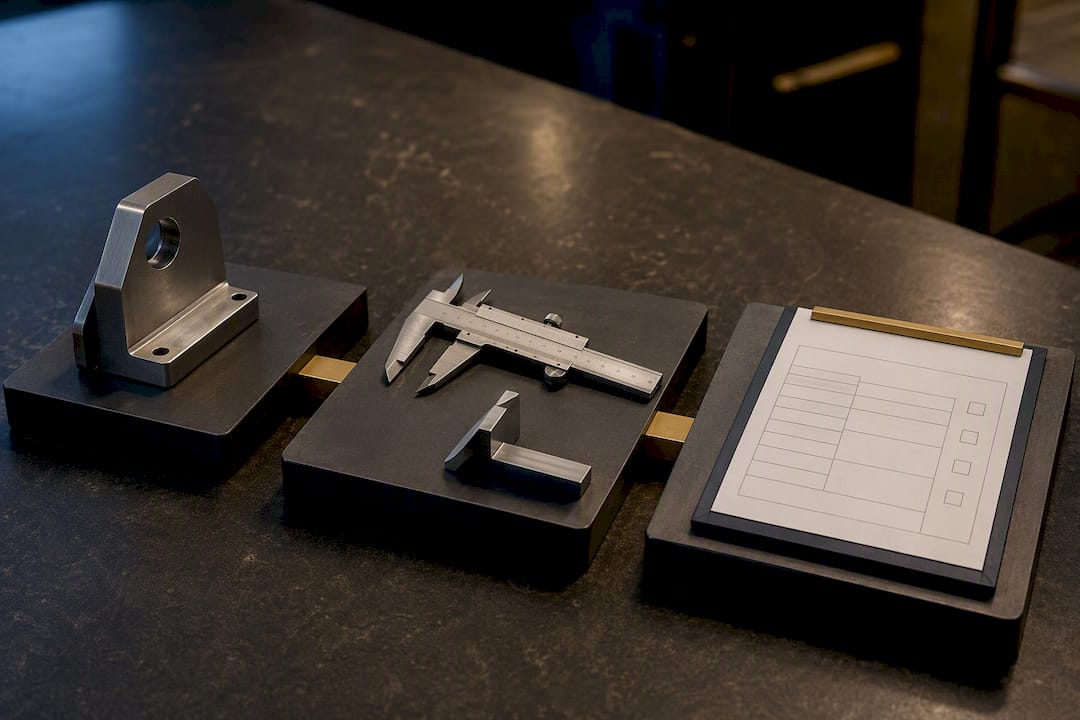
Pro Tip: Ask for a copy of a first-article inspection report from a past project, with client details redacted. A shop that can produce one in a day already runs the discipline you’re checking for.
Common red flags when choosing a metal fabricator
Some warning signs show up before you even get to the shop floor. Vague answers about quality control, quotes with no line-item breakdown, and heavy subcontracting of processes the shop claims to offer are the three most common.
A supplier with no repeat clients in your industry, or one that dodges questions about defect rates, is telling you something even if they never say it directly.
Verify claims rather than take them at face value:
- Request recent inspection records or calibration logs, not just a certificate number.
- Ask when the shop’s last quality audit happened and what came out of it.
- Ask for photos or a virtual walkthrough of the shop floor, including calibration stickers on measuring equipment.
- Call at least one listed reference and ask specifically about on-time performance, not just satisfaction.
Sample parts settle arguments that conversations can’t. If a supplier hesitates to produce a small sample or first article before committing to volume, treat that as a decision point, not a formality.
Evaluating proposals: pricing, tooling, and total project value
The lowest quote rarely wins on total project value. Compare fabricators on what’s actually in the number, not just the number itself.
A complete quote itemizes material, labour, tooling amortization, finishing, testing, and shipping separately. When a quote refuses to break these out, you can’t tell whether you’re paying for corners cut on inspection or genuinely lean overhead.
Tooling amortization changes the math on repeat orders. A shop that spreads tooling cost across a longer production run, or one that recommends a cheaper process for your volume, is thinking about your total cost, not just this invoice.
Before you sign, require these protections in writing:
- First-article acceptance criteria, defined in measurable terms, not “looks good.”
- Traceable inspection records tied to your part numbers.
- Clear change-order terms, including how a design revision affects lead time and price.
- Lead-time penalties or at minimum a documented escalation process if a promised date slips.
Watch for pricing patterns that hide risk: suspiciously low tooling costs, one lump “fabrication” line with nothing broken out, or a quote that changes materially between verbal and written versions.
What to check on a shop visit or first-article sample
A site visit, in person or virtual, tells you more in twenty minutes than a proposal does in twenty pages.
- Look for a dedicated inspection area with calibrated measuring equipment, not a tape measure on a workbench.
- Check whether the shop floor looks organized, with clear workflow between cutting, forming, and welding stations, consistent with modern manufacturing safety management standards.
- Ask to see evidence of recent equipment purchases or maintenance records on existing machines.
- Request a dimensional report and, where welding is involved, weld coupons or photographic evidence of test welds.
- Ask to meet someone from quality assurance or engineering, not only the salesperson who quoted the job.
If travel isn’t practical, ask for a live video walkthrough rather than pre-recorded marketing footage. A shop confident in its process will show you the floor as it actually runs that day. A short technical review, quote, and site visit typically takes two to four weeks from first contact to decision on prototype or production work.
How Manara Corp. runs a technical review and first article
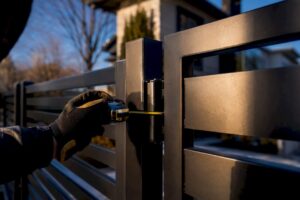
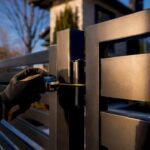
Manaracorp fabricates CNC laser cutting, sheet bending and rolling, profile rolling, and welding of steel, stainless steel, aluminum, and copper entirely in-shop, then installs locally across Greater Montreal. During technical review, Manaracorp discusses design-for-manufacturability with clients directly, including material trade-offs like stainless versus galvanized steel for exterior railings or industrial parts exposed to Quebec winters. When you request a quote, expect an itemized breakdown and a first-article sample before full production begins, so tolerances and finish are confirmed before volume runs.
A procurement rubric for scoring metal fabricators
Weight capability and quality highest, because rework and missed dates cost far more than a few points on unit price.
Once you’ve scored two or three finalists, move immediately: request an itemized quote, book a site visit or virtual tour, and ask for a first article before committing to volume. Document the scores and your reasoning in one page for internal sign-off. It’s the difference between a defensible decision and a gut call nobody can explain later.
— Ash
Get a quote from Manara Corp. for your next project
If your shortlist keeps stalling on the same problem, subcontracted forming, vague quality answers, or quotes that won’t itemize, consider a fabricator that keeps cutting, forming, and welding under one roof and installs locally in a defined service area.
Before you reach out, gather your drawings, tolerance requirements, estimated volumes, and your target delivery date. That’s enough for Manaracorp to turn around an itemized quote fast. Whether you need custom railings, structural welding, or onsite welding services for an installation already underway, contact Manara Corp. to request a quote or book a shop visit and see the process before you commit.
Sources
- ISO
- Canadian Welding Bureau (CWB Group)
- American Welding Society (AWS)
- 7 Keys to Selecting the Right Metal Fabrication Company — Machine Design
FAQ
Do metal fabricators make good money?
Profitability varies widely by shop size, specialization, and how well a fabricator controls rework and downtime; shops with strong quality systems and repeat clients tend to run more predictable margins than those competing purely on low price.
What are the three main types of metal fabrication?
Cutting (including laser and plasma cutting), forming (bending and rolling), and joining (primarily welding) make up the three core processes, and Manaracorp performs all three in-shop.
Is metal fabrication a difficult trade to work in?
It demands precision, physical stamina, and ongoing certification upkeep, particularly for welders maintaining CWB or AWS qualifications, which makes it demanding but far from impossible for trained tradespeople.
What’s the difference between a welder and a fabricator?
A welder specializes in joining metal through welding processes, while a fabricator oversees the broader job: cutting, forming, assembling, and finishing a finished part or structure, often coordinating welders as part of that process.