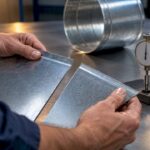
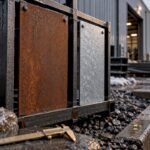
For sheet metal forming, welding, and marine or road-salt exposure, 5052-H32 is the right call. For CNC-machined parts, structural extrusions, and anything that needs maximum strength, 6061-T6 wins.
The reason comes down to one fundamental difference: 6061 is heat-treatable (precipitation-hardened with magnesium and silicon), which gives it higher strength but makes it brittle under tight bends and weaker in the heat-affected zone after welding. 5052-H32 is non-heat-treatable, strengthened instead by cold work, which means it bends tighter, welds without losing temper, and resists salt corrosion better than 6061 in most environments.
Quick exceptions worth knowing: if you need a welded sheet assembly that also carries significant structural load, you may need to specify 6061 and accept a post-weld heat treatment, or design around the strength reduction. If a part must be formed first and then aged to higher strength, a 6061-T4 blank formed and then artificially aged to T6 is possible but adds cost and distortion risk.
| Decision | Recommended alloy | Key reasons |
|---|---|---|
| Sheet metal forming, marine panels, welded enclosures | 5052-H32 | Tighter bend radii, superior weldability, better salt-corrosion resistance |
| CNC machining, structural frames, extrusions | 6061-T6 or T651 | Higher yield and tensile strength, predictable chip formation, excellent surface finish |
Key takeaways
For most fabrication decisions, the choice between 6061-T6 and 5052-H32 comes down to three factors: whether the part will be formed or machined, whether it will face salt or marine exposure, and whether cosmetic finish consistency matters.
| Point | Details |
|---|---|
| Forming vs machining | 5052-H32 for sheet forming and welding; 6061-T6 or T651 for CNC machining and structural parts. |
| Strength gap | 6061-T6 yields at approximately 276 MPa vs 5052-H32 at about 193 MPa, a difference that matters for load-bearing parts. |
| Corrosion and climate | 5052-H32 outperforms 6061 in salt and marine environments, including Canadian road-salt exposure. |
| Temper matters | Specify T651 (not just T6) for precision machining; verify the mill certificate before cutting. |
| Manaracorp | Manaracorp fabricates both alloys in Lachine, QC, offering laser cutting, bending, rolling, and welding for Greater Montreal clients. |
Table of Contents
- How do 6061 and 5052 compare on mechanical properties?
- What do alloy chemistry and temper designations actually mean?
- Machining, bending, and welding: what to expect on the shop floor
- Corrosion resistance, anodizing, and Canadian climate considerations
- Which applications suit each alloy?
- Availability, cost, and sourcing in Canada
- How Manaracorp chooses between 6061 and 5052 on the shop floor
- Where to verify numbers and find full datasheets
- Manaracorp’s perspective on material selection and risk
- Manaracorp handles your aluminium fabrication in Greater Montreal
- Sources
- FAQ
How do 6061 and 5052 compare on mechanical properties?
The numbers tell the story clearly. Property comparisons between 6061-T6 and 5052-H32 show a consistent pattern: 6061 is materially stronger, 5052 is more ductile.
Verify exact values against your supplier’s mill datasheet before finalizing any design — values can shift slightly between tempers and mill sources.
Three numbers drive most decisions. First, yield strength: 6061-T6 at ~276 MPa versus 5052-H32 at ~193 MPa is a significant gap in strength. For a bracket, frame, or machined housing under load, that gap is decisive. Second, elongation: 5052-H32’s higher elongation is what allows it to survive tight bends without cracking. Third, fatigue strength: side-by-side property charts show 5052-H32 actually edges out 6061-T6 in fatigue resistance, which matters for vibrating panels, marine hulls, and cyclically loaded sheet assemblies.
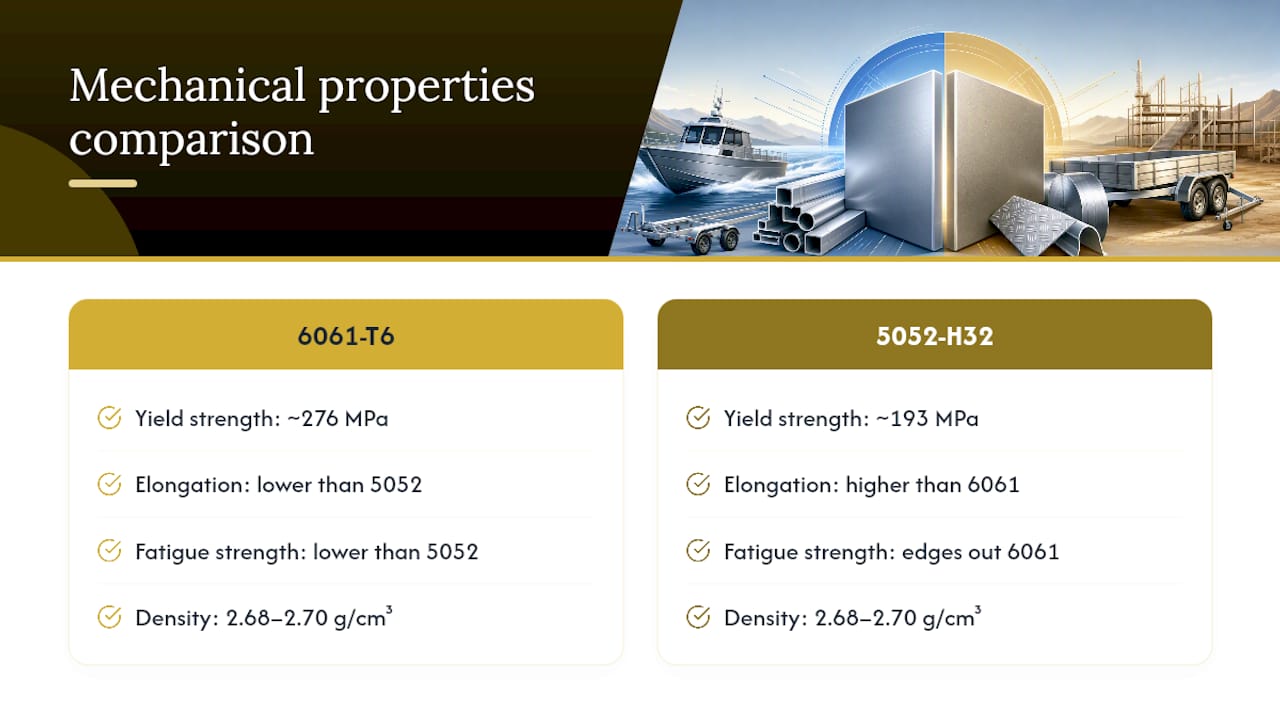
Density is nearly identical at 2.68–2.70 g/cm³, so specific strength (strength per unit weight) still favours 6061 by a wide margin. Both alloys have the same elastic modulus of approximately 69 GPa, so deflection calculations are the same for either.
Pro Tip: When comparing alloys for a structural application, check yield strength, not just tensile strength. A part that yields under service load has failed functionally even if it hasn’t fractured.
What do alloy chemistry and temper designations actually mean?
The difference in behaviour between these two alloys starts in the chemistry. It cannot be heat-treated to higher strength.
What the temper codes mean in practice:
- T6: Solution heat-treated and artificially aged. Applies to 6061. Delivers peak strength but introduces residual stresses and reduces ductility.
- T651: Same as T6, plus stress-relieved by stretching. Preferred for precision-machined parts because it reduces distortion when material is removed.
- T4: Solution heat-treated but naturally aged. Lower strength than T6, but more formable. Used when a 6061 blank needs to be formed before final ageing.
- H32: Strain-hardened (cold-worked) and stabilised. Applies to 5052. The “3” means strain-hardened then stabilised; the “2” denotes quarter-hard. This is the standard sheet temper for fabrication.
For machining, always specify 6061-T651 over T6 when dimensional stability matters. The stress relief in T651 means the part is far less likely to move when you take heavy cuts. For forming and welding, 5052-H32 is the standard request. If you are ordering 6061 for a part that will be bent, ask for T4 or O (annealed) temper, form it, then arrange for artificial ageing if the strength is needed. Hydro’s 6061 datasheet covers the full temper-specific mechanical ratings and is worth bookmarking for procurement reference.
Pro Tip: Specify T651 (not just T6) on your purchase order when the part will be precision-machined. The stress-relief step costs little at the mill and saves significant rework when a machined pocket causes the plate to bow.
Machining, bending, and welding: what to expect on the shop floor
Machinability
6061 is one of the easiest aluminium alloys to machine. It produces short, predictable chips, holds tight tolerances, and leaves a clean surface finish with standard carbide tooling. Protolabs’ alloy comparison guidance consistently places 6061 at the top for CNC work because of this stable chip formation and its response to both roughing and finishing passes.
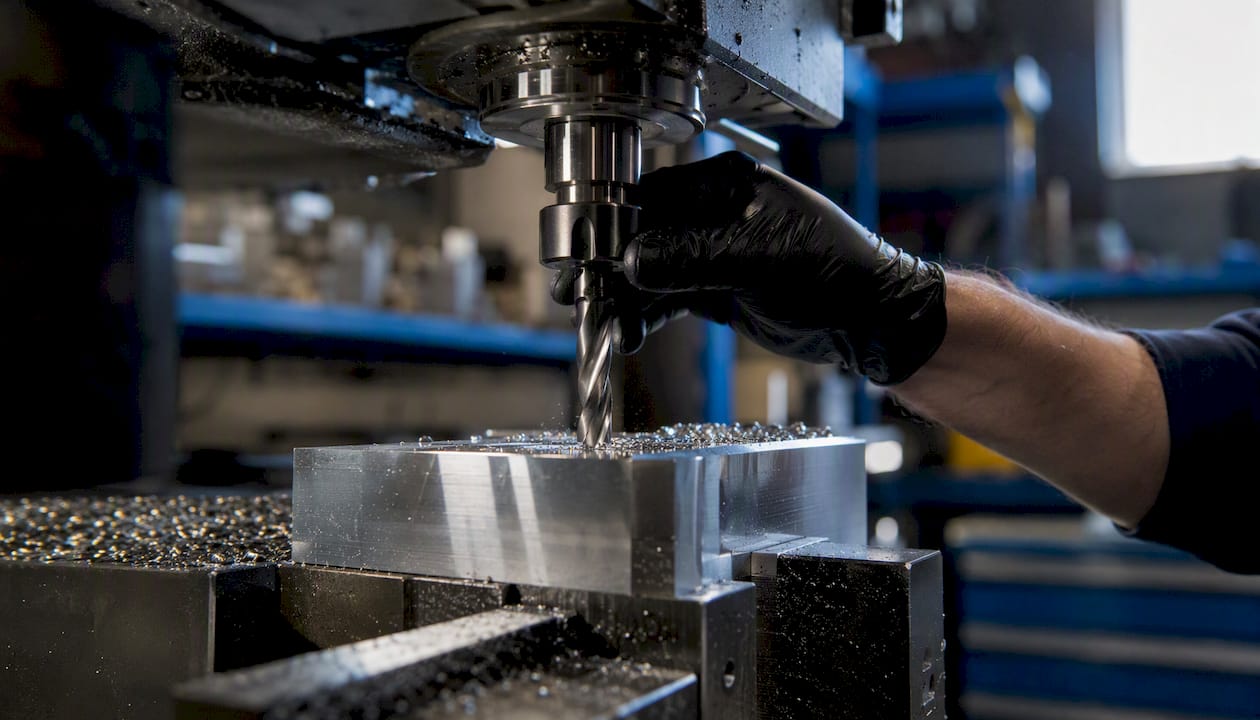
5052 is a different story. Its higher ductility means chips tend to be long and stringy, which can wrap around tooling, cause built-up edge on the cutter, and produce a rougher surface finish. For simple drilling and tapping it is manageable, but for precision CNC work with tight tolerances, 5052 is genuinely harder to hold. If your design calls for close-tolerance bores or fine surface finish, 6061 is the right choice.
Bending and forming
5052-H32 handles tight bends well. A general fabrication rule of thumb for 5052-H32 sheet:
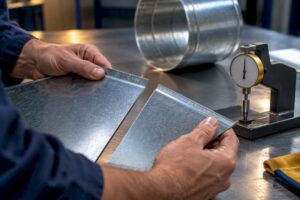
6061-T6 needs significantly larger radii or it will crack at the bend. For 6061-T6 sheet, minimum inner radius is typically 3t to 4t (three to four times the material thickness), depending on grain direction. If tight bends are unavoidable in 6061, the blank should be ordered in O (annealed) or T4 temper, formed, then aged. Springback is also more pronounced in 6061-T6 than in 5052-H32, which means your sheet bending programme needs overbend compensation built in.
Welding
Both alloys are weldable, but the consequences of welding differ significantly. Welding 6061-T6 destroys the T6 temper in the heat-affected zone, reducing local strength to roughly that of the annealed condition. For non-critical welds this is acceptable; for structural joints under load, it requires either a post-weld heat treatment (solution treat and re-age) or a joint design that keeps the weld out of the high-stress region. 5052-H32 does not suffer the same temper loss because its strength comes from cold work, not precipitation hardening. The weld zone softens slightly but remains structurally useful without any post-weld treatment.
Can you weld 5052 to 6061? Yes, with caveats. The recommended filler metal is 5356 (ER5356), which bridges the two alloys reasonably well. Filler 4043 is also used but tends to produce a softer weld deposit and is less suitable when the joint will be anodised (it anodises grey rather than matching the base metal). For a structural joint between the two alloys, test the weld procedure and verify the joint strength before committing to production. The dissimilar-alloy weld is not inherently weak, but the strength mismatch between the two base metals means the joint design needs to account for the weaker side.
Filler metal summary:
- 5052 to 5052: 5356 or 5183
- 6061 to 6061: 4043 or 5356 (4043 for better crack resistance; 5356 for higher strength and better anodising match)
- 5052 to 6061: 5356 preferred
Manaracorp’s welding services cover aluminium TIG and MIG welding for both alloys, including dissimilar-metal joints.
Corrosion resistance, anodizing, and Canadian climate considerations
5052 has better corrosion resistance than 6061 in salt-water and salt-spray environments. The chromium addition in 5052 and its higher magnesium content both contribute to this. In atmospheric conditions (typical Canadian urban or suburban exposure), both alloys perform well without coating. The difference becomes significant in marine environments, coastal installations, or anywhere road salt is a regular factor.
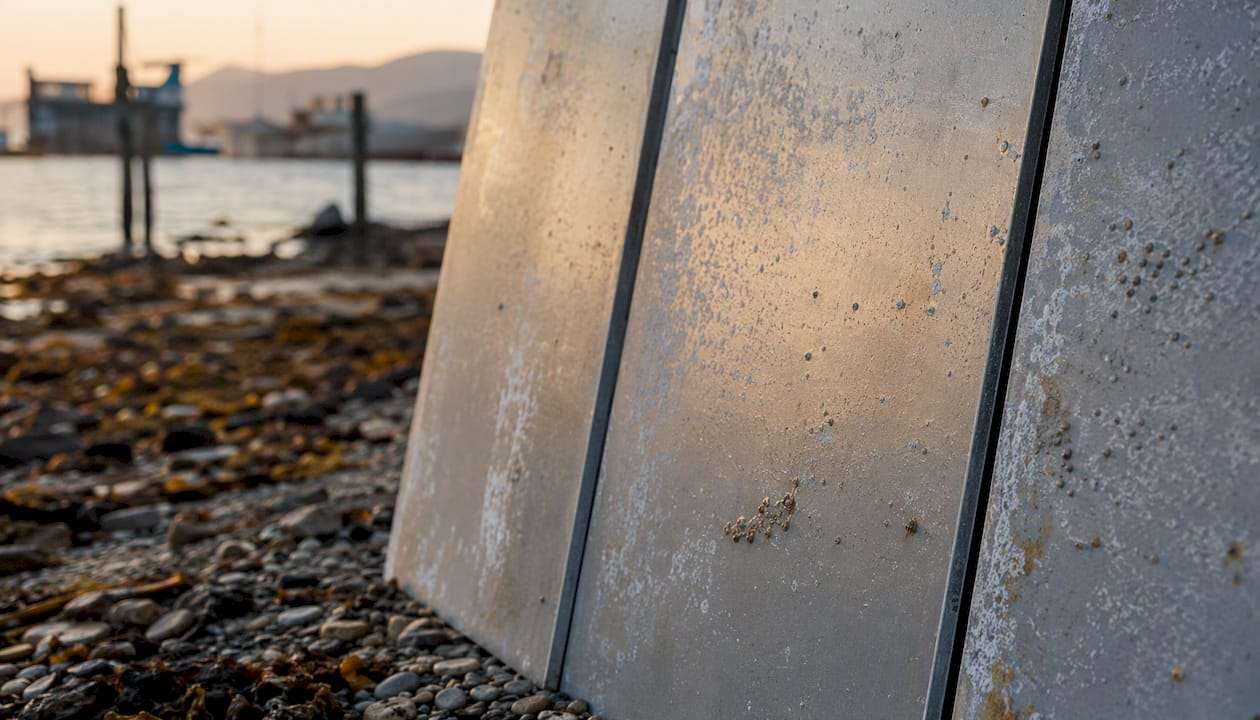
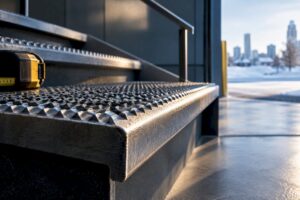
For Greater Montreal and most of southern Quebec, road-salt exposure from November through April is the relevant test. 5052-H32 is the safer choice for any exterior sheet component that will see regular salt contact: HVAC ductwork penetrations, exterior panels, marine fittings, or architectural cladding near grade level. 6061 in atmospheric exposure is fine with a proper anodise or paint system, but if the coating is breached, 6061 is more vulnerable to pitting in salt environments.
Anodizing response:
- 6061 anodises well and accepts a wide range of colours consistently. Its lower copper content means the anodise layer is clear and even.
- 5052 also anodises, but the chromium content can produce a slightly yellowish or uneven tint in clear anodise. For cosmetic applications where colour consistency matters, 6061 is the better substrate.
- When welding 5052 to 6061 and then anodising the assembly, expect colour variation at the joint. This is a known cosmetic limitation.
Galvanic corrosion: both alloys sit close together in the galvanic series, so joining them directly carries low galvanic risk. The bigger concern is contact with dissimilar metals such as steel fasteners. Use stainless steel or aluminium fasteners, or isolate steel hardware with a nylon washer and sealant.
Which applications suit each alloy?
The process determines the alloy more than the part name does. Here is how the decision maps in practice:
5052-H32 is typically the right pick for:
- Marine panels, boat hulls, and dock fittings
- Exterior architectural cladding and signage
- HVAC ductwork and sheet-formed enclosures
- Fuel tanks and chemical storage containers (5052 resists saltwater and many chemicals)
- Any part that requires tight bends, complex forming, or deep drawing
- Welded sheet assemblies where post-weld heat treatment is not feasible
6061-T6 or T651 is typically the right pick for:
- CNC-machined brackets, housings, and structural components
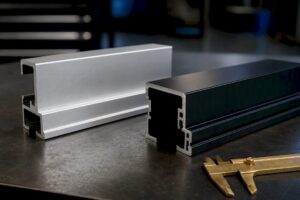
- Structural extrusions (frames, rails, channels)
- Bicycle frames, automotive parts, and aerospace structural members
- Threaded inserts and precision-tolerance parts
- Parts that will be anodised for cosmetic consistency
Pro Tip: If you are substituting one alloy for the other on an existing design, check the fatigue life, not just the static strength. A 5052 panel replacing a 6061 panel may have lower yield strength but comparable or better fatigue resistance under cyclic loading. Run the numbers for your specific load case before approving the substitution.
A useful alloy comparator tool can help you cross-check trade-offs when evaluating substitutions, particularly for less common load cases.
Availability, cost, and sourcing in Canada
Both alloys are widely stocked across Canada, but the form factors differ. 5052 is primarily a sheet and plate alloy. You will find it readily in 1.0 mm through 6.4 mm sheet at most metal service centres in Montreal, Toronto, and Vancouver, often in 4×8 ft and 4×10 ft sheets. 6061 is available in sheet and plate but is also the dominant alloy for extrusions, bar, rod, and structural profiles.
On cost, 5052 sheet and 6061 sheet are typically priced similarly per kilogram at the raw material level, though this varies with market conditions and order volume. The real cost difference shows up downstream: 6061 machined parts cost more in tooling wear and cycle time if you are machining complex geometry, but 6061 is the only practical choice for extruded profiles and precision-machined components. 5052 sheet parts often cost less to form and weld because the material cooperates with the process.
Sourcing tips for Canadian buyers:
- Ask your service centre for the mill certificate (also called a material test report or MTR) with every order. This confirms the actual temper, chemistry, and mechanical properties of the specific batch.
- For marine-grade 5052, confirm the supplier stocks material that meets ASTM B209 (sheet and plate standard). Most Canadian distributors carry ASTM-compliant stock, but it is worth confirming for critical applications.
- For 6061-T651 plate, specify the stress-relief requirement explicitly on your purchase order. Some distributors stock T6 only and will need to source T651 on request.
- Lead times for standard sheet sizes are typically short (one to five business days from stock). Custom widths, heavy plate, or specific tempers may require two to four weeks.
- Profile rolling of 6061 extrusions is available locally in Montreal, which avoids the lead time and freight cost of sourcing custom profiles from out of province.
Pro Tip: Always request the mill certificate before cutting. A certificate mismatch (e.g., T6 supplied instead of T651) discovered after machining is an expensive problem. Verify the temper designation on the cert against your purchase order before the material goes to the floor.
How Manaracorp chooses between 6061 and 5052 on the shop floor
At Manaracorp’s Lachine shop, the alloy decision follows a short checklist before any aluminium job goes to the floor:
The first question is always: will this part be formed, or machined? If it needs tight bends or complex sheet work, 5052-H32 is the default. If it needs to be drilled, tapped, or held to close tolerances, 6061-T6 or T651 is the answer. The second question is environment: will it see road salt, marine exposure, or outdoor weather without a reliable coating? If yes, 5052 wins again unless the strength requirement forces 6061. The third question is finish: does the client need a consistent anodised colour? That pushes toward 6061. Most jobs answer themselves after those three questions.
The shop’s decision flow in practice:
- Function first: load-bearing or structural? 6061. Formed, welded sheet? 5052.
- Environment second: salt, marine, or uncoated outdoor? 5052. Indoor or coated? Either works.
- Finish third: cosmetic anodise with colour match? 6061. Painted or mill finish? Either.
- Process last: CNC machining or extrusion? 6061. Sheet bending, rolling, or welding? 5052.
For projects in Greater Montreal where the alloy choice is genuinely ambiguous (a welded structural frame that also needs to be formed, for example), Manaracorp will often prototype a single component in both alloys and compare the results before committing to a production run. This is especially useful for architectural railings and custom HVAC components where both formability and finish matter.
Pro Tip: When in doubt, prototype. A single test piece in each alloy costs far less than a production run in the wrong material. Manaracorp can cut, form, and weld small-run prototypes in both 5052 and 6061 to help you confirm the right choice before you commit.
Where to verify numbers and find full datasheets
Before finalising any design decision based on this article, cross-check the mechanical properties against primary sources. The numbers in this article are representative values for the standard tempers; your actual batch may vary slightly.
Primary sources to consult:
- Hydro 6061 datasheet: Temper-specific mechanical ratings, corrosion and finishing data for 6061. A reliable mill-level reference.
- MakeItFrom 5052-H32 vs 6061-T6 comparison: Side-by-side property charts covering mechanical, thermal, and fatigue properties. Good for quick trade-off checks.
- Rapid Protos alloy guide: Numeric property tables with context for design decisions.
- Aluminium Magazine alloy comparison tool: Useful for cross-checking multiple alloys and tempers; note that supplier datasheets remain the authoritative procurement reference.
- ASTM B209: The governing standard for aluminium sheet and plate in North America. Confirm your supplier’s stock is ASTM B209-compliant for structural or marine applications.
- Your supplier’s mill certificate: The single most important document. It gives the actual chemistry and mechanical test results for the specific coil or plate you are buying. Never finalise a design using only published nominal values.
Manaracorp’s perspective on material selection and risk
The most common mistake in alloy selection is treating it as a one-time decision made at the design stage and never revisited. Material properties on a datasheet are nominal values for a standard temper from a standard mill. Real parts live in real environments, get welded by real welders, and get bent on real press brakes with real springback. The conservative approach is to pick the simplest alloy that meets your functional requirements, build in a prototype step when the environment is severe or the geometry is complex, and verify the mill certificate before cutting.
At Manaracorp, we apply this logic to every aluminium job in Greater Montreal, whether it is a set of custom railings, an HVAC duct assembly, or a structural bracket for an industrial client. If you are unsure which alloy fits your project, we can help you work through the decision, run a small prototype, and confirm the finish before committing to full production.
Manaracorp handles your aluminium fabrication in Greater Montreal
Choosing the right alloy is only half the work. Getting it cut, bent, welded, and finished to spec is the other half, and that is where Manaracorp’s Lachine shop comes in.
Manaracorp offers CNC laser cutting, sheet bending and rolling, profile rolling, and in-house aluminium welding for both 5052 and 6061. Whether you need a single prototype to confirm your alloy choice or a full production run of formed and welded sheet assemblies, the shop handles it locally, with no shipping outside Greater Montreal. For complex forming jobs, dissimilar-alloy welds, or finish-sensitive parts that need consistent anodising prep, contact Manaracorp for a quote. The team works in both French and English and serves clients across the island of Montreal, Laval, the South Shore, and the West Island.
Sources
- Alloy 6061
- Aluminum 5052-H32 vs 6061-T6 Sheet Metal | (Updated for 2026)
- Types of Aluminum Alloys: Properties & Grade Selection
- Comparing Aluminum Alloys
- Makeitfrom
FAQ
Is 6061 better than 5052?
Neither alloy is universally better. 6061-T6 is stronger and machines more cleanly, making it the right choice for structural and machined parts. 5052-H32 forms and welds more easily and resists salt corrosion better, making it the better pick for sheet fabrication and marine or outdoor applications.
What is 5052 aluminum good for?
5052-H32 is well suited to sheet metal forming, welded enclosures, marine panels, fuel tanks, HVAC ductwork, and any application requiring tight bend radii or regular exposure to salt or moisture. Its higher elongation and superior corrosion resistance in salt environments are its defining advantages.
Can you weld 5052 aluminum to 6061?
Yes. Use 5356 filler metal for the best combination of strength and anodising compatibility. The joint is structurally sound, but expect some colour variation at the weld line if the assembly is anodised afterward. For critical structural joints, test the weld procedure and verify joint strength before production.
What are the disadvantages of 6061 aluminum?
6061-T6 cracks under tight bends, loses significant strength in the heat-affected zone after welding (without post-weld heat treatment), and is more vulnerable to pitting in salt and marine environments than 5052. It also requires stress-relief (T651 temper) for precision-machined parts to avoid distortion during heavy cuts.