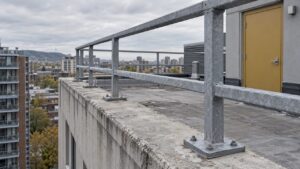
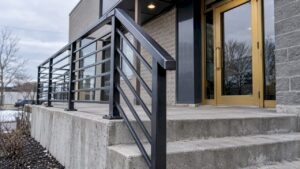
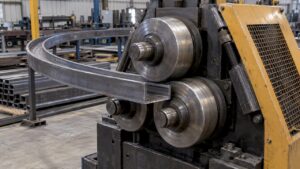
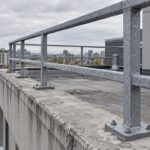
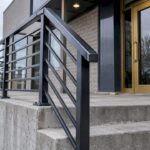
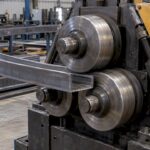
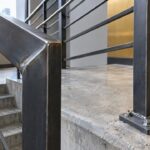
Steel railings rust where water stays: in crevices, at the base of posts, inside welds and anywhere road salt gets carried in and left to sit. The best protection is a good finish applied to clean steel, a design that sheds water, and a short inspection routine every spring and fall. This guide covers all three for Montreal, Laval and the South Shore, plus how to remove rust, when to repair and when to replace.
TL;DR
- Rust starts where moisture lingers: crevices, flat areas that hold water, weeping welds and post bases. Check those first.
- Road salt speeds up corrosion on wet steel, so winter is the hardest season on railings near roads, driveways and parking areas.
- A railing built to drain, with a durable finish such as hot-dip galvanizing, lasts far longer than bare steel with a coat of paint.
- Rust removal only works if you clean and prepare the surface properly before any primer or paint goes on.
- Once rust has thinned the steel or loosened the posts, a guard is a safety question, not a cosmetic one. Have it assessed.
Table of Contents
- Why steel railings rust in Montreal
- Where to check first
- Design details that keep water out
- Choosing a coating system
- How to remove rust and prepare for repainting
- A maintenance routine that fits the Quebec calendar
- When to repair and when to replace
- Stainless steel: does it need the same care?
- Building railings to last: what we do at Manara
- Our perspective: rust is mostly a design problem
- FAQ
- Sources
Why steel railings rust in Montreal
Steel rusts when it meets moisture and oxygen. In our climate, one more ingredient makes it worse. One Canadian maintenance guide notes that road salt raises the conductivity of wet surfaces and accelerates corrosion, and that exposure is especially relevant near roads, driveways and parking structures. Montreal has all of that for five months a year, followed by freeze and thaw cycles that open hairline cracks in paint.
The salt problem is not limited to steel in the open air. Research from the National Research Council of Canada on steel in concrete points out that chlorides, including those from winter de-icing salts, can damage the protective passive film on steel. That matters for railing posts set into concrete steps, slabs and balcony edges, where salty meltwater runs straight down the post and into the anchor point.
A typical Greater Montreal railing sees the following in a single year:
- Wet snow and ice sitting against the lower rail and posts.
- Salt splash from the street, a shared driveway or tracked-in boots on exterior stairs.
- Repeated freezing and thawing that cracks coatings at edges and welds.
- Summer humidity and rain on any spot where the paint has already failed.
None of this means steel is a poor choice. Steel is strong, can be welded into almost any shape and is easy to repair. It does mean the finish and the details matter more here than in a dry climate.
Where to check first
Rust rarely appears evenly. It shows up at a handful of predictable places, and the American Galvanizers Association lists the same priorities in its field inspection guidance: crevices that trap corrosive water, flat areas where water pools, and weeping welds that let liquid in and then bleed rust stains.
On a real railing, that translates into a short walk-around checklist:
- Post bases and base plates. Look for flaking paint, bubbling or orange stains on the concrete. This is the most common failure point on balconies and exterior stairs.
- Welds and joints. Rust streaks running down from a weld suggest water is getting into the joint.
- Top of the bottom rail and any horizontal surface. Anything flat holds snow, leaves and water.
- Open ends of tubes. Unsealed ends let water in and keep it there.
- Fasteners and brackets. Check where different metals touch, and where anchors enter masonry or concrete.
- Underside of stair stringers and treads. These stay damp and are rarely looked at.
Press gently on suspicious spots. Surface rust on a sound railing is a maintenance job. A post that flexes at the base, or metal that flakes in layers, is a different problem, covered further down.
Design details that keep water out
Coatings get most of the attention, but the cheapest rust prevention happens before the railing is built. A railing that sheds water needs less from its paint.
Drainage and contact with the ground
Guidance from the Canadian Conservation Institute on outdoor metal objects says to make sure the site drains well and water does not pool around the object, and to use an appropriate base or plinth so the metal does not sit in direct contact with the ground. For a railing, the same thinking applies. Base plates should sit on a surface sloped away from the post, not in a dish where meltwater collects. Where possible, posts should stand slightly proud of the concrete rather than buried in it.
Hollow sections need to breathe
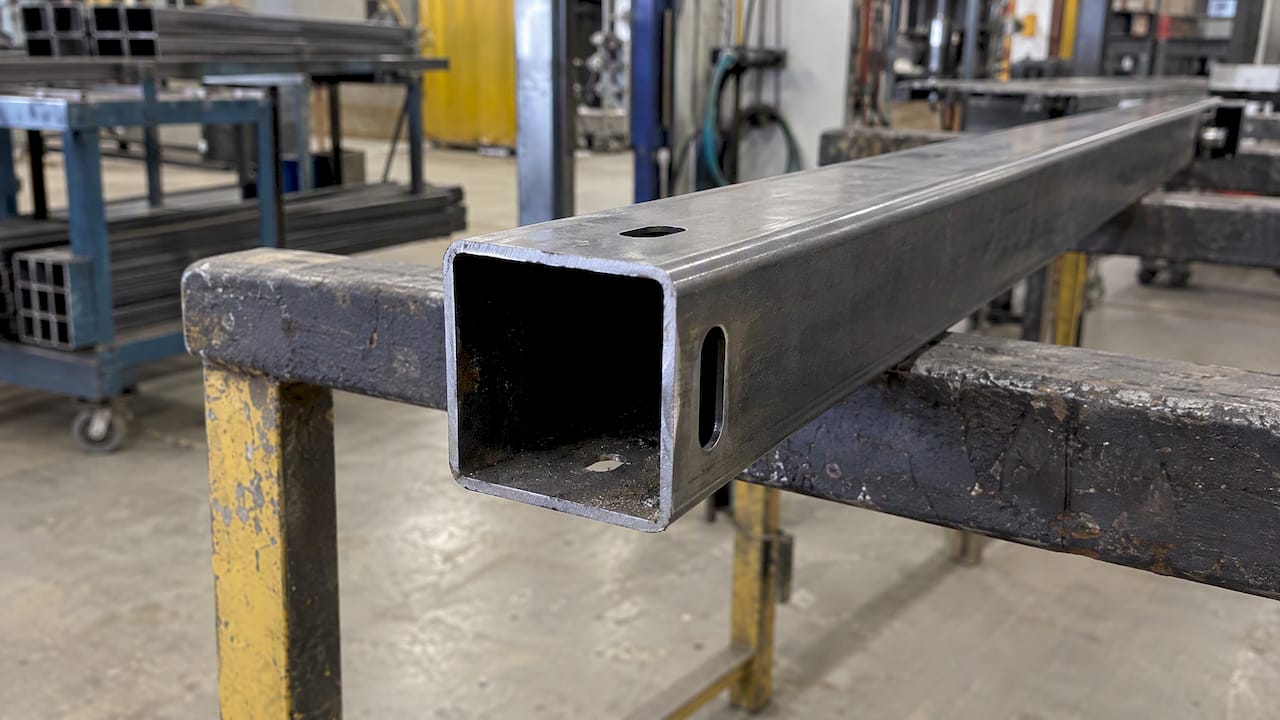
Most modern railings use square or round tube. Water that enters a closed tube has nowhere to go. If the railing is to be hot-dip galvanized, hollow parts also need vent and drain openings: the AGA’s design guide explains that trapped liquids can create dangerous pressure during galvanizing. Those same openings, planned by the fabricator, also let condensation escape in service. This is a detail that has to be designed into the railing at the shop. It cannot be added later without cutting into finished work.
Continuous welds and fewer crevices
A joint with a gap is a crevice, and a crevice holds water. Sealed, continuous welds that are ground smooth leave less room for moisture and give the coating an even surface to bond to. Bolted connections have their place, and we compare the two approaches in our guide to welded versus bolted railings, but every overlap and washer is another spot to watch for rust.
Choosing a coating system
Hot-dip galvanizing
For exterior railings in road-salt country, hot-dip galvanizing is the benchmark. A Canadian transportation research paper on zinc coatings describes it as a robust, abrasion-resistant protection that bonds zinc metallurgically to the steel, lasting significantly longer than standard paint. The same source notes that proper galvanizing involves degreasing, acid pickling to remove mill scale and fluxing, which is why it is done on bare, finished steel at a specialist plant rather than brushed on afterwards.
Paint over galvanizing
Galvanized steel can be painted for colour, and a painted galvanized railing can last longer than either layer alone. The catch is adhesion. The AGA’s paint guide says that painting galvanized steel requires surface profiling such as sweep blasting so the paint grips. Skipping that step is why paint sometimes peels off new galvanized railings within a couple of seasons.
Primer and paint on bare steel
A good paint system on steel normally means thorough surface preparation, a rust-inhibiting primer and one or more topcoats rated for exterior use, with extra attention at welds, edges and corners where coatings are thinnest. Follow the paint manufacturer’s data sheet for the product you choose: it states the surface preparation, the temperature and humidity limits and the recoat times. In Quebec, that usually means working in the warmer months, and a railing painted late in the fall may not cure properly before freezing weather.
A realistic view of any coating
No coating is permanent. The Canadian Conservation Institute, writing about iron objects, says to set up a regular inspection and maintenance program and warns that maintenance may involve periodically removing and reapplying coatings. The same note cautions that waxes and lacquers deteriorate quickly outdoors. Treat a coating as a consumable that you inspect and touch up, not as a one-time purchase.
| Finish | Typical strength | What to watch |
|---|---|---|
| Primer and exterior paint on bare steel | Lower cost, any colour | Chips and cracks at welds and base plates; needs regular touch-ups |
| Hot-dip galvanizing | Long life, abrasion resistant | Parts must be designed with vent and drain holes; handling damage |
| Galvanizing plus paint | Longer protection and colour | Surface must be profiled before painting |
| Stainless steel | Naturally corrosion resistant | Can still stain from salt and contamination |
| Aluminum | Does not rust | Different strength and appearance; not always suitable for every design |
How to remove rust and prepare for repainting
Painting over rust hides it for a season and then fails. The sequence matters more than the product.
The SSPC hand-tool cleaning standard sets out the order: first remove visible oil, grease, soluble welding residues and salts, then remove loose scale, rust, paint and weld slag, and finally clear away dirt and dust before painting. For a homeowner, that looks like this:
- Wash first. Use warm water and a mild detergent to remove grease, grime and salt. Rinse well with clean water. Salt left under paint keeps corroding.
- Remove loose rust and failed paint. Use a wire brush, scraper or sanding block. Work until the remaining coating is firmly bonded and any remaining rust is gone from the surface.
- Feather the edges. Sand the edge of sound paint so the repair does not leave a ridge.
- Dust off and dry. The steel must be clean and dry before priming. Wait for a dry spell.
- Prime promptly. Bare steel starts to rust again quickly, so prime the same day.
- Topcoat. Apply at least two thin coats rather than one heavy one, following the product data sheet.
Pay attention to personal protection. Old paint on older railings may contain lead, and sanding creates dust. If a railing in an older building has many layers of paint, have the coating tested or use a professional before sanding. Wear eye protection and a suitable respirator when grinding or wire-brushing.
Heavy rust, deep pitting and rust inside tubes are beyond what hand tools can reasonably fix. In those cases, abrasive blasting or section replacement is the right approach, and it is best done at a shop.
A maintenance routine that fits the Quebec calendar
The following schedule is our recommendation, based on how the seasons treat railings here. It is not an official standard, so adjust it for how exposed your railing is.
Late fall, before the first snow
- Wash the railing and rinse off summer dust and grime.
- Inspect the base plates, welds and any chipped paint, and touch up before freezing weather.
- Clear drainage paths around posts and stair landings.
Winter
- Brush off snow and ice where it piles against the rail.
- Rinse salt residue off with clean water on a mild day when you can, especially near entrances and driveways.
- Avoid piling salted snow against posts.
Early spring, once the snow is gone
- Do a full walk-around using the checklist above.
- Rinse the whole railing to remove the winter’s salt.
- Note any new rust staining and mark spots to treat.
Summer
- Do any sanding, priming and repainting in dry, moderate weather.
- Re-seal gaps around base plates where they meet concrete if needed.
For condo boards and property managers, it helps to log each inspection with photos by location. A record shows which balconies are deteriorating faster and supports a planned replacement budget rather than an emergency one.
When to repair and when to replace
Most railings can be saved if the rust is caught early. We would look at it this way:
Repair is reasonable when:
- Rust is on the surface or in light blisters, and the steel underneath is solid.
- The damage is limited to a few areas such as one base plate or a short section of rail.
- The posts are firm and do not move when you push on them.
Get it assessed for replacement when:
- Metal flakes in layers or shows holes or deep pitting.
- A post moves, or the rust has cracked the concrete around its anchor.
- Welds are cracked or have rusted through.
- The railing has been repainted several times and the problem keeps coming back in the same spots.
Guards on balconies and stairs protect people from falls, so they must meet current building code requirements, which in Quebec are based on the National Building Code of Canada as adopted in the Quebec Construction Code. If a guard is loose or heavily corroded, do not rely on paint to fix it. Ask a qualified fabricator, or an engineer for a building with multiple units, to assess it. Condo boards in particular should treat visible structural corrosion on a guard as a priority item.
Sometimes the smarter move is to replace only the damaged posts or sections with new steel built to drain properly, and keep the rest. Matching new work to old is something a custom shop can do far more easily than a catalogue supplier.
Stainless steel: does it need the same care?
Stainless steel contains chromium, which forms a thin protective layer on the surface. That is why it is the usual choice for restaurants, commercial kitchens and some exterior railings. It is not immune to staining, though. Salt, dirt and particles from other steel tools can leave brown marks that look like rust.
The care is different from painted steel:
- Clean with mild soap and water and a soft cloth. Rinse and dry.
- Avoid carbon steel wool and brushes. They can leave fragments of ordinary steel that rust and stain the surface. Use non-metallic pads or brushes made for stainless.
- Do not paint or prime it. It is meant to be left as is.
- Rinse off salt in winter, particularly near entrances and driveways.
Light staining on stainless can usually be cleaned off, and a surface that has been contaminated can be restored by cleaning and, if needed, a polish suited to the grade and finish. Deep pitting is different: it generally cannot be reversed and means sections may need to be replaced. In coastal or heavily salted settings, the grade of stainless matters, so ask your fabricator which grade is being used.
Building railings to last: what we do at Manara
All of our fabrication and welding is done in-house at our shop in Lachine, and our team installs throughout Greater Montreal. That gives us direct control over weld quality, joint design and project timelines, which is where rust prevention starts. If you are replacing a balcony railing or building exterior stairs, our railings page and metal staircases page show what we build, and our welding services cover steel, stainless steel, aluminum and copper. Tell us how exposed the location is, and we will talk through materials and finish options with you. We work with homeowners, contractors, architects, property managers and condo boards, in French and English.
Our perspective: rust is mostly a design problem
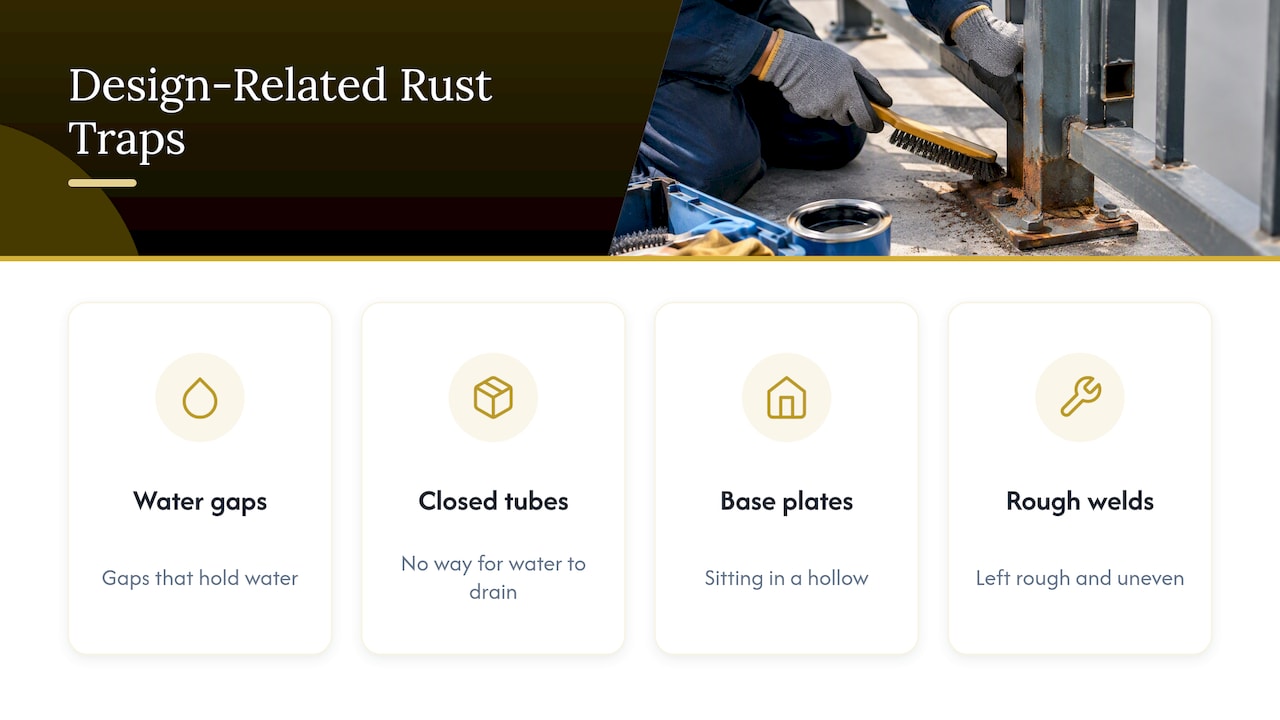
When we are called in to look at a rusting railing, the paint is rarely the root cause. More often, the railing was built with a gap that holds water, a closed tube with no way to drain, a base plate sitting in a hollow, or a weld left rough and uneven. Paint on top of those problems is a repair that keeps repeating itself.
Our approach follows from that. We prefer continuous, clean welds with the joints designed so water can leave. We ask where the railing is, how close it is to the street or a salted driveway, and who maintains it. A condo balcony facing a parking lot needs a different plan than a backyard stair. We also tell clients plainly that a finish is something you look after: a quick spring inspection costs very little compared to replacing posts after ten neglected winters.
If you are specifying a railing as a contractor or architect, bring us in before the drawings are final. Details such as drainage, vent holes and post-to-slab connections cost almost nothing at the design stage and a lot to fix on site.
— Ash
FAQ
How do I remove rust from metal railings?
Wash off grease and salt first, then remove loose rust and flaking paint with a wire brush or sanding block. Dry the steel, prime it the same day with a rust-inhibiting primer and apply exterior topcoats. If the rust is deep or the metal is pitted, a shop should assess it.
What is the best metal for outdoor railings?
It depends on the setting and budget. Galvanized steel is a strong, durable choice for exposed railings. Stainless steel and aluminum resist rust well, with different costs, strength and appearance. We can help you compare them for your property.
Can rusted stainless steel be restored?
Often, yes, when the marks are surface staining from salt or contamination. Clean it with mild soap and water and a non-metallic pad, and use a stainless-specific cleaner if needed. Deep pitting cannot be reversed, and affected sections may need to be replaced.
How often should I inspect my railings?
At least twice a year: in late fall before the snow and again in early spring after the snow is gone. Rail bases, welds and flat surfaces deserve the closest look. Railings close to roads or salted driveways may merit extra checks.
Sources
- Steel Components Maintenance and Corrosion Protection Guide
- National Research Council of Canada: chlorides and steel in concrete
- American Galvanizers Association: Field Inspection
- Canadian Conservation Institute: Caring for outdoor objects
- American Galvanizers Association: Design Guide
- Zinc Coatings for Sustainable Transportation Infrastructure
- American Galvanizers Association: Paint guide for galvanized steel
- Canadian Conservation Institute: Care and Cleaning of Iron
- SSPC Surface Preparation Specification No. 2: hand tool cleaning