The price of a custom metal job in Montreal depends on six things: the material and its thickness, how much cutting and forming the part needs, the welding time, the finish, whether the shop installs, and what the Quebec code requires of the finished piece. We are a fabrication shop in Lachine, so this guide stays on the work we do in-shop: sheet and profile work, laser-cut parts, railings, stairs and fences. It will not give you one magic number. It will show you how a fabricator builds a quote, so you can read yours and compare it fairly.
One note on scope. We fabricate and install only within Greater Montreal, and we do not ship parts elsewhere. If your project is on the island, in Laval, on the South Shore or in the West Island, the advice below applies directly.
TL;DR
- Material, thickness and finish (steel, stainless, aluminum or copper) usually set the baseline. Labour on cutting, forming, welding and installation sits on top.
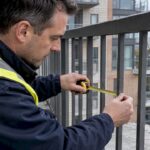
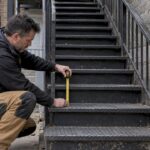
- A drawing or a measured site visit saves money. Guesses from a photo do not.
- Ask for an itemized quote that separates fabrication, finish, installation and any engineering or permit work.
- Railings and stairs must meet the Quebec Construction Code. A cheaper piece that fails inspection costs more than the one built right.
- We publish no price list. Every job is quoted from drawings and a site visit.
Table of Contents
- Why metalwork has no standard price
- The six cost drivers, in order of impact
- Railings, stairs and fences: where code changes the price
- What a good quote should contain
- How to lower the cost without lowering quality
- Our perspective: price the whole job, not the steel
- Get a quote built on your drawings
- FAQ
- Sources
Why metalwork has no standard price
A sheet-metal part or a railing is not a catalogue item. Two guards that look alike from the street can differ by a wide margin once you count the steel grade, the number of posts, the number of welds, the finish and the access on site. That is why serious fabricators quote per project rather than per metre or per kilogram, and why a quote found online for a different job rarely transfers to yours.
We would rather say this plainly than print a number that misleads you. Our metal fabrication cost guide for Montreal walks through worked examples for stairs. For anything else, the factors below tell you where your own number will come from.
The six cost drivers, in order of impact
1. Material and thickness
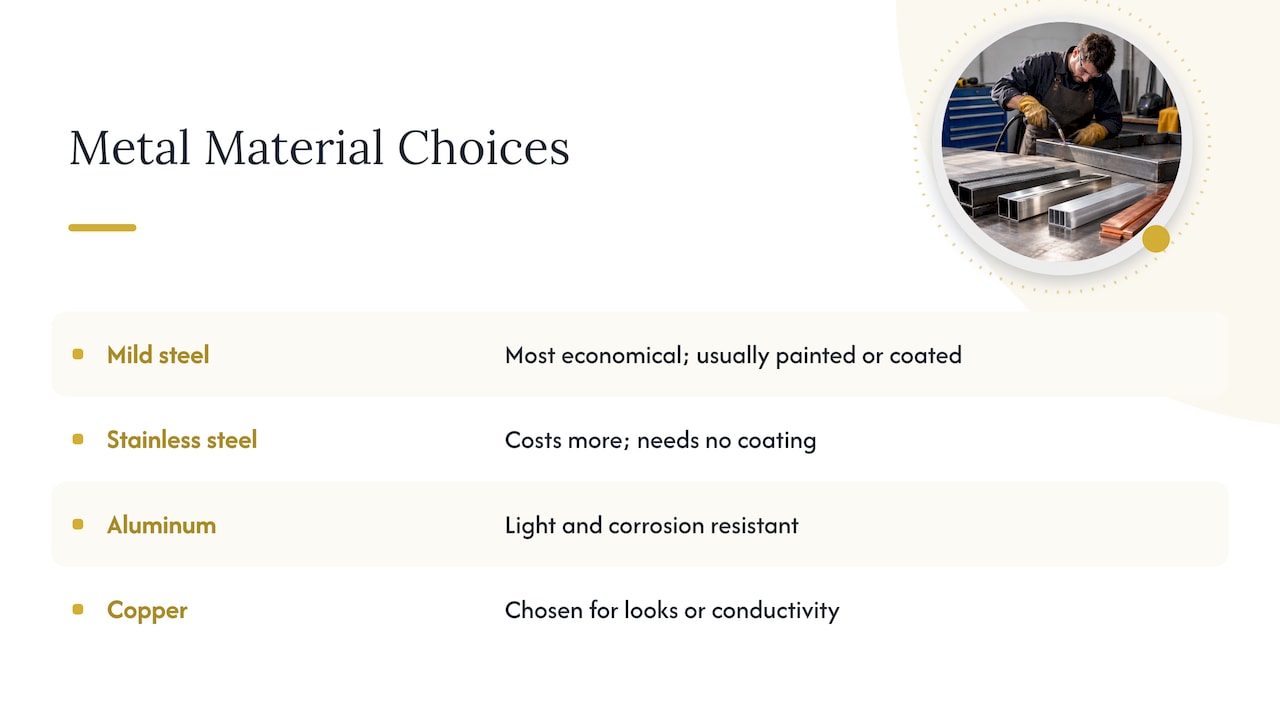
Material is the first line of any quote. Mild steel is the most economical and is normally painted or powder coated. Stainless steel costs more per kilogram and is harder to cut and weld, but it needs no coating and suits kitchens, restaurants, food-grade and coastal-style exposure. Aluminum is light and corrosion resistant, which helps on balconies where weight matters. Copper is a specialty choice, chosen for look or conductivity.
Thickness matters as much as the metal. A 3 mm plate and a 6 mm plate are not the same job: the thicker one takes longer to cut, needs more welding passes and weighs more to handle and install. Ask your fabricator why they picked a thickness. If it is for strength or code, that is a good reason. If it is only habit, ask whether a lighter gauge would do.
2. Cutting
CNC laser cutting is where precision becomes affordable. Once a file is nested on a sheet, the machine cuts repeat parts with little variation, and that is what lowers the unit cost on repeated parts such as balusters, brackets, plates and decorative panels. A single complex piece costs more per part than fifty identical ones, because programming and setup are spread over fewer parts.
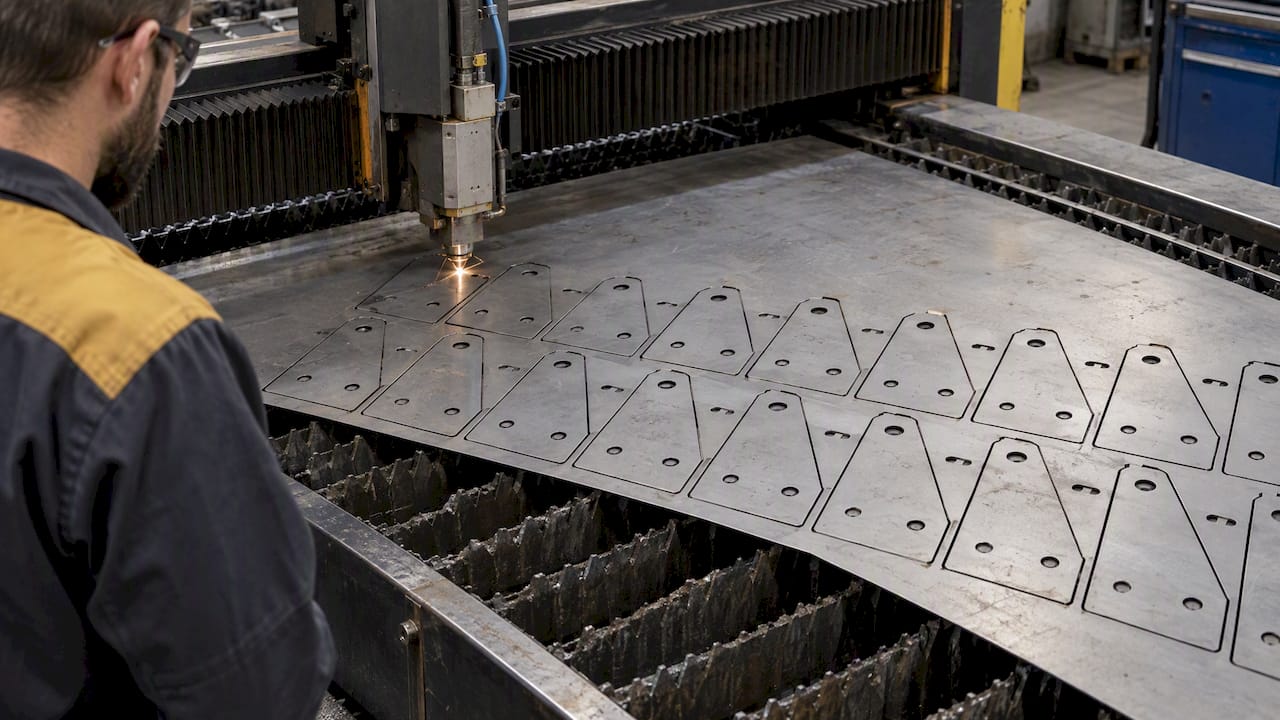
What raises the cut price: thick material, intricate patterns with many pierce points, tight tolerances, and files that need to be redrawn. Send a clean DXF or DWG when you can. Our laser cutting service accepts drawings, and clean files are the simplest way to keep cutting costs down.
3. Forming: bending and rolling
Flat parts become useful once they are bent, rolled or curved. Sheet bending on a press brake adds setup time for each different angle and tool. A part with many bends, or tight bend radii on thicker material, takes longer and sometimes needs trial bends before the first part is right. Rolling a curved guard, a round tank shell or a curved stair stringer calls for different equipment again.
We do both sheet bending and rolling and profile rolling in-house. That matters for cost in a quiet way: when forming happens under the same roof as cutting and welding, parts are not shuttled between three shops, and tolerances between steps are easier to control.
4. Welding
Welding is mostly labour, so it scales with the number and length of welds, the position (flat welds are faster than overhead ones), the joint preparation and the grade of finish. Stainless and aluminum need more skill and more cleaning than mild steel. A guard that will be visible at eye level, with ground-smooth welds, costs more than a structural bracket that will be painted and hidden.
Specify the finish expectation early. “Structural, painted over” and “showroom grade, welds invisible” are two very different amounts of labour. Our welding service covers steel, stainless steel, aluminum and copper, and we quote the finish level you actually need.
5. Finish
The finish protects the metal and sets how it ages. Common choices for Montreal exteriors are powder coating, paint over primer, and galvanizing for steel, or the natural finish of stainless and aluminum. Winter road salt, freeze-thaw cycles and snow load are hard on exterior metal, so a cheap finish often turns into a repaint within a few years. Our guide to metal railing maintenance in Canada explains what each material needs over time, which is worth reading before you choose a coating on price alone.
6. Installation and site conditions
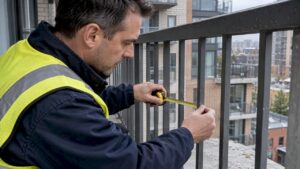
A part that is perfect on the bench still has to go in on site. Installation cost depends on access (a ground-floor entrance or a fourth-floor walk-up), anchoring into concrete, brick or wood, the need for a lift or scaffolding, and whether existing railings must be removed first. Because we install our own work across Greater Montreal, there is no handoff between a fabricator and a separate installer, which means one party answers for fit.
Railings, stairs and fences: where code changes the price
For anything people lean on or climb, the Quebec Construction Code sets the minimum. The Régie du bâtiment du Québec publishes the Construction Code, and its Chapter I, Building, is built on the National Building Code of Canada with Quebec amendments. It requires work to follow established best practices. For guards and stairs, that translates into rules on guard height, openings between pickets, handrail height and stair geometry, which depend on where the guard is, how high the drop is and what type of building it serves.
We will not quote specific dimensions here, because the right values depend on your building and on the code edition in force when you apply for the work. Your fabricator and, for larger projects, your architect or engineer should confirm them for your project. What you can do is ask each bidder the same question: which code requirements did you design to, and will your drawings show them?
This is where the cheapest quote can turn out the most expensive. A guard that does not pass inspection has to be reworked, sometimes rebuilt, and the delay hits every other trade on the site. Condo boards and property managers feel this most, because a failed guard on a shared balcony is a safety matter as well as a cost one.
Some examples of how design choices move the price:
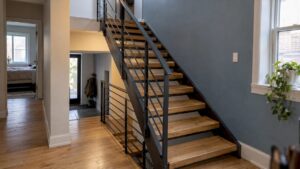
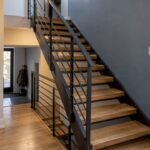
- Stairs. Straight stairs are generally simpler to fabricate than spiral ones, but footprint and code decide what fits your space. Our piece on spiral or straight stairs for Greater Montreal homes covers that trade-off, and our metal staircases page shows what we build.
- Railings. Pickets, cable, glass panels and plate infill all price differently, and each handles weather and maintenance differently. If you are weighing glass against metal, what to ask fabricators about retention will help. Our railings page covers residential and commercial work.
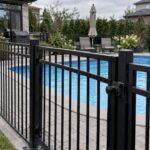
- Fences. Height, length, post spacing, gates and finish drive the total. Long runs on sloped sites need more cutting and fitting than flat ones.
What a good quote should contain
Whether you ask us or anyone else, use the same checklist. A quote you can compare has these lines:
- Scope in plain words, with reference to your drawings or our site measurements.
- Material and thickness, by grade, so stainless 304 is not silently swapped for something cheaper.
- Fabrication, separate from finish.
- Finish, with the type and colour.
- Installation, with what is included: anchors, removal of old work, cleanup.
- Exclusions: permits, engineering, lift rental, patching of masonry.
- Lead time and validity period of the quote, since metal prices move.
- Payment schedule and warranty terms.
Natural Resources Canada gives similar advice for renovation quotes in general: ask for an itemized breakdown that separates labour from materials and names who is responsible for permits. The principle carries over to any trade. For a broader method, read three filters to vet a metal fabricator before comparing price.
How to lower the cost without lowering quality
The savings that hold up are about information and timing, not shortcuts on structure.
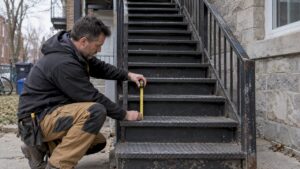
- Measure and draw first. A dimensioned sketch with photos lets a fabricator quote tightly. Vague scope forces a contingency into the price.
- Standardize. Repeating the same picket, bracket or post spacing lets laser cutting and jigs do the work. Custom one-offs cost more.
- Choose the finish for the exposure. Paying more once for a durable exterior finish beats repainting.
- Bundle jobs. Railings, stair and fence from one shop in one visit save mobilization.
- Involve the fabricator early. Contractors and architects who send drawings before tender often find details that simplify welds or reduce parts. Early input also avoids rework when the design meets the code.
- Allow lead time. Rushing a job usually costs more. Plan fabrication before the trades that depend on it.
For engineers and designers who specify stainless piping and supports for cooling systems in larger buildings, the principle is the same: sizing and layout decisions made at the design stage decide most of the cost. High-strength steel supports for data center cooling lines is one example of how support design affects performance on technical installations.
Our perspective: price the whole job, not the steel
We fabricate and weld everything in our Lachine shop and install it ourselves, and that shapes how we think about cost. The metal is rarely the biggest surprise on a bill. Surprises come from a measurement that was wrong, a code detail found late, a finish that did not suit the exposure, or a handoff between a fabricator and an installer who never met.
So we push for three habits. First, a site visit before a fixed quote on anything that has to fit an existing structure. Second, a conversation about code before drawings are final, not after the inspector arrives. Third, an honest discussion about where money is better spent: usually on material grade and finish for exterior work, and rarely on decoration that adds hours but no durability.
We also tell people when a smaller job is simply a smaller job. We work with general contractors, architects, designers, industrial manufacturers and homeowners, in French and in English, and no job is too small or too large for us to quote. What we will not do is give a price by phone for something we have not seen.
— Ash
Get a quote built on your drawings
If you are planning railings, stairs, fences or custom cut and formed parts in Greater Montreal, send us your drawings, photos or dimensions and tell us where the work is. We will visit when the job calls for it and return an itemized quote you can compare with any other. Start on our services page or contact us through manaracorp.com.
FAQ
Do you publish prices for railings, stairs or laser cutting?
No. Each job depends on material, thickness, finish, complexity and site access, so we quote from drawings or a site visit. This keeps the number tied to your project rather than to an average that fits nobody.
Can you ship fabricated parts outside Montreal?
No. We fabricate in Lachine and install within Greater Montreal: the island, Laval, the South Shore and the West Island. We do not ship fabricated parts elsewhere.
Is stainless steel worth the higher price?
Often, for kitchens, restaurants, wet areas and any place where a coating would be hard to maintain. It costs more up front but needs no paint. For a hidden structural frame, painted mild steel is usually the sensible choice.
Why do two quotes for the same railing differ so much?
Usually because the scope is not the same. Check material grade, thickness, finish, whether installation and old-railing removal are included, and whether the design meets the Quebec Construction Code. An itemized quote makes those differences visible.
Do I need drawings before I ask for a quote?
Not always. Measurements, photos and a short description of the use are enough to start. For stairs or guards that must pass inspection, accurate dimensions and a site visit are worth the time.