Galvanized steel finished with a duplex coating system is the most reliable base for exterior metal stairs that need to last decades, not years. Stainless 316 earns its higher cost only in coastal or heavy de-icing salt exposure. Whatever the material, three details separate a stair that lasts from one that fails early: open treads with real drainage, full-penetration welds with no sealed crevices, and fasteners that match the base metal instead of fighting it galvanically. Manara Corp. fabricates and installs stairs to exactly this specification for clients across Greater Montreal.
TL;DR:
- Galvanized steel with duplex coating is the most reliable and cost-effective material for exterior stairs that need to last decades, especially in salt-prone environments.
- Proper drainage, full-penetration welds, and matching fasteners to the base metal are critical design details that prevent early corrosion failures.
- Aluminum offers corrosion resistance and light weight but requires specialized fabrication and cannot be welded to steel, increasing costs.
- Regular maintenance involves seasonal visual inspections for coating damage, rust, and debris, with galvanized-plus-duplex systems outperforming powder coating alone.
- Custom fabrication with site-specific design, coating, and drainage details provides longer-lasting results than off-the-shelf prefab kits.
Table of Contents
- How do you choose the right material for exterior metal stairs?
- What finish actually stops corrosion on exterior stairs?
- Which design details actually prevent hidden corrosion?
- What tread material sheds water and resists ice best?
- What codes and dimensions apply to exterior stairs in Quebec?
- Prefab stringers or custom fabrication: which fits your project?
- How much maintenance do exterior metal stairs actually need?
- What does Manara Corp. bring to a custom stair project?
- Why drainage is the specification I’d never let a client skip
- Get a custom exterior stair quote built to these specs
- Sources
- FAQ
How do you choose the right material for exterior metal stairs?
The material decision comes down to three variables: how exposed the site is, how much fabrication complexity you can afford, and how the stair needs to look. Get this wrong and no finish will save you.
Mild or structural steel is the workhorse. It’s strong, cheap relative to stainless, and easy to weld and modify on site. The trade-off is that raw steel corrodes fast outdoors, so it only performs long-term when hot-dip galvanized and duplex-coated. Skip that step and you’re looking at rust within a couple of winters in a climate that salts sidewalks from November through April.
Stainless steel comes in two grades worth knowing. 304 handles general outdoor exposure fine. 316 adds molybdenum, which resists chloride pitting, the kind of corrosion caused by road salt and coastal air. For most inland Montreal-area properties, galvanized-and-coated steel outperforms 304 stainless per dollar spent. Stainless earns its premium near open water or where de-icing salt use is heavy and constant.
Aluminum brings two real advantages: it’s light and it resists corrosion on its own, no coating required. It’s the right call for weight-limited rooftop applications or where a lighter, modern architectural look matters. The catch is fabrication. Aluminum welding requires different equipment, different technique, and more skilled labour, which shows up in the quote. It also can’t be welded to steel, so mixed-material stairs need mechanical connections instead.
- Steel: strong, affordable, requires galvanizing plus duplex coating for exterior use
- Stainless 316: best where salt exposure or coastal humidity is constant
- Aluminum: lightest option, naturally corrosion-resistant, but pricier to fabricate and weld
What finish actually stops corrosion on exterior stairs?
Hot-dip galvanizing is the baseline every exterior steel stair should carry. The process submerges fabricated steel in molten zinc, which bonds metallurgically to the surface and keeps protecting the steel even where the coating gets scratched. In Canada, that process should meet CAN/CSA G164, the standard governing coating thickness and application quality. Galvanizing alone is often enough for a utility stair in a low-traffic side yard.
For anything visible from the street, or anywhere exposed to heavy rain and freeze-thaw cycling, a duplex system does more work. That means galvanize first, then a sweep blast to key the surface, then a zinc-compatible epoxy primer, then an architectural polyurethane or powder topcoat. This combination is standard practice among fabricators dealing with wet coastal-style climates, and it holds up well against Quebec’s freeze-thaw swings too, as detailed in this breakdown of galvanizing and coastal rain exposure.
Statistic to know: front-line inspection data shows that peeling topcoat and white rust on galvanized surfaces are the earliest visible signs of coating failure, showing up well before any structural weakness appears.
When you’re comparing quotes, ask for these specifics in writing:
- Coating thickness in microns, not just “galvanized” as a checkbox
- Whether the primer is explicitly zinc-compatible
- Whether coating is applied in-shop or on site, and the warranty terms attached to each
Which design details actually prevent hidden corrosion?
Most stair failures Manara Corp. sees in the field trace back to detailing, not material choice. A cheap steel stair, properly drained and welded, will often outlast an expensive one that traps water at the joints.
- Drainage first. Use open treads, slope every horizontal surface slightly, and never create a sealed pocket where water and debris can sit. Weep holes at low points matter more than most homeowners expect.
- Weld the full joint. Full-penetration welds with a back-seal pass close off the crevices where partial welds leave gaps. Grind welds smooth before any coating goes on; a rough weld under galvanize is where rust starts first.
- Match your fasteners to your metal. Mixing dissimilar metals in a fastener creates a galvanic cell that eats away at one of them. For coastal or near-coastal sites, 316 stainless fasteners are the standard recommendation.
- Isolate the base plate. Where steel meets concrete, a neoprene isolation pad on a raised pedestal with a drained slope stops capillary action from wicking moisture into the base connection.
Pro Tip: Ask your fabricator how they treat the underside of the base plate specifically. It’s the detail almost nobody checks, and it’s usually where corrosion starts first.
What tread material sheds water and resists ice best?
Treads take the most abuse on any exterior stair: foot traffic, standing water, ice, and salt, all at once. The tread type you pick affects both safety and how long the stair looks good.
- Open steel grating drains instantly and provides excellent grip even wet, making it a common choice for commercial and industrial exterior stairs.
- Perforated plate offers a more finished look while still letting water through, a good middle ground for residential entries.
- Welded bar grating is heavier-duty again, suited to high-traffic or commercial applications where durability matters more than appearance.
- Slatted hardwood, cedar or ipe, adds warmth underfoot and a residential feel, but needs more upkeep than metal and doesn’t drain quite as cleanly.
- Solid treads with drainage channels balance a clean architectural look with enough water management to avoid pooling, if the channels are cut generously.
Open-tread designs consistently reduce water retention and debris buildup compared with solid treads, which is exactly what you want going into a Quebec winter where standing water becomes ice overnight. If you want the warmth of wood underfoot, weigh that against the extra sealing and inspection it needs versus a metal grating that basically ignores the weather.
What codes and dimensions apply to exterior stairs in Quebec?
Before you finalize a design or request a quote, check these code items. The NBC/CNB sets dimensional limits for riser height and tread depth, and requires landings at both the top and bottom of exterior stair flights. These rules apply whether you’re building a rear deck exit or a full commercial fire escape.
Handrail continuity is one of the most commonly missed items on exterior installations. Interruptions at landings can push an otherwise compliant staircase into non-conformance, which shows up as a permit rejection late in the project when it’s expensive to fix. Guard height minimums also apply anywhere there’s a fall risk, and these thresholds are stricter for exterior applications than many contractors expect coming from interior work.
Before you request a quote or permit, confirm:
- Riser and tread dimensions match your jurisdiction’s current code limits
- Landings are specified at both ends of every stair flight
- Handrail runs continuously through landings with no gaps
- Guard heights meet minimums for the fall exposure at your site
Prefab stringers or custom fabrication: which fits your project?
Prefab stair kits are the fast, low-cost option. They ship with standard stringer lengths, generic coatings, and hardware-store fasteners, and they install quickly. The trade-off shows up over time: standard stringers rarely fit an exact rise and run, coating quality varies by manufacturer, and the fasteners included are often plain steel or light galvanized, not matched to your exposure.
Custom fabrication costs more upfront but solves the fit and durability problem at the source.
- Engineered attachments are built to your exact site dimensions, not adjusted after the fact.
- Coating specification is controlled, meaning hot-dip galvanize plus a duplex topcoat applied to the actual finished part, not a generic pre-treated stock stringer.
- Drainage and anchoring are designed in, not retrofitted with a hacksaw on installation day.
Cost drivers in the Canadian market typically include site accessibility, run length and number of landings, the finish specification you choose, and whether custom handrail work is part of the scope. When you request a quote, send site photos, describe the exposure (inland versus near water, salt use on the property), and state your finish requirements explicitly rather than leaving them to interpretation. A custom fabrication shop can quote accurately once those variables are clear; a prefab retailer generally can’t.
How much maintenance do exterior metal stairs actually need?
Set expectations early: even the best-finished stair needs a look twice a year. A quick visual check each season and one detailed annual inspection catches problems while they’re still cheap to fix.
- Check for coating cracks, chips, or peeling, especially at welds and edges
- Look for pitting or rust streaks around fasteners
- Clear debris from tread gaps and drainage points before it holds moisture
- Choose calcium chloride or sand over rock salt where possible; heavy salt use accelerates coating breakdown even on galvanized steel
Service life varies a lot by system. Galvanized-plus-duplex assemblies commonly outperform powder-coat-only stairs, since powder coat alone lacks the sacrificial zinc layer that keeps protecting exposed steel at scratches and cut edges. Properly detailed stainless assemblies can match or exceed that lifespan but cost significantly more upfront.
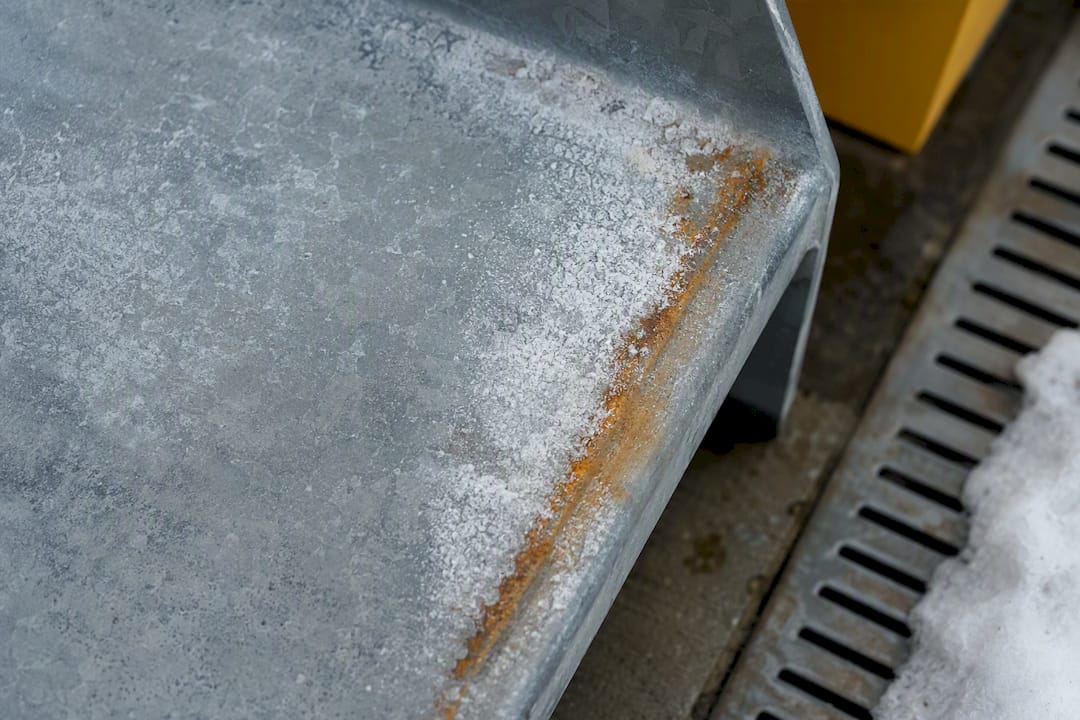
Pro Tip: If you see white, powdery residue on galvanized steel, that’s zinc oxidizing, not necessarily failure. But combined with rust streaks underneath, it’s worth a professional inspection before winter.
What does Manara Corp. bring to a custom stair project?
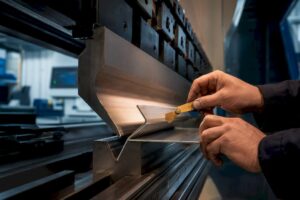
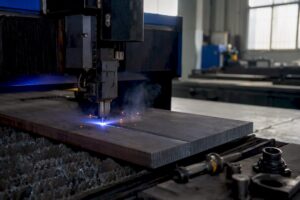
Manara Corp. fabricates and installs exterior metal stairs from a shop in Lachine, serving the island of Montreal, Laval, the South Shore, and the West Island. In-shop capability covers CNC laser cutting, sheet bending and rolling, profile rolling, and welding across steel, stainless steel, aluminum, and copper.
- CNC laser cutting for precise tread and stringer profiles
- Sheet bending and rolling for custom base plates and closures
- Full welding services across steel, stainless, and aluminum
- Local installation, not shipped parts, across Greater Montreal
Recent shop work has included galvanize-plus-duplex stringers with 316 stainless fasteners and drained base connections for properties with heavy winter salt exposure, built to the detailing standards described above.
Why drainage is the specification I’d never let a client skip
If a fabricator can only get one thing right, it should be drainage. Corrosion doesn’t start from bad material choice nearly as often as it starts from water that had nowhere to go, sitting in a weld crevice or a sealed base plate for months. Galvanize, compatible fasteners, and open treads all matter, but they’re solving the same underlying problem: keep water moving. When you’re vetting a fabricator, ask specifically how they detail drainage at welds and base plates. If they can’t answer without hesitating, that’s your answer too.
— Ash
Get a custom exterior stair quote built to these specs
Manara Corp. is the local alternative to buying a generic prefab kit and hoping the fit and coating hold up. Every exterior stair fabricated in the Lachine shop is built to the site’s exact dimensions, with galvanize-plus-duplex coating and fastener selection matched to your property’s exposure, then installed locally across Greater Montreal instead of shipped as a mismatched kit.
When you request a quote, send site photos, note your property’s exposure (near water, heavy salt use, or a sheltered inland lot), and specify the finish you want. Manara Corp. can also handle related welding work and custom handrail fabrication as part of the same project. Start your custom stair project with a quote request through the stairs page, and get a design built for the exposure your property actually faces, not a generic one pulled off a shelf.
Sources
- Exterior mono stringer staircases: galvanizing and Vancouver rain
- Hot-dip galvanizing specifications (Frontier Galvanizing)
FAQ
How much do outdoor metal stairs cost?
Cost depends heavily on run length, finish specification, and site accessibility. Prefab kits sit at the low end, while custom-fabricated stairs with galvanize-plus-duplex coating and engineered attachments cost more upfront but avoid the fit and coating problems that shorten a prefab stair’s life.
Can you buy ready-made outdoor steps?
Yes, prefab stringer kits are widely available and install quickly, but they rarely match an exact rise and run, and their standard coatings and fasteners often aren’t matched to your site’s exposure.
What is the cheapest way to build outdoor stairs?
A prefab stringer kit with standard galvanized coating is the lowest upfront cost, though it typically needs more maintenance and has a shorter service life than a custom-fabricated, duplex-coated stair.
What is the best material for outside stairs?
Hot-dip galvanized steel finished with a duplex coating system is the most cost-effective, durable choice for most sites, while 316 stainless is worth the premium in coastal or heavy salt-exposure locations.